

Your guide to navigating mental health treatment options
Finding the right mental health care feels overwhelming when you’re already struggling. For adults in Texas and Colorado dealing with ADHD, anxiety, or depression, navigating mental health treatment options adds another layer of stress to an already difficult situation. Symptoms overlap, providers vary widely in approach, and virtual care platforms differ in structure and quality. This guide cuts through that confusion. We’ll walk you through each step, from getting an accurate evaluation to selecting a virtual provider who fits your needs, so you can move forward with clarity and confidence.
Table of Contents
- Understanding your mental health needs and getting an accurate assessment
- Planning your search: insurance coverage, licensing, and evidence-based practices
- Navigating directories and choosing the right virtual clinician
- Safety, follow-up, and managing your virtual care journey
- Why navigating mental health treatment is an evolving journey, not a one-time choice
- Explore Journey Mental Health’s virtual care options in Texas and Colorado
- Frequently asked questions
Key Takeaways
| Point | Details |
|---|---|
| Start with assessment | Begin your virtual mental health journey by obtaining an accurate evaluation to clarify your diagnosis and symptoms. |
| Check insurance coverage | Always verify your insurance benefits for virtual mental health services to understand costs and network providers. |
| Choose licensed providers | Select mental health programs and clinicians who are licensed, accredited, and use evidence-based treatments like CBT. |
| Use directories wisely | Navigate reputable directories by filtering for insurance, specialties, and availability before scheduling consultations. |
| Mental health treatment evolves | Be prepared to adjust your treatment plan over time as your needs and progress change for effective care. |
Understanding your mental health needs and getting an accurate assessment
Before you compare providers or browse directories, you need a clear picture of what you’re dealing with. This is where a formal mental health evaluation becomes essential, not optional. A mental health evaluation clarifies your diagnosis and symptom severity, which is the foundation everything else is built on.
Here’s why this matters more than most people realize: ADHD, anxiety, and depression share a significant number of symptoms. Difficulty concentrating, poor sleep, low motivation, and irritability appear in all three conditions. Without a structured evaluation, it’s easy to treat the wrong condition or miss a second diagnosis entirely. For example, an adult who has lived with untreated ADHD for years often develops anxiety as a secondary response to chronic underperformance and frustration. Treating only the anxiety without addressing the ADHD vs anxiety distinctions leaves the root cause unresolved.
A proper evaluation typically includes:
- A detailed review of your symptom history, including when symptoms started and how they affect daily life
- Standardized rating scales for ADHD, depression, and anxiety
- Questions about family history, since ADHD in particular has a strong genetic component
- A review of any prior diagnoses or treatments you’ve received
The evaluation also helps your provider understand symptom severity. Mild anxiety managed with therapy alone looks very different from severe depression that may require medication alongside counseling. Getting attention support and evaluations through a virtual platform means you can complete this process from home, which removes a major barrier for many adults.
One thing worth knowing: the ADHD and depression overlap is more common than most people expect. Research consistently shows that adults with ADHD are significantly more likely to experience depression, and each condition can mask or amplify the other. A thorough evaluation catches both.
Pro Tip: Before your evaluation appointment, write down your top five symptoms and note how long you’ve experienced each one. This saves time and helps your provider get to the most relevant questions faster.
Planning your search: insurance coverage, licensing, and evidence-based practices
With your evaluation complete and a clearer diagnosis in hand, the next step is building a practical search plan. Two things matter most here: knowing what your insurance will actually cover and knowing how to identify quality providers.

Start with insurance. Most insurance plans cover mental health treatment, but coverage varies by plan, level of care, and whether the provider is in-network. Call the number on the back of your insurance card and ask specifically about telehealth mental health visits, medication management, and psychiatric evaluations. Ask about copays, deductibles, and whether prior authorization is required for any services.
Once you understand your coverage, focus on provider quality. SAMHSA recommends choosing licensed and accredited programs that use evidence-based practices. Cognitive Behavioral Therapy, commonly called CBT, is one of the most well-researched treatments for anxiety, depression, and even ADHD-related behavioral patterns. Seeing CBT listed as a treatment approach is a good sign. Seeing vague language like “holistic wellness support” with no clinical specifics is a reason to look more carefully.
Here’s a quick checklist to use when evaluating any virtual mental health provider:
- Is the clinician licensed in Texas or Colorado?
- Does the platform accept your insurance plan?
- Are evidence-based treatments like CBT offered?
- Is the program accredited by a recognized body?
- Are psychiatric evaluations and medication management available?
- What are the follow-up protocols after your first appointment?
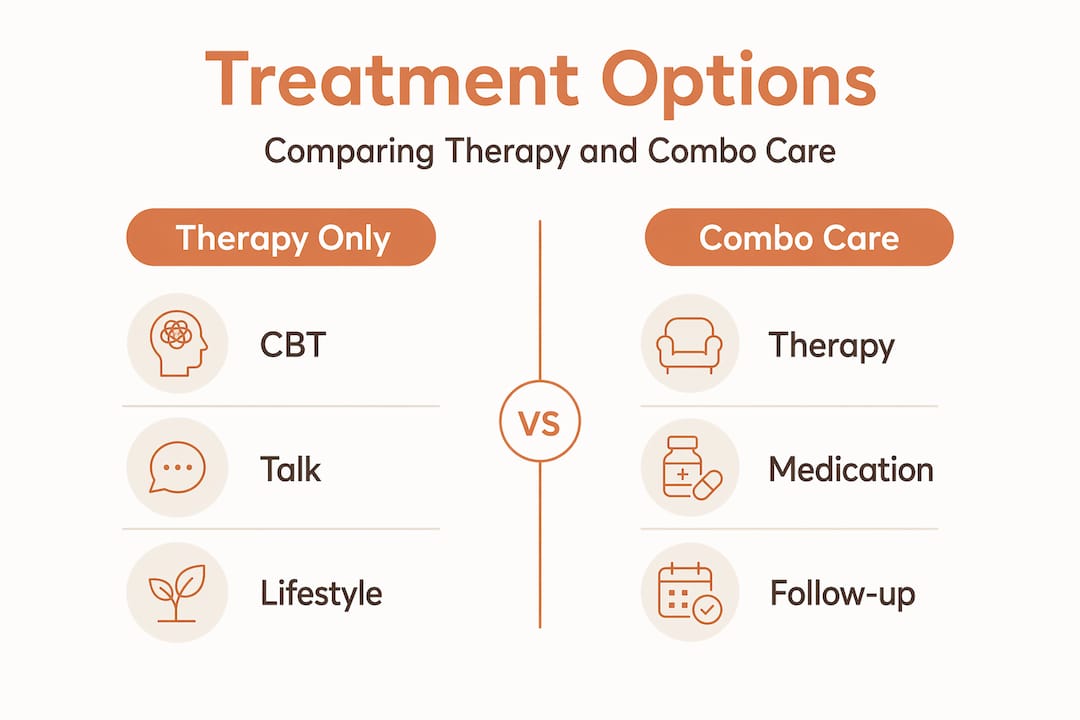
Use this comparison table to understand the key differences between common mental health treatment structures:
| Treatment type | What it includes | Best suited for |
|---|---|---|
| Therapy only | CBT, talk therapy, behavioral strategies | Mild to moderate anxiety or depression |
| Medication management | Psychiatric evaluation, prescriptions, monitoring | Moderate to severe ADHD, depression, anxiety |
| Combined care | Therapy plus medication management | Complex or overlapping conditions |
| Virtual structured programs | Bundled evaluations, medication, follow-ups | Adults seeking convenient, organized care |
Pro Tip: When you call your insurer, ask if ADHD medication management falls under your mental health or medical benefit. The answer affects your out-of-pocket cost more than most people expect.
Navigating directories and choosing the right virtual clinician
Now comes the part most people find most stressful: actually finding and selecting a provider. A clear process makes this manageable.
Follow these steps in order:
- Write down your primary treatment goals. Are you looking for a diagnosis, medication, therapy, or all three?
- List your non-negotiables, such as insurance acceptance, virtual-only appointments, and availability within the next few weeks.
- Use reputable directories that display clinician specialties, credentials, and availability. Directory and matching workflows work best when you filter by your insurance network first, then by specialty.
- Narrow your list to two or three providers who match your criteria.
- Schedule short consultation calls with each. Most providers offer 15 to 20-minute introductory calls at no charge.
- After each call, ask yourself: Did they ask about my goals? Did I feel heard? Was their communication style clear?
The therapeutic relationship is not a soft consideration. It’s a clinical one. Research consistently shows that the quality of the patient-provider relationship predicts treatment outcomes more reliably than the specific technique used. If a provider feels dismissive or rushed during a consultation call, that experience will likely continue throughout your care.
Here are the key questions to ask during any consultation:
- What is your experience treating adults with ADHD, anxiety, or depression?
- How do you approach treatment when symptoms overlap?
- How often will we meet, and how do you handle concerns between appointments?
- Do you coordinate with primary care providers when needed?
If you’re looking for ADHD treatment in Texas or ADHD treatment in Colorado, confirm that the clinician has specific experience with adult ADHD presentations, which differ meaningfully from childhood ADHD.
Pro Tip: Don’t settle for the first provider who has availability. Spending one extra week finding the right fit saves months of ineffective treatment.
Safety, follow-up, and managing your virtual care journey
Choosing a provider is not the finish line. Managing your ongoing care well is what actually produces results. This means understanding your provider’s safety protocols, follow-up structure, and how to handle urgent situations.
Ask your telehealth provider these questions before your first appointment:
- How do you handle clinical concerns that arise between scheduled visits?
- What is your process if I experience a mental health crisis?
- How often will we schedule follow-up appointments?
- Do you coordinate with my primary care provider?
Quality telehealth practices describe their safety processes clearly, including how they manage urgent contact triggers and care coordination with primary care. If a provider can’t answer these questions directly, that’s important information.
For medication management specifically, follow-up frequency matters. Stimulant medications used for ADHD and antidepressants both require regular monitoring to assess effectiveness and adjust dosing. Expect follow-up appointments at least monthly in the early stages of treatment.
Know your emergency resources. If you or someone you know is in crisis, the 988 crisis lifeline provides free, confidential, 24/7 support from trained counselors. Save that number now, before you need it.
Know your crisis contacts before you need them. The 988 Suicide and Crisis Lifeline is available 24/7 by call or text. Having this number saved is a simple step that can make a critical difference in an urgent moment.
Also maintain open communication with your care team as your symptoms change. Depression can lift and then return. ADHD symptoms shift with life circumstances like new jobs, relationship changes, or major stress. Your mental health treatment protocols should adapt with you, not stay fixed at the initial plan.
Pro Tip: Keep a brief weekly symptom log, even just two or three sentences. Bring it to every appointment. It gives your provider concrete data instead of relying on memory, which is often unreliable when you’re managing a condition like ADHD or depression.
Why navigating mental health treatment is an evolving journey, not a one-time choice
Here is something most mental health content gets wrong: it frames finding treatment as a problem you solve once. You find a provider, start a medication, begin therapy, and then you’re done. That framing sets people up for unnecessary disappointment.
The reality, as NAMI clearly states, is that the mix of treatments and supports should be individualized and evolves with you over time. What works at 32 may not work at 40. A therapy approach that helped during a period of work stress may need to shift when your circumstances change. Medication that managed your depression effectively for two years may need adjustment as your brain and life situation change.
We see this regularly in adults managing overlapping conditions. Someone who starts with a primary anxiety diagnosis often discovers that understanding the ADHD and anxiety differences changes their entire treatment picture. What looked like generalized anxiety was actually ADHD-driven dysregulation, and that distinction changes both the therapy approach and the ADHD medication management conversation entirely.
The adults who do best in mental health treatment share one trait: they stay engaged in shaping their care. They ask questions, report changes honestly, and don’t interpret the need to adjust a treatment plan as failure. Adjusting is the process. Patience matters here, but so does advocacy for yourself.
There is no permanent perfect treatment. There is only the current best plan, reviewed and refined over time.
Explore Journey Mental Health’s virtual care options in Texas and Colorado
You now have a clear framework for navigating mental health care, from evaluation to provider selection to ongoing management. The next practical step is finding a platform built to support exactly that process.
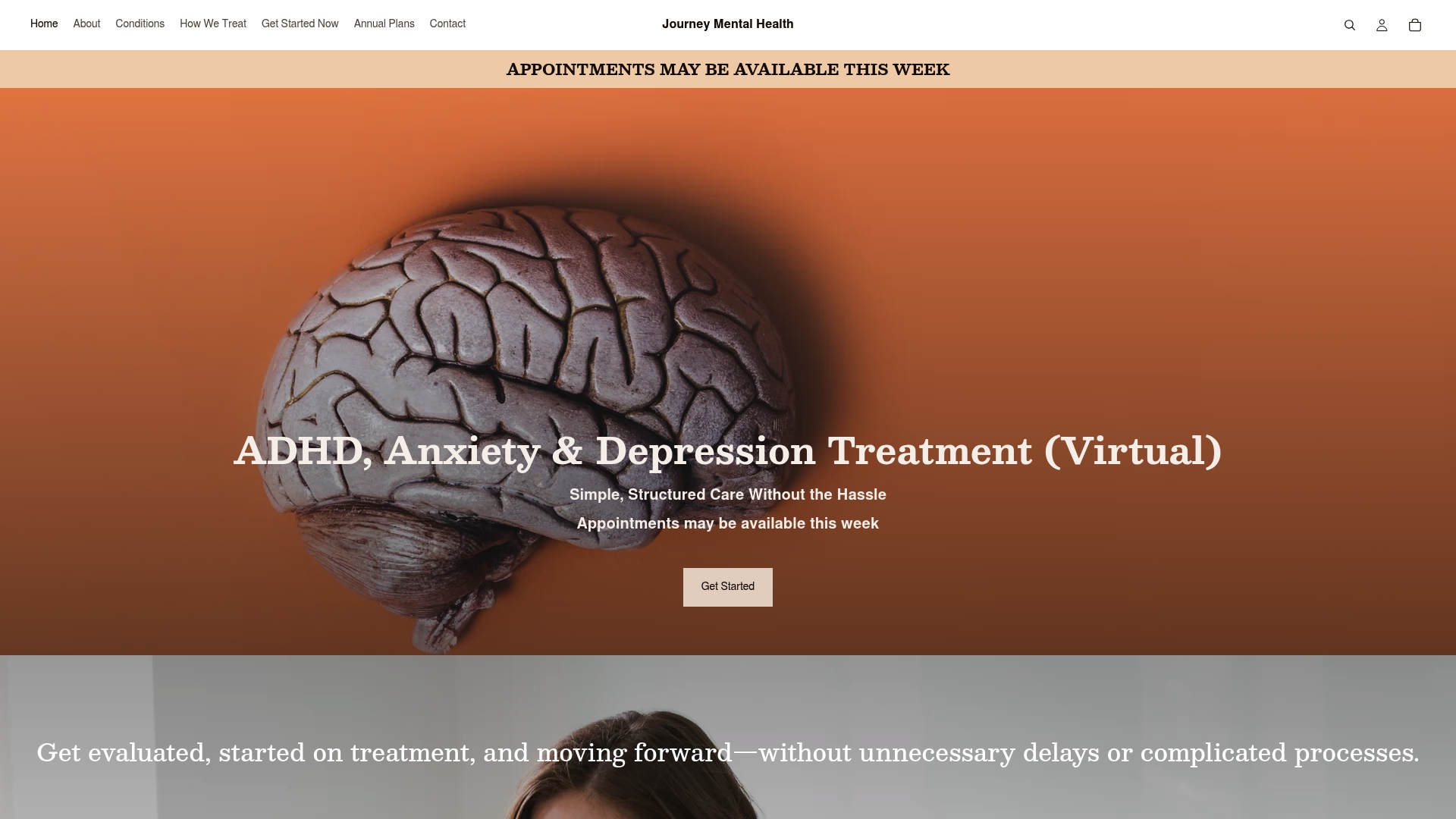
Journey Mental Health offers structured virtual care programs designed specifically for adults in Texas and Colorado managing ADHD, anxiety, and depression. Our platform makes it easy to see clinician specialties, confirm insurance acceptance, and schedule appointments without long wait times. Whether you’re starting with an evaluation or looking for ongoing medication management and treatment, we provide a clear path forward. You can also explore anxiety and depression treatment options or get started with depression treatment services tailored to your needs. Start with an assessment and find a care plan that fits where you are right now.
Frequently asked questions
What is the first step to finding virtual mental health treatment for ADHD, anxiety, or depression?
The first step is a comprehensive mental health evaluation to clarify your diagnosis and symptom severity, which guides personalized treatment planning rather than a one-size-fits-all approach.
How can I find out if my insurance covers virtual mental health treatment?
Call the phone number on your insurance card and ask specifically about telehealth mental health coverage. Most insurance plans cover mental health treatment, but rates and telehealth inclusion vary by plan.
What should I look for to ensure quality virtual mental health care?
Look for licensed and accredited programs that use evidence-based practices like CBT and have clear safety protocols, structured follow-up schedules, and transparent communication about urgent care procedures.
What is the 988 lifeline and when should I use it?
The 988 Suicide and Crisis Lifeline connects you with trained crisis counselors 24/7 by call or text. Use it any time you are in emotional distress or a mental health crisis.
How do I know if a virtual therapist or psychiatrist is the right fit?
Schedule one or two short consultation calls to discuss your goals and treatment expectations. As finding-a-therapist guidance consistently shows, if the relationship doesn’t feel comfortable or supportive, it’s completely appropriate to try another provider.
Recommended
- Mental Health Treatment in Texas & Colorado | Medication Management & Online Care – Journey Mental Health
- Anxiety Treatment in Texas & Colorado | Online Anxiety Help & Medication – Journey Mental Health
- About – Journey Mental Health
- Depression Treatment in Texas & Colorado | Online Depression Help & Medication – Journey Mental Health