

Why Depression Affects Daily Functioning: A Clear Guide
Depression is a mental health condition defined by persistent low mood and cognitive impairment that significantly disrupts daily functioning. Clinically, major depressive disorder (MDD) requires these symptoms to persist for at least two weeks, occurring most of the day, nearly every day. The impact of depression on daily life extends far beyond sadness. It disrupts how you think, work, connect with others, and care for yourself. Understanding why depression affects daily functioning is the first step toward reclaiming your life, and this guide covers the key mechanisms and practical strategies to help you do that.
Why depression affects daily functioning: the cognitive connection
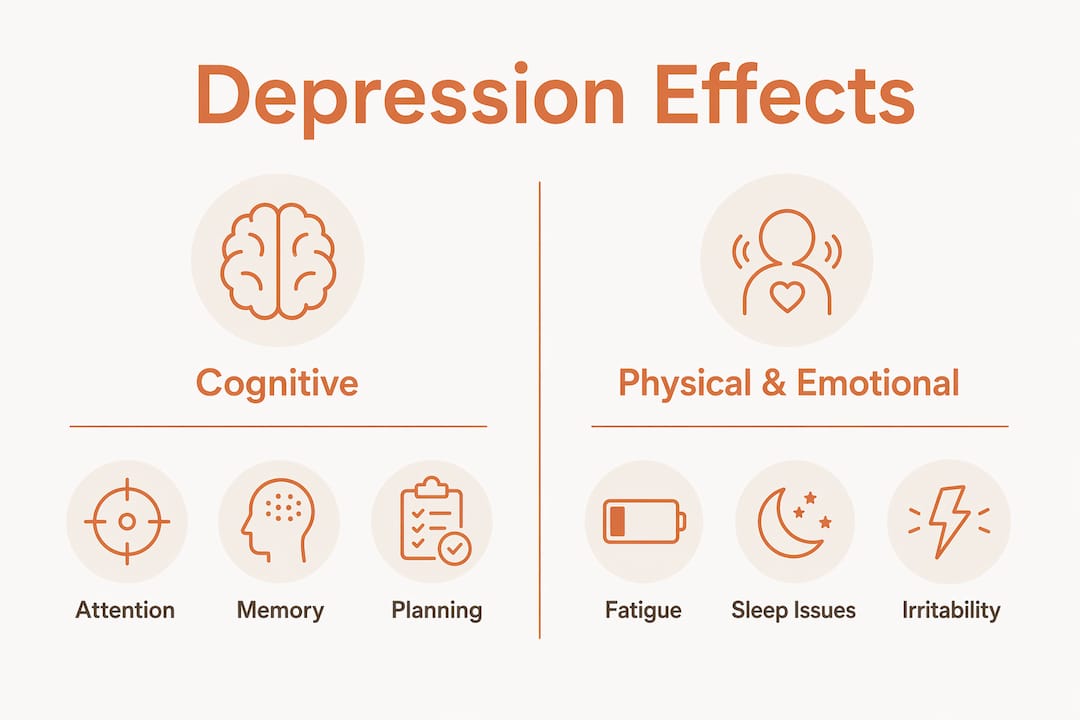
Depression does not just change how you feel. It changes how your brain works. Cognitive dysfunction in attention, planning, organization, and memory correlates directly with depression severity and predicts poorer treatment outcomes. That means the harder it is to think clearly, the harder recovery becomes.

How cognitive symptoms show up in real life
The cognitive effects of depression are often the most disabling part of the condition, yet they receive the least attention. People frequently describe feeling like they are “thinking through fog.” That experience has a clinical basis.
Common cognitive impairments in depression include:
- Attention and concentration: You lose your place mid-task, reread the same paragraph multiple times, or struggle to follow a conversation.
- Working memory: You forget what you walked into a room to do, miss appointments, or lose track of instructions at work.
- Executive function: Planning a meal, organizing a project, or making a simple decision feels disproportionately difficult.
- Processing speed: Tasks that once took 20 minutes now take an hour, which compounds frustration and fatigue.
- Decision-making: Even low-stakes choices, like what to eat or what to wear, feel paralyzing.
These impairments directly reduce productivity at work and school. They also create a secondary layer of distress. When you cannot perform at your previous level, self-criticism and shame often follow. That emotional response then deepens the depression itself.
Pro Tip: If you notice cognitive symptoms alongside low mood, mention them specifically to your provider. Cognitive difficulty is a treatable symptom of depression, not a character flaw or permanent limitation.
Research confirms that cognitive symptoms drive functional impairment and require targeted assessment and therapy. Addressing them directly, rather than waiting for mood to improve first, leads to better outcomes.
How physical and emotional symptoms disrupt your daily routine
Depression is not only a mental experience. It lives in the body. Fatigue, low energy, sleep disturbance, irritability, and emotional instability all disrupt daily routines and reduce motivation. These symptoms lead directly to absenteeism and decreased productivity. That is a significant real-world cost.
The physical toll of depression
The effects of depression on routine are often most visible in physical functioning. Getting out of bed, preparing food, and maintaining basic hygiene can feel like enormous efforts. This is not laziness. It reflects genuine neurobiological changes in energy regulation and motivation.
Key physical and emotional symptoms that disrupt daily life include:
- Fatigue: Persistent tiredness that does not improve with rest makes completing physical tasks feel impossible.
- Sleep disruption: Both insomnia and hypersomnia are common. Poor sleep then worsens mood and cognitive function the following day, creating a cycle that is hard to break.
- Appetite changes: Eating too little or too much affects energy, concentration, and physical health over time.
- Irritability and mood swings: Emotional volatility strains relationships and makes social interactions feel exhausting.
- Feelings of worthlessness: These feelings reduce motivation to attempt tasks, reinforcing withdrawal and inactivity.
Depression forms a self-reinforcing daily cycle where poor sleep, sad mood, and concentration difficulties on one day predict worsening symptoms the next. This cycle is one of the clearest explanations for why the effects of depression on routine feel so relentless. Small, consistent behavioral changes are the most effective way to interrupt it.
How depression affects relationships and work performance
The social and occupational consequences of depression are among its most damaging effects. Social withdrawal and reduced emotional connection deteriorate personal relationships and social functioning. Depression limits emotional expression and increases relationship strain, often leaving both the person with depression and their loved ones feeling confused and disconnected.
Ways depression disrupts living at work and in relationships
At work, the impact of depression on daily life shows up in specific, measurable ways:
- Reduced concentration leads to more errors, missed deadlines, and lower quality output.
- Difficulty communicating makes it harder to collaborate, ask for help, or advocate for yourself.
- Absenteeism and presenteeism mean you are either missing work or physically present but mentally unavailable.
- Withdrawal from colleagues reduces the social support that normally buffers workplace stress.
- Impaired decision-making slows response times and undermines confidence in professional judgment.
The scale of occupational impairment in depression is often underestimated. Research shows that psychosocial impairment in MDD can be as profound as, or greater than, impairment seen in other chronic medical conditions. That comparison matters because it challenges the misconception that depression is less serious than physical illness.
| Area of life | How depression affects it |
|---|---|
| Work performance | Reduced focus, more errors, missed deadlines |
| Relationships | Emotional withdrawal, communication breakdown |
| Social life | Isolation, reduced participation in activities |
| Self-care | Neglect of hygiene, nutrition, and health routines |
| Finances | Absenteeism and reduced productivity affect income |
Without treatment, the risk of job loss and long-term social isolation increases substantially. Seeking support early protects both your career and your relationships.
Why functional impairment can persist after symptoms improve
One of the most frustrating aspects of depression is that feeling better emotionally does not always mean functioning better. Residual symptoms after syndromal remission contribute to continued psychosocial impairment and a higher risk of relapse. Patients with residual symptoms show poorer work and social functioning over the long term.
This distinction between syndromal remission and full functional recovery is critical. Syndromal remission means your symptoms no longer meet the clinical threshold for a diagnosis. Functional recovery means you are back to performing at your previous level in work, relationships, and daily activities. These two milestones often do not arrive at the same time.
Restoring psychosocial functioning is the primary goal of depression treatment, not just symptom remission. Long-term treatment adherence is strongly linked to functional recovery, and patients who discontinue care after initial symptom relief face a significantly higher risk of relapse and continued impairment.
Pro Tip: If you feel emotionally better but still struggle with concentration, motivation, or social engagement, tell your provider. These residual symptoms are treatable and should not be accepted as your new normal.
Long-term treatment adherence is strongly linked to functional recovery. Maintenance therapy, whether through medication, psychotherapy, or both, protects the gains you have made and reduces the likelihood of a future episode.
Practical strategies to improve daily functioning with depression
Recovery from depression requires more than waiting for symptoms to lift. Active, targeted strategies accelerate functional improvement and reduce the risk of relapse. The most effective approaches address both symptoms and the cognitive and behavioral patterns that sustain impairment.
Treatment and therapy options
- Antidepressant medication: Medications targeting serotonin, norepinephrine, and dopamine systems reduce core symptoms and can improve cognitive function directly.
- Psychotherapy: Cognitive behavioral therapy (CBT) addresses distorted thinking patterns, builds coping skills, and improves daily functioning through structured behavioral change.
- Cognitive remediation: Computerized cognitive remediation shows measurable benefits for real-world performance, improving attention, memory, and executive function alongside clinical outcomes.
- Behavioral activation: This structured approach to gradually increasing rewarding activities directly counters the withdrawal and inactivity that depression reinforces.
Lifestyle and self-management strategies
- Sleep hygiene: Consistent sleep and wake times stabilize mood and cognitive function. Irregular sleep worsens both.
- Exercise: Regular physical activity improves mood, energy, and cognitive performance through neurobiological pathways.
- Nutrition: Stable blood sugar and adequate nutrient intake support brain function and reduce fatigue.
- Routine building: A predictable daily structure reduces the cognitive load of decision-making and creates momentum.
- Social connection: Even brief, low-pressure social contact counteracts isolation and supports emotional regulation.
Practical coping strategies for depression work best when layered. No single approach is sufficient on its own. Combining professional treatment with consistent lifestyle changes produces the most durable improvement in daily functioning.
Pro Tip: Start with one small behavioral change, such as a 10-minute walk or a consistent bedtime, rather than overhauling your entire routine at once. Consistency with small actions interrupts the self-reinforcing symptom cycle more effectively than large, unsustainable efforts.
If you are managing depression while still meeting daily obligations, the strategies outlined in high-functioning depression resources offer targeted guidance for that specific experience.
Key Takeaways
Depression impairs daily functioning through interconnected cognitive, physical, emotional, and social mechanisms that require targeted treatment for full recovery.
| Point | Details |
|---|---|
| Cognitive impairment is central | Attention, memory, and executive function deficits directly reduce work and daily task performance. |
| Physical symptoms compound the impact | Fatigue, sleep disruption, and appetite changes worsen cognitive function and reduce motivation. |
| Functional impairment can outlast symptoms | Residual symptoms after remission increase relapse risk and require ongoing treatment. |
| Social and occupational costs are significant | Depression-related impairment rivals that of other chronic medical conditions in severity. |
| Recovery requires active, layered strategies | Combining medication, therapy, lifestyle changes, and social support produces the best functional outcomes. |
What I have learned from watching people fight their way back
When people talk about depression, the conversation usually centers on mood. That framing misses the bigger picture. The adults I have seen struggle most are not the ones who feel the saddest. They are the ones who cannot think clearly, cannot follow through on commitments, and cannot understand why they are failing at things they used to do easily.
The cognitive and functional symptoms of depression carry a particular kind of shame. Mood symptoms feel like something that happened to you. Cognitive symptoms feel like something that is wrong with you. That distinction is false, but it is powerful, and it keeps people from asking for help with the parts of depression that most affect their daily lives.
The other thing I have observed is that people set the wrong recovery goal. They aim to feel better. The real goal is to function better. Feeling better often follows functioning better, not the other way around. When you rebuild a routine, reconnect with one person, or complete one task you have been avoiding, the mood shift follows. Waiting to feel motivated before acting is the trap depression sets.
Realistic recovery also takes longer than most people expect. Symptom relief in weeks is possible. Full functional recovery often takes months. That is not failure. That is the nature of the condition. Patience with the process, combined with consistent professional care, is what gets people back to their lives.
— Jamie
Personalized depression care with Journeymhw
Living with depression is hard enough without also trying to figure out where to get help. Journeymhw offers structured, personalized depression treatment that addresses both your symptoms and your ability to function day to day. Our virtual psychiatric evaluations and medication management are available from your home, with quick appointment availability designed to reduce delays in care.
Whether you are in Texas, Colorado, or connecting online, Journeymhw provides a clear path to professional support. Our treatment plans are built around your specific needs, covering therapy, medication, and ongoing monitoring to support full functional recovery. If depression is affecting your work, relationships, or daily routine, online depression treatment through Journeymhw is a practical, accessible next step.
FAQ
What is major depressive disorder?
Major depressive disorder (MDD) is a clinical condition defined by persistent low mood or loss of interest interfering with daily functioning for at least two weeks. Symptoms occur most of the day, nearly every day during that period.
Why does depression make it hard to concentrate?
Depression causes measurable impairments in attention, working memory, and executive function. These cognitive deficits are directly linked to depression severity and predict how well a person responds to treatment.
Can depression affect you even after you feel better?
Yes. Residual symptoms after remission continue to impair work and social functioning and significantly increase the risk of relapse. Full functional recovery requires ongoing treatment beyond initial symptom relief.
How does depression affect relationships?
Depression reduces emotional expression, increases irritability, and drives social withdrawal. These changes strain relationships and reduce the social support that helps protect against worsening symptoms.
What is the most effective way to treat depression’s impact on daily life?
Combining antidepressant medication, psychotherapy such as CBT, behavioral activation, and consistent lifestyle changes produces the strongest improvement in both symptoms and daily functioning. No single approach is sufficient on its own.