

What Causes Adult ADHD: Symptoms, Triggers, and Care
Adult ADHD is defined as a lifelong neurodevelopmental disorder caused primarily by genetic inheritance and structural differences in the brain. If you’ve been wondering what causes adult ADHD, the answer is not a single event or life experience. Research shows ADHD persists into adulthood in up to 60% of childhood cases, affecting 2.5–6.8% of adults worldwide. Heritability rates reach 70–80%, comparable to height or intelligence. Understanding these roots does not just satisfy curiosity. It changes how you approach diagnosis, treatment, and daily life.
What genetic and neurological factors cause adult ADHD?
Genetics is the single strongest factor contributing to adult ADHD. Studies confirm heritability reaches 80%, a figure comparable to intelligence. That means if a parent or sibling has ADHD, your own risk is substantially higher than the general population.
ADHD is polygenic, meaning many genes contribute small effects rather than one gene causing the condition. Rare genetic variants also play a role, which explains why ADHD can appear in families with no obvious history of the diagnosis. The genetic picture is complex, but the core message is clear: ADHD is not caused by poor parenting, weak willpower, or personal failure.
Brain structure differences are equally significant. Brain imaging research shows adults with ADHD have a thinner cortex in the prefrontal and parietal regions. These areas govern executive functions like planning, impulse control, and sustained attention. A thinner cortex in these zones directly impairs the brain’s ability to regulate focus and behavior.

White matter also plays a surprising role. Excessive white matter can disrupt communication between brain regions, acting like neurological white noise. This interference makes it harder to filter distractions and maintain cognitive control. The result is not laziness. It is a brain wired differently from birth.
Key neurological differences in adult ADHD include:
- Prefrontal cortex thinning: Reduces capacity for planning, decision-making, and impulse regulation.
- Parietal cortex changes: Affects attention shifting and spatial awareness.
- White matter disruption: Impairs signal efficiency between brain regions responsible for focus.
- Dopamine pathway differences: Alter motivation, reward processing, and sustained effort.
Pro Tip: If you suspect ADHD, ask your provider specifically about executive dysfunction. Understanding the neurological basis of ADHD helps you frame your symptoms accurately during an evaluation.
How do environmental factors influence adult ADHD symptoms?
Environmental factors do not cause ADHD, but they shape how severe your symptoms feel and when they become disruptive. This distinction matters because many adults blame their environment for their struggles without recognizing the underlying neurodevelopmental condition driving them.
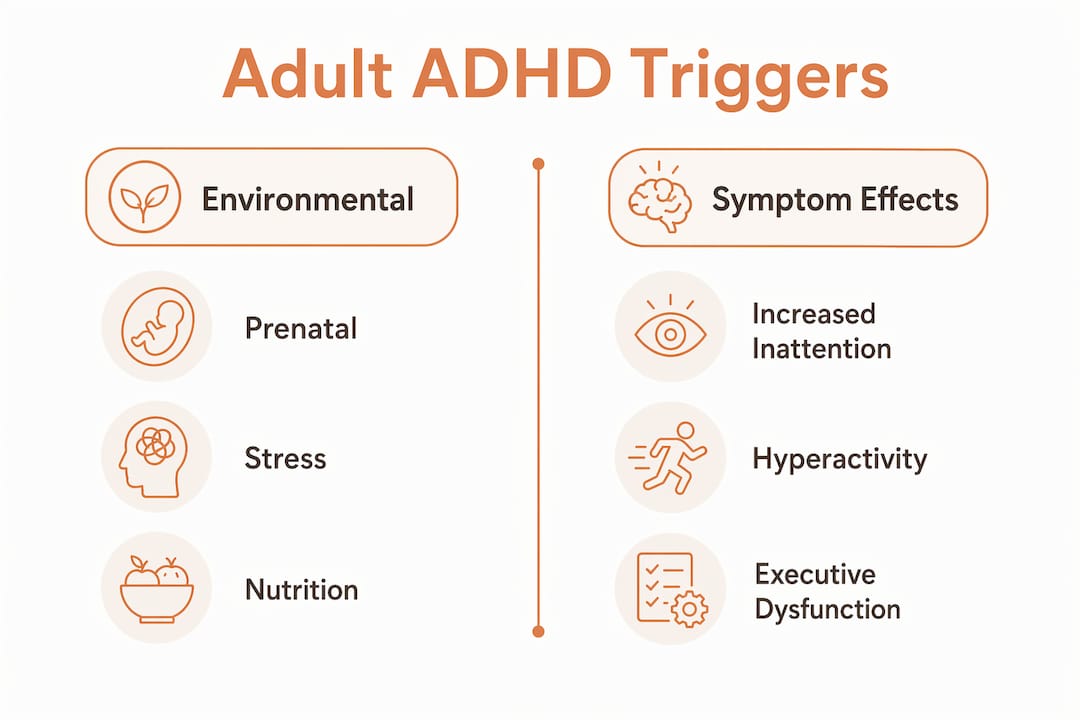
Prenatal exposures carry some documented risk. Fetal alcohol exposure and complications during birth have been linked to higher rates of ADHD diagnosis. These factors may affect early brain development, but they are not the primary cause for most adults with the condition.
Childhood environment and trauma influence symptom expression rather than origin. A highly structured home or school setting can suppress visible symptoms for years. When that structure disappears in adulthood, the underlying neurological differences become harder to compensate for.
Common environmental factors that affect symptom severity include:
- Chronic stress: Elevates cortisol, which impairs prefrontal cortex function and worsens focus.
- Sensory overload: Open offices, loud environments, and constant notifications amplify distractibility.
- Digital overstimulation: Rapid content consumption trains the brain to expect constant novelty, making sustained tasks feel unbearable.
- Unstructured adult life: Without school schedules or parental oversight, adults must self-regulate entirely, exposing gaps in executive function.
- Sleep deprivation: Reduces cognitive reserve, making ADHD symptoms significantly more pronounced.
The key insight here is that life stressors exacerbate symptoms in a lifelong condition. They do not create ADHD from scratch. Recognizing this distinction reduces self-blame and points you toward the right kind of help.
Why do some adults think they develop ADHD later in life?
ADHD does not appear suddenly in adulthood. Adults who receive a first diagnosis at 30, 40, or 50 have had the condition their entire lives. What changes is the environment, not the brain.
Protective factors like high cognitive ability or structured childhood environments can mask symptoms for decades. A highly intelligent child may compensate for attention deficits through sheer mental effort. A student in a rigid, predictable school system may never need to self-organize enough to notice the deficit. These compensatory mechanisms are real and powerful.
Adult responsibilities strip away those protections. Consider what changes when you leave school:
- No external schedule. You must create your own structure for work, finances, relationships, and health.
- Higher cognitive load. Adult life demands simultaneous management of multiple complex systems.
- Reduced supervision. No teacher or parent monitors your progress or redirects your attention.
- New relationship demands. Emotional regulation and communication become more critical, exposing impulsivity or inattention.
- Career pressure. Sustained performance in a single role over years can be harder than rotating through school subjects.
Diagnosis is also complicated by high comorbidity with depression and anxiety. Adults with ADHD are more likely to develop mood disorders, and those mood disorders can look like the primary problem. A thorough psychiatric evaluation separates ADHD from anxiety, depression, and other conditions that share overlapping symptoms. You can learn more about this overlap by reading about comorbid ADHD and anxiety and how it affects treatment decisions.
Pro Tip: When seeking a diagnosis, bring a timeline of your symptoms across different life stages. Providers who see a pattern from childhood through adulthood can make a more accurate assessment.
What role do adult ADHD triggers play in daily function?
Adult ADHD triggers are conditions that intensify existing symptoms. They do not cause ADHD, but they can make a manageable condition feel unmanageable. Identifying your personal triggers is one of the most practical steps you can take toward better daily function.
Common triggers include lack of sleep, chronic stress, irregular routines, sensory overload, and certain foods. Blood sugar fluctuations, in particular, are frequently overlooked. When blood sugar drops, prefrontal cortex function declines, and focus deteriorates rapidly. Eating irregularly or skipping meals can trigger a symptom flare that feels indistinguishable from a “bad ADHD day.”
| Trigger | Effect on symptoms | Management approach |
|---|---|---|
| Sleep deprivation | Reduces attention span and impulse control | Maintain a consistent sleep schedule |
| Chronic stress | Elevates cortisol, impairing executive function | Structured stress reduction practices |
| Irregular meals | Blood sugar drops impair prefrontal function | Regular meals with balanced macronutrients |
| Sensory overload | Amplifies distractibility and emotional reactivity | Noise-canceling headphones, quiet workspaces |
| Unstructured time | Removes external scaffolding for focus | Time blocking and daily planning routines |
Tracking your triggers through a daily journal gives you data, not guesses. After two weeks, patterns become visible. You may find that your worst focus days follow poor sleep, or that afternoon crashes correlate with skipped lunches. That information directly shapes how you and your provider approach managing ADHD symptoms over time.
Multimodal treatment combining stimulant medication, cognitive behavioral therapy (CBT), and lifestyle changes produces the best outcomes for adults with ADHD. Medication addresses the neurological deficit. CBT builds the behavioral skills that medication alone cannot teach. Lifestyle changes reduce the frequency and intensity of trigger-driven flares. All three work together, and understanding the causes of your ADHD makes each component more effective.
Key Takeaways
Adult ADHD is a lifelong neurodevelopmental condition driven by genetics and brain structure differences, not life events or personal choices, and understanding its causes directly improves how you manage it.
| Point | Details |
|---|---|
| Genetics is the primary cause | Heritability reaches 70–80%, making family history the strongest single risk factor. |
| Brain structure differs | A thinner prefrontal and parietal cortex impairs executive function and attention regulation. |
| Environment shapes severity | Stress, poor sleep, and sensory overload worsen symptoms but do not create ADHD. |
| Late diagnosis is not late onset | Adults masked symptoms with cognitive ability or structure; the condition existed from childhood. |
| Multimodal treatment works best | Combining medication, CBT, and lifestyle changes addresses both neurology and behavior. |
What I’ve learned from watching adults finally understand their ADHD
The most common reaction I see when adults receive an accurate ADHD diagnosis is relief, not alarm. They describe years of feeling like they were failing at tasks that seemed effortless for everyone else. Understanding that the cause is neurological, not characterological, changes everything.
What conventional advice misses is how much lifestyle factors quietly drive symptom severity. Blood sugar, sleep quality, and sensory environment are rarely discussed in a first appointment, yet they can account for dramatic day-to-day variation in how functional someone feels. I’ve seen adults make significant improvements simply by stabilizing their meals and reducing screen time in the hour before bed, before any medication adjustment.
The other thing worth saying plainly: anxiety and ADHD frequently travel together, and treating only one leaves the other untreated. A thorough evaluation that screens for both conditions is not optional. It is the foundation of a treatment plan that actually works. Compassion toward yourself matters here too. You are not managing a character flaw. You are managing a brain that works differently, and that brain responds well to the right support.
— Jamie
Personalized ADHD care at Journeymhw
Adults who understand their ADHD causes are better positioned to act on that knowledge with the right clinical support.
Journeymhw offers personalized ADHD treatment for adults through telehealth, with providers in Texas and Colorado. The care model combines psychiatric evaluation, medication management, and therapy referrals to address both the neurological and behavioral dimensions of ADHD. For adults dealing with comorbid anxiety or depression, Journeymhw also provides anxiety treatment and depression treatment as part of an integrated approach. Appointments are available quickly, and the process is designed to reduce the delays that often stand between adults and the care they need.
FAQ
What is the main cause of ADHD in adults?
The primary cause of adult ADHD is genetic inheritance, with heritability rates of 70–80%. Structural brain differences in the prefrontal and parietal cortex also contribute directly to the condition.
Can stress or trauma cause adult ADHD?
Stress and trauma do not cause ADHD, but they can significantly worsen existing symptoms. ADHD is a neurodevelopmental condition present from birth, not one triggered by life events.
Why was my ADHD not diagnosed until adulthood?
High cognitive ability, structured environments, and strong support systems can mask ADHD symptoms through childhood. Adult responsibilities remove those compensatory structures, making the condition more visible.
How do I know if I have ADHD or anxiety?
ADHD and anxiety share overlapping symptoms, including poor concentration and restlessness, but have different causes and treatments. A comprehensive psychiatric evaluation is the only reliable way to differentiate between them.
What is the most effective way to manage adult ADHD?
Multimodal treatment combining stimulant medication, CBT, and lifestyle modifications produces the best outcomes. Tracking personal triggers through journaling also helps you and your provider fine-tune your care plan.