

Trauma Informed Therapy: Your Guide to Healing
Trauma informed therapy is defined as a care approach that recognizes how widespread trauma is and reshapes every part of treatment around safety, trust, and client empowerment. Unlike a single technique, it is a philosophy that changes how a therapist asks questions, sets up the room, and responds when you feel overwhelmed. SAMHSA’s six core principles of safety, trustworthiness, peer support, collaboration, empowerment, and cultural sensitivity form the recognized standard for this approach. The central shift is moving from “What is wrong with you?” to “What happened to you?” reducing shame and opening the door to real healing.
What is trauma informed therapy and how does it differ from trauma-focused care?
Trauma informed therapy and trauma-focused therapy are related but not the same thing. Understanding the difference helps you choose the right path and set realistic expectations.
Trauma informed therapy is a framework. It shapes the entire therapeutic relationship, the language a clinician uses, and the environment they create. A trauma informed therapist does not necessarily guide you through processing specific traumatic memories. Instead, they make sure every interaction feels safe, respectful, and free of judgment. This framework can apply to any mental health setting, from a psychiatry appointment to a group therapy session.
Trauma-focused therapies, by contrast, are specific treatment methods designed to target traumatic memories directly. Two of the most researched are:
- EMDR (Eye Movement Desensitization and Reprocessing): Sessions typically last 60–90 minutes, with a full course running 6–12 sessions weekly or biweekly. EMDR uses guided eye movements to help the brain reprocess distressing memories.
- TF-CBT (Trauma-Focused Cognitive Behavioral Therapy): Treatment spans 12–25 sessions delivered over 3–6 months, often at a pace of three sessions per month. TF-CBT combines talk therapy with skill-building to change how trauma memories affect thoughts and behavior.
The table below shows how these approaches compare across key dimensions.
| Feature | Trauma informed therapy | Trauma-focused therapy (EMDR, TF-CBT) |
|---|---|---|
| Primary goal | Create a safe therapeutic environment | Process specific traumatic memories |
| Scope | Framework applied across all care | Targeted treatment modality |
| Memory processing | Not required | Central to treatment |
| Typical session focus | Stabilization, trust, empowerment | Trauma reprocessing |
| Who delivers it | Any trained clinician | Specially trained therapists |
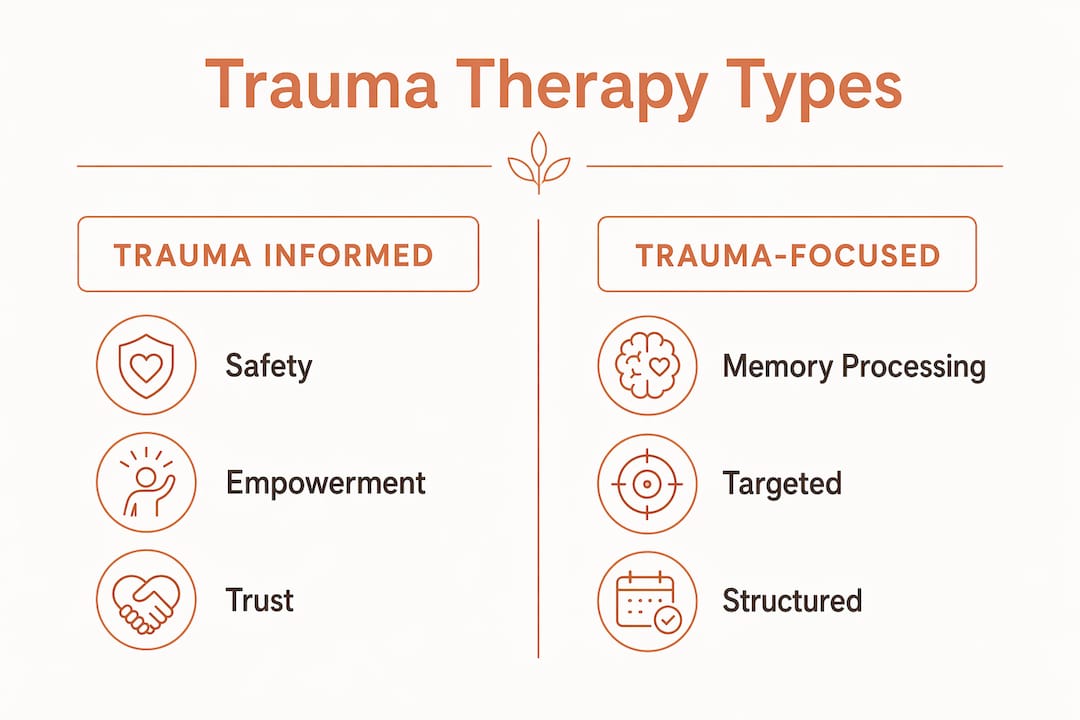
One common misconception is that trauma informed care forces you to recount every painful memory. It does not. The framework actually protects you from being pushed into processing before you are ready. Trauma-focused methods like EMDR are only introduced when a solid foundation of safety and stabilization is already in place.
A structured mental health treatment plan often combines both: the trauma informed philosophy guides the relationship, while specific trauma-focused techniques address memories when the time is right.
How do the six core principles shape real therapy sessions?
SAMHSA’s six principles are not abstract ideals. Each one produces concrete, observable behaviors in a therapy session.
- Safety: The therapist explains what will happen before it happens. You always know what to expect, and you can stop or redirect the session at any point.
- Trustworthiness: The therapist is transparent about their methods, your treatment plan, and any limits to confidentiality. There are no surprises.
- Peer support: Group formats or peer-led programs are offered when appropriate, because shared experience reduces isolation and builds hope.
- Collaboration: Your therapist treats you as an equal partner. Goals are set together, not handed down. You have real input into the pace and direction of care.
- Empowerment: The focus is on your strengths, not your deficits. A trauma informed therapist highlights what you have survived and what skills you already carry.
- Cultural sensitivity: The therapist recognizes that trauma is shaped by race, gender, identity, and community. They avoid assumptions and adapt their approach to your specific background.
These principles prevent retraumatization, which is the risk of a therapy session itself triggering a trauma response. Empowerment, peer support, and collaboration are especially critical for keeping that risk low.
Pro Tip: Before your first appointment, ask a potential therapist directly: “How do you apply trauma-informed principles in your practice?” A well-trained clinician will give you a specific, confident answer. Vague responses are a signal to keep looking.

What should you expect in trauma informed therapy sessions?
The first phase of trauma informed therapy focuses entirely on safety and stabilization. No therapist trained in this approach will push you into trauma processing before you feel grounded and secure. This phase can last weeks or months, and that is by design.
A key concept here is the window of tolerance. This is the zone of emotional activation where you can process difficult feelings without shutting down or becoming overwhelmed. Your therapist works to keep you inside that window. When you drift outside it, either through emotional flooding or complete numbness, processing stops and grounding begins.
Here is what a typical progression looks like:
- Building the relationship. Your therapist establishes trust through consistent, transparent communication. You learn the structure of sessions and what you can control within them.
- Developing coping skills. Before any trauma content is introduced, you practice grounding techniques such as controlled breathing, body scans, or sensory anchoring. These become your tools for managing distress.
- Stabilization. You and your therapist assess your daily functioning, support systems, and emotional regulation. Stability in daily life is a prerequisite for deeper work.
- Client-led pacing. You decide when you feel ready to move toward trauma processing. A trauma informed therapist follows your lead, not a predetermined schedule.
- Responding to overwhelm. A skilled trauma informed therapist adjusts pace instantly if you feel flooded, returning to grounding techniques and emotional regulation before continuing.
Healing requires dual awareness of traumatic memories and present-moment safety. This means you hold both at once: the memory of what happened and the clear knowledge that you are safe right now. That dual awareness is what allows integration without retraumatization.
Pro Tip: If a session ever feels too fast or too intense, say so. A trauma informed therapist expects this and welcomes it. Slowing down is not a setback. It is the work.
What does the research say about the benefits of trauma therapy?
The evidence for trauma-focused therapy within a trauma informed framework is strong and growing. A 2026 King’s College London study with 305 participants found that trauma-focused therapy is safe and highly acceptable, even in complex populations that include people with both PTSD and psychosis. That finding matters because clinicians have historically avoided trauma processing with this group out of fear of destabilization.
The same study reported a disengagement rate of just 6.5% over nine months. That is a remarkably low dropout figure for any psychotherapy trial, and it reflects how well a trauma informed approach keeps people engaged in care.
“Patients often have similar improvement expectancies for trauma-focused and non-trauma-focused treatments. Severe trauma does not reduce preference for trauma-focused care.” — 2026 study on treatment preferences among veterans with co-occurring PTSD and substance use disorder.
This finding challenges the assumption that people with severe trauma histories will avoid or resist direct trauma processing. Research shows patients with severe symptoms actually maintain strong expectations for improvement when given the choice. The takeaway is clear: individualized care, not a one-size-fits-all protocol, produces the best outcomes.
For people managing depression and anxiety alongside trauma, the trauma informed framework is especially valuable. It addresses the root causes of emotional dysregulation rather than treating symptoms in isolation.
Key Takeaways
Trauma informed therapy is the most effective foundation for mental health care when safety, trust, and client empowerment guide every step of the therapeutic process.
| Point | Details |
|---|---|
| Framework, not a technique | Trauma informed therapy shapes the entire care environment, not just specific interventions. |
| SAMHSA’s six principles | Safety, trustworthiness, peer support, collaboration, empowerment, and cultural sensitivity define the standard. |
| Stabilization comes first | Therapists build safety and coping skills before any trauma processing begins. |
| Strong research backing | A 2026 King’s College London study found a 6.5% dropout rate, confirming high acceptability even in complex cases. |
| Client-led pacing | You control the speed of treatment. Slowing down is a clinical tool, not a failure. |
What I have learned about finding the right trauma informed therapist
People often come to trauma therapy with one fear above all others: they will be forced to relive the worst moments of their lives in graphic detail. That fear is understandable. It is also, in my experience, the single biggest reason people delay getting help.
What I have seen consistently is that the quality of the therapeutic relationship matters more than the specific technique used. A therapist who genuinely applies trauma informed principles, who slows down when you signal distress, who asks rather than tells, and who treats your cultural background as relevant, will produce better outcomes than a technically skilled clinician who ignores those principles.
Ask direct questions before committing to a therapist. Ask how they handle sessions when a client feels overwhelmed. Ask what their approach is to pacing. Ask whether they have training in EMDR, TF-CBT, or narrative therapy for trauma. Their answers will tell you more than any credential on the wall.
The research on treatment preferences confirms something I find encouraging: people with serious trauma histories do not shy away from processing when they trust the environment. The work is hard, but it is not as dangerous as fear makes it seem. The right therapist makes that difference concrete and felt from the very first session.
— Jamie
Personalized mental health care that puts your safety first
Trauma informed care works best when it is built into every layer of your treatment, not added as an afterthought. At Journeymhw, we design care around the same principles that define effective trauma informed therapy: safety, transparency, and personalized support.
Journeymhw offers virtual psychiatric evaluations and structured treatment plans for anxiety, depression, and ADHD, with quick appointment availability and care pathways built for real people with complex histories. Whether you are taking a first step or looking for a more supportive approach to ongoing care, our team is ready to meet you where you are. Learn more about our approach to care or book an appointment to get started.
FAQ
What is trauma informed therapy?
Trauma informed therapy is a care philosophy that recognizes the widespread impact of trauma and prioritizes safety, trust, and empowerment in every therapeutic interaction. It is a framework applied across all mental health care, not a single treatment technique.
Does trauma informed therapy require me to talk about my trauma?
No. Trauma informed therapy prioritizes stabilization and safety before any trauma processing begins. You set the pace, and a trained therapist will never push you into discussing traumatic memories before you feel ready.
How is trauma informed care different from EMDR or TF-CBT?
EMDR and TF-CBT are specific trauma-focused treatments that target traumatic memories directly. EMDR runs 6–12 sessions and TF-CBT spans 12–25 sessions. Trauma informed care is the broader framework that makes those treatments safe and effective.
Is trauma therapy safe for people with complex mental health conditions?
A 2026 King’s College London study found trauma-focused therapy safe and acceptable even for people with both PTSD and psychosis, with a dropout rate of only 6.5% over nine months. That evidence supports its use across a wide range of complex presentations.
How do I know if a therapist is truly trauma informed?
Ask them directly how they apply trauma informed principles, how they respond when a client feels overwhelmed, and what training they have in recognized methods. A genuinely trauma informed clinician will answer with specifics, not generalities. You can also review your first appointment checklist to prepare the right questions.