

SSRI Medication for Anxiety: What You Need to Know
Selective serotonin reuptake inhibitors (SSRIs) are medications defined by their ability to increase serotonin availability in the brain, making them the first-line pharmacotherapy for anxiety disorders. If you are wondering what SSRI medication does for anxiety, the short answer is this: SSRIs block the reabsorption of serotonin between nerve cells, leaving more of it active in the brain to regulate mood and reduce anxious symptoms. The FDA has approved several SSRIs specifically for anxiety-related conditions, and clinical tools like the Hamilton Anxiety Rating Scale measure how well they work. Understanding how these medications function, what to expect, and how to use them alongside therapy gives you a much stronger foundation for making treatment decisions.
How do SSRIs work to relieve anxiety symptoms?
SSRIs work by preventing neurons from reabsorbing serotonin after it is released. This leaves more serotonin available in the space between nerve cells, called the synapse, where it continues to signal and regulate mood. Over time, this shift in serotonin activity changes how the brain processes fear, stress, and worry.
One of the most important and least discussed effects of SSRIs is neuroplasticity. SSRIs promote neuroplasticity, meaning they help the brain become more flexible and capable of forming new patterns. That flexibility is what allows behavioral therapies to take hold and produce lasting change. Without it, old anxiety patterns tend to reassert themselves even when you feel temporarily better.
SSRIs do not cure anxiety on their own. They create the neurological conditions that make recovery possible. Think of them as preparing the ground so that therapy and behavioral work can actually grow.
Timing matters here. Initial therapeutic effects may appear within a few weeks, but meaningful symptom improvement typically takes up to 6 weeks. Patients who stop early because they feel no change at week two are often quitting right before the medication begins to work.

Pro Tip: Keep a simple daily log of your mood, sleep, and anxiety levels during the first 6 weeks. This gives your provider concrete data to assess whether the medication is working and at what dose.
Are SSRIs effective for anxiety disorders?
The clinical evidence for SSRIs in anxiety treatment is strong. A 2025 Cochrane review on generalized anxiety disorder found that SSRIs produce a 50% symptom reduction on the Hamilton Anxiety Rating Scale with a Number Needed to Treat (NNT) of 6 over 8 to 12 weeks. An NNT of 6 means that for every six patients treated, one achieves significant improvement that would not have occurred with a placebo. That is a clinically meaningful result.
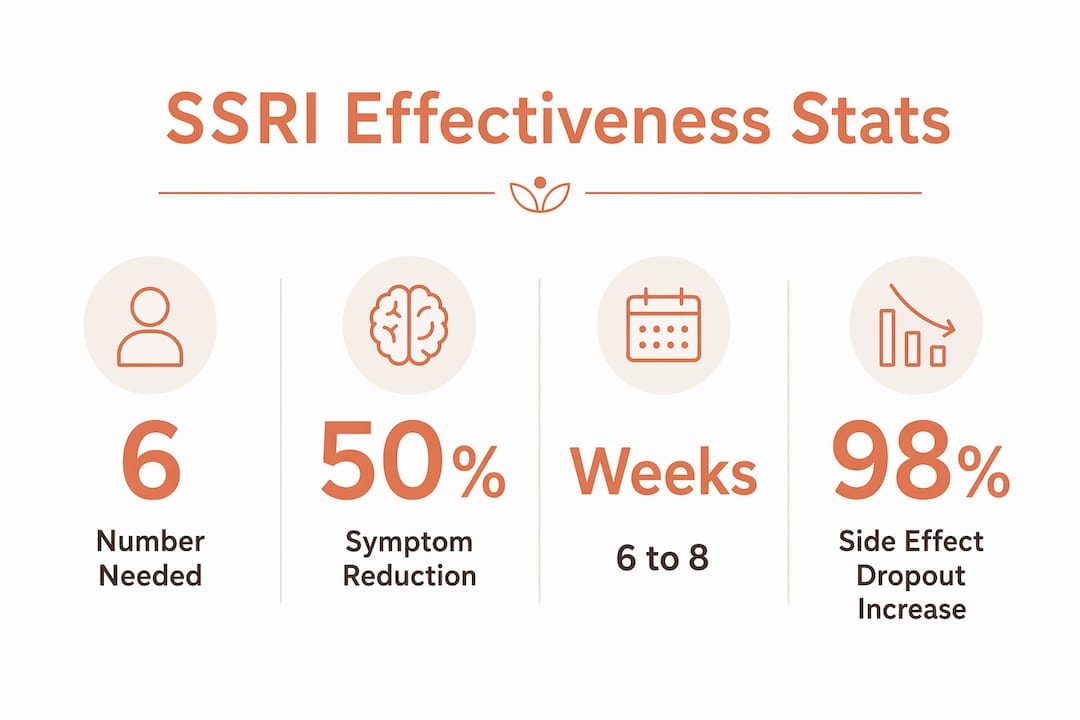
For context, many widely accepted medical treatments have NNTs in the range of 10 to 20. An NNT of 6 places SSRIs among the more effective pharmacological options available for anxiety. This data supports their status as first-line pharmacotherapy when psychological interventions alone have not produced adequate results.
The table below summarizes the key clinical outcomes from the evidence base:
| Outcome | Detail |
|---|---|
| Symptom reduction threshold | 50% improvement on the Hamilton Anxiety Rating Scale |
| Number Needed to Treat (NNT) | 6 patients treated for 1 to benefit significantly vs. placebo |
| Treatment duration for efficacy | 8–12 weeks in clinical trials |
| Guideline status | First-line pharmacotherapy after psychological interventions |
| Comparison to placebo | Statistically and clinically superior across reviewed trials |
Realistic expectations matter as much as the data. SSRIs reduce symptoms. They do not eliminate anxiety entirely in every patient. Many people experience a meaningful reduction in daily distress, which then allows them to engage more productively with therapy and lifestyle changes. That combination is where the best outcomes come from.
What are the common side effects of SSRIs for anxiety?
Side effects are real, and you deserve a clear picture of them. The most frequently reported issues include gastrointestinal discomfort, sexual dysfunction, agitation, insomnia, and dizziness. These tend to be most noticeable in the first two to four weeks and often ease as your body adjusts.
The risk of stopping treatment due to side effects is quantifiable. Withdrawal due to adverse effects increases by 98% in SSRI groups compared to placebo, with a Number Needed to Harm (NNH) of 24. That means 1 in 24 patients discontinues treatment because of side effects. For most patients, side effects are manageable. For a smaller group, they require a medication change.
Modern SSRIs are more selective than older antidepressants, which reduces the likelihood of side effects like drowsiness and significant weight gain. Better receptor targeting means better tolerability for most people, which is one reason adherence rates have improved compared to earlier generations of antidepressants.
The most serious risk is abrupt discontinuation. Stopping SSRIs suddenly can trigger discontinuation syndrome, which includes symptoms like electric shock sensations (commonly called “brain zaps”), flu-like feelings, and a return of anxiety. These symptoms are often mistaken for the original condition coming back, which can cause unnecessary alarm.
Common side effects to monitor and discuss with your provider:
- Gastrointestinal issues: nausea, diarrhea, or upset stomach, especially in the first few weeks
- Sexual dysfunction: reduced libido or delayed orgasm, which may persist beyond the adjustment period
- Sleep disruption: insomnia or vivid dreams, often manageable by adjusting the time of day you take the medication
- Agitation or restlessness: more common in the early weeks; usually resolves with time or dosage adjustment
- Dizziness: particularly when standing up quickly; typically mild and temporary
Pro Tip: If a side effect feels intolerable, tell your provider before stopping the medication. Doctors can adjust dosages or switch to a different SSRI to find a better fit. You do not have to endure side effects in silence.
How do SSRIs work best alongside therapy and lifestyle changes?
SSRIs work best as part of a broader treatment plan, not as a standalone fix. Clinical guidelines recommend starting anxiety treatment with education and psychological interventions, such as cognitive behavioral therapy (CBT), before initiating medication. SSRIs become the recommended next step when those approaches alone are not enough.
The reason therapy and medication work so well together comes back to neuroplasticity. SSRIs increase the brain’s capacity to change. CBT and other behavioral approaches give the brain specific new patterns to adopt. Combine the two, and you get results that neither produces as reliably on its own. SSRI treatment aims not just to restore chemical balance but to improve quality of life by enabling effective anxiety management strategies.
Here is a practical framework for getting the most from SSRI treatment:
- Start with a full evaluation. A psychiatric provider should assess your specific anxiety disorder, medical history, and any co-occurring conditions like depression before prescribing. You can read more about managing anxiety alongside depression to understand how these conditions interact.
- Engage actively in therapy. CBT, exposure therapy, and acceptance-based approaches all benefit from the neuroplastic window SSRIs open. Passive participation limits results.
- Build consistent behavioral habits. Regular sleep, physical activity, and reduced caffeine intake all support serotonin regulation and reduce baseline anxiety. Medication works better in a stable lifestyle environment.
- Track your progress systematically. Documenting physical and mental changes during treatment helps your provider fine-tune your medication plan and reduces distress when side effects appear.
- Communicate openly with your provider. Medication management is an ongoing process. Dose adjustments, timing changes, and medication switches are all normal parts of finding what works for you.
For adults managing anxiety alongside other conditions, the generalized anxiety disorder treatment guide from Journeymhw offers a detailed look at how clinical evidence translates into personalized care.
Key Takeaways
SSRIs are the most clinically supported pharmacological option for anxiety, with an NNT of 6 confirming their effectiveness when combined with therapy and consistent behavioral engagement.
| Point | Details |
|---|---|
| SSRIs increase serotonin availability | They block reuptake, leaving more serotonin active in the brain to regulate mood and anxiety. |
| Improvement takes 2–6 weeks | Patients should not stop early; meaningful benefits typically appear after several weeks of consistent use. |
| NNT of 6 confirms strong efficacy | One in six patients achieves significant symptom reduction compared to placebo over 8–12 weeks. |
| Side effects are manageable for most | An NNH of 24 means most patients tolerate SSRIs; providers can adjust dosage or switch medications if needed. |
| Therapy multiplies medication benefits | SSRIs enhance neuroplasticity, making CBT and behavioral approaches more effective when used together. |
What I’ve learned about setting realistic expectations for SSRI treatment
After years of working in mental health content and speaking with clinicians and patients, the single biggest mistake I see is treating SSRIs as either a miracle or a failure. Neither framing is accurate, and both lead to poor decisions.
The patients who do best with SSRIs are the ones who go in with a clear understanding of what the medication actually does. It does not erase anxiety. It lowers the neurological noise enough that you can do the real work. That work is therapy, behavioral change, and honest communication with your provider. The medication is the support structure, not the solution.
I also think the side effect conversation is handled badly in most articles. The numbers are real: 1 in 24 patients stops due to side effects. But that also means 23 out of 24 continue. Most people tolerate SSRIs well, especially modern formulations. The key is not to suffer silently. If something feels wrong, say so. Providers can adjust the plan.
The other thing I would tell anyone starting SSRIs is to resist the urge to evaluate the medication at week three. The 2–6 week timeline is not a suggestion. The brain needs time to respond. Stopping early because you feel the same as you did before treatment is one of the most common reasons people conclude that medication “doesn’t work” for them, when in reality they never gave it a real chance.
Patience, documentation, and a good provider relationship are the three things that determine outcomes more than any specific medication choice.
— Jamie
Personalized anxiety care with Journeymhw
Managing anxiety with medication requires more than a prescription. It requires a provider who monitors your response, adjusts your plan, and coordinates care across medication and therapy.
Journeymhw is a telehealth platform offering structured medication management for anxiety, depression, and ADHD from the convenience of your home. The platform connects patients in Texas and Colorado with licensed psychiatric providers who specialize in personalized care plans. If you are ready to get a professional evaluation and discuss whether SSRIs are right for your anxiety, Journeymhw offers quick appointment availability and a clear, supportive process from assessment to treatment. Visit Journeymhw’s anxiety treatment page to learn what a structured care plan looks like for you.
FAQ
What is SSRI medication used for in anxiety treatment?
SSRIs are used to reduce the frequency and intensity of anxiety symptoms by increasing serotonin availability in the brain. They are FDA-approved for several anxiety disorders, including generalized anxiety disorder, social anxiety disorder, and panic disorder.
How long do SSRIs take to work for anxiety?
Initial effects may appear within a few weeks, but meaningful symptom improvement typically takes up to 6 weeks of consistent use. Stopping before that window closes is the most common reason patients incorrectly conclude the medication is ineffective.
What are the most common SSRI side effects for anxiety?
The most frequently reported side effects include nausea, sexual dysfunction, insomnia, agitation, and dizziness. Most side effects are strongest in the first two to four weeks and ease as the body adjusts to the medication.
Can you stop taking SSRIs suddenly?
Stopping SSRIs abruptly can trigger discontinuation syndrome, which includes brain zaps, flu-like symptoms, and a return of anxiety. Always taper off under a provider’s guidance to avoid these effects.
Do SSRIs work better with therapy for anxiety?
Yes. SSRIs promote neuroplasticity, which makes the brain more receptive to behavioral change. Combining SSRIs with CBT or other evidence-based therapies produces better outcomes than medication alone.