

Serotonin and Anxiety Disorders: What You Need to Know
Serotonin is defined as a neurotransmitter that regulates mood, fear responses, and emotional processing across the brain and body. The role of serotonin in anxiety disorders is central to how psychiatry understands and treats conditions like generalized anxiety disorder, panic disorder, and social anxiety disorder. Medications that target serotonin signaling, particularly selective serotonin reuptake inhibitors (SSRIs) and serotonin-norepinephrine reuptake inhibitors (SNRIs), are the most widely prescribed first-line treatments for these conditions. Recent research from 2026 has pushed the field beyond the old “chemical imbalance” model, revealing a far more nuanced picture of how serotonin shapes anxiety at the circuit, genetic, and gut level.
How does serotonin influence anxiety symptoms and brain circuits?
Serotonin does not act uniformly across the brain. Its effects on anxiety depend on which brain region is receiving the signal and which receptor type is activated. This context-dependent action explains why serotonin can both calm and intensify anxiety depending on the situation.

The primary serotonin pathway relevant to anxiety runs from the raphe nuclei in the brainstem to the limbic system, which includes the amygdala and hippocampus. The amygdala processes fear and threat detection. When serotonin transmission in this pathway is disrupted, the amygdala becomes hyperactive, producing the persistent worry, hypervigilance, and physical tension that define most anxiety disorders.
Receptor subtypes determine the specific effect serotonin has at any given site:
- 5-HT1A receptors: Activation at these receptors generally reduces anxiety. Many anxiolytic medications target this receptor subtype to produce a calming effect.
- 5-HT2C receptors: Activation here tends to increase anxiety-related behaviors. High baseline activity at 5-HT2C receptors can actually interfere with the brain’s ability to unlearn fear responses.
- 5-HT3 receptors: These receptors influence nausea and gut signaling, which connects serotonin’s peripheral and central roles.
Serotonin transmission is context-dependent, with varying effects across brain areas tied to anxiety and cognition. This means a medication that helps one person feel calmer may produce agitation in another, depending on which circuits are most active.
Pro Tip: If you feel worse in the first two weeks of starting an SSRI, this is often the 5-HT2C receptor activating before 5-HT1A effects build up. Tell your prescriber rather than stopping the medication on your own.
What medications target serotonin for anxiety disorders treatment?
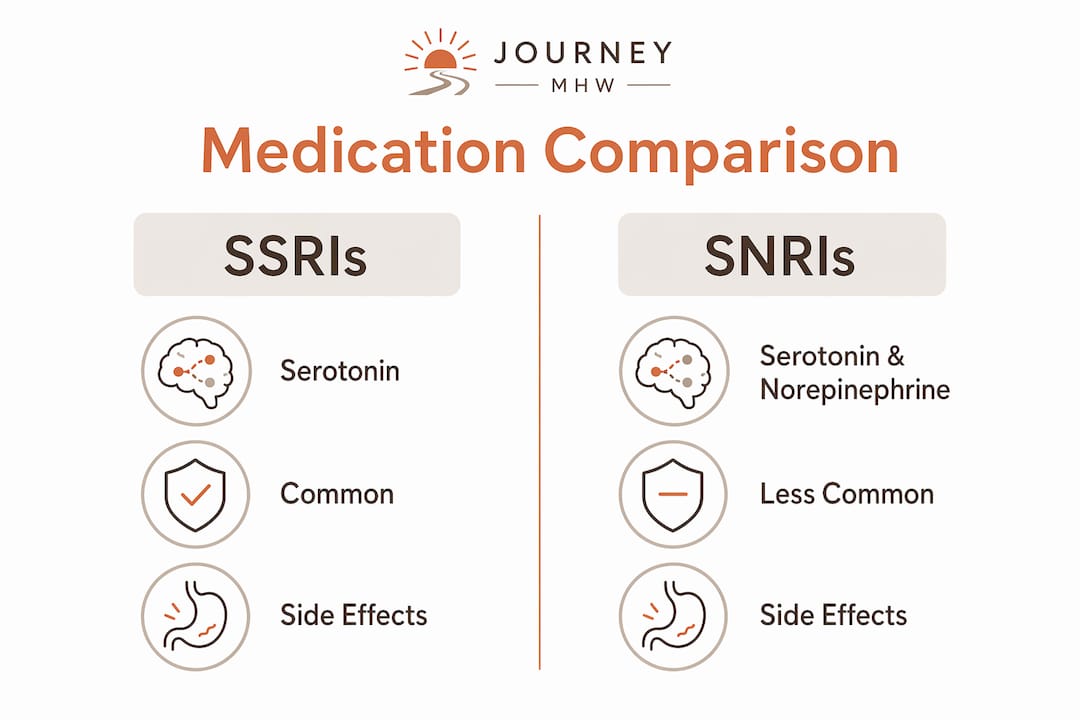
SSRIs and SNRIs are the recommended primary medication classes for anxiety symptom reduction, supported by decades of clinical evidence and a well-established safety profile. They work by blocking the reabsorption of serotonin back into the neuron that released it, leaving more serotonin available in the synapse to bind to receptors.
The mechanism is more complex than simple serotonin boosting. SSRIs trigger a cascade of neuroplasticity changes over weeks, including increased production of brain-derived neurotrophic factor (BDNF) and structural remodeling in the prefrontal cortex and hippocampus. This is why SSRIs take four to six weeks to produce full therapeutic effects, even though serotonin levels change within hours of the first dose.
Common serotonin-based medications for anxiety
- SSRIs (e.g., sertraline, escitalopram, fluoxetine): First choice for most anxiety disorders. Well tolerated, low risk of dependence, and effective across multiple anxiety subtypes.
- SNRIs (e.g., venlafaxine, duloxetine): Target both serotonin and norepinephrine. Particularly useful when anxiety coexists with depression or chronic pain.
- Buspirone: A partial 5-HT1A agonist used for generalized anxiety disorder. Takes several weeks to work but carries no dependence risk.
- Benzodiazepines: Fast-acting but not serotonin-based. Used short-term only due to dependence risk. Not a first-line option for long-term anxiety management.
The table below compares the two primary serotonin-targeting medication classes on key clinical factors.
| Feature | SSRIs | SNRIs |
|---|---|---|
| Primary target | Serotonin reuptake | Serotonin and norepinephrine reuptake |
| Onset of effect | 4–6 weeks | 4–6 weeks |
| Common side effects | Nausea, sleep changes, sexual side effects | Similar to SSRIs, plus elevated blood pressure |
| Best suited for | Most anxiety disorders | Anxiety with depression or pain |
| Dependence risk | Low | Low |
Side effect profiles vary significantly between patients. Genetic and receptor-level variability affects outcomes in serotonin-based treatments, which is why the same SSRI can work well for one person and cause intolerable side effects in another. For a detailed breakdown of how SSRIs work in anxiety management, the SSRI medication guide at Journeymhw covers mechanisms, dosing, and what to expect.
What does new research say about serotonin and anxiety?
The “serotonin deficiency” model, which held that anxiety and depression result from simply having too little serotonin, is now considered too simplistic. Therapeutic effects of SSRIs may stem from broader neuroplasticity and circuit connectivity changes rather than serotonin level correction alone. This shift matters because it explains why SSRIs help some patients but not others, and why the field is moving toward more personalized approaches.
Genetics and individual response
TPH2 gene variants impact serotonin production and anxiety treatment efficacy. TPH2 encodes tryptophan hydroxylase 2, the enzyme that synthesizes serotonin in the brain. Patients with certain TPH2 polymorphisms produce less serotonin at baseline, making them more vulnerable to anxiety disorders and potentially more responsive to SSRIs. Others with high baseline 5-HT2C activity may find that standard SSRIs worsen their ability to extinguish fear memories, a process central to anxiety recovery.
The gut-brain axis
Over 90% of serotonin is produced in the gut, not the brain. This fact reshapes how we think about anxiety treatment. The gut microbiome regulates serotonin synthesis through tryptophan metabolism, and gut dysbiosis, an imbalance in gut bacteria, can disrupt serotonin metabolism and trigger neuroinflammation that worsens anxiety symptoms. A 2025 rodent study found that gut serotonin elevation reduced anxiety-like symptoms, pointing toward the gut-brain axis as a future treatment target.
The table below contrasts the older serotonin deficiency model with the current evidence-based understanding.
| Aspect | Old model | Current understanding |
|---|---|---|
| Core theory | Low serotonin causes anxiety | Serotonin dysregulation across circuits |
| Treatment logic | Raise serotonin levels | Modulate circuits and neuroplasticity |
| Individual variation | Largely ignored | Central to treatment planning |
| Gut involvement | Not considered | Critically important |
| Genetic factors | Not addressed | TPH2 and receptor genetics matter |
Pro Tip: Ask your prescriber about gut health and diet as part of your anxiety treatment plan. Probiotic support and dietary changes that favor microbiome diversity may complement serotonin-based medications.
How does combining medication and therapy improve anxiety outcomes?
The most effective anxiety treatment combines psychotherapy with pharmacotherapy for better symptom control than either approach alone. Cognitive behavioral therapy (CBT) teaches patients to identify and restructure the thought patterns that fuel anxiety. Medication stabilizes the neurochemical baseline that makes those skills easier to practice and retain.
SSRIs and CBT work through complementary mechanisms. Medication reduces the amygdala’s baseline reactivity, making it easier for patients to engage with exposure exercises without being overwhelmed. CBT then builds new neural pathways that support long-term resilience. Medication and psychotherapy work best in tandem because SSRIs modulate physiological brain stress while CBT builds the cognitive skills to manage it.
Practical strategies for combining both approaches effectively include:
- Start medication before intensive exposure therapy. Allowing four to six weeks for the SSRI to stabilize serotonin signaling before beginning exposure-based CBT reduces dropout rates.
- Coordinate your prescriber and therapist. Share progress notes between providers so medication adjustments align with therapy milestones.
- Track symptom changes weekly. Use a simple rating scale to monitor anxiety levels across both treatment components. This helps identify whether medication, therapy, or both need adjustment.
- Plan for maintenance. Most clinical guidelines recommend continuing SSRIs for at least 12 months after symptom remission to prevent relapse. CBT skills, practiced consistently, extend that protection further.
For patients managing anxiety alongside other conditions, the integrated treatment guide at Journeymhw addresses how to coordinate care across multiple diagnoses.
Key Takeaways
Serotonin’s role in anxiety disorders extends far beyond simple neurotransmitter levels. It involves circuit-specific signaling, genetic variability, gut-brain communication, and neuroplasticity, all of which must inform a personalized treatment plan.
| Point | Details |
|---|---|
| Serotonin acts by circuit, not level | Effects on anxiety depend on which brain region and receptor subtype is activated. |
| SSRIs and SNRIs are first-line treatments | Both classes reduce anxiety symptoms through serotonin modulation and neuroplasticity changes. |
| Genetics shape treatment response | TPH2 gene variants influence serotonin synthesis and how well a patient responds to medication. |
| The gut produces most serotonin | Gut microbiome health directly affects brain serotonin levels and anxiety regulation. |
| Combined treatment outperforms either alone | CBT paired with medication produces better and more durable anxiety symptom relief. |
Why I think we’ve been asking the wrong question about serotonin
For years, the clinical conversation around serotonin and anxiety focused almost entirely on quantity. Is there enough serotonin? Is the medication raising it? That framing was useful for building the first generation of treatments, but it led a lot of patients to feel like failures when an SSRI didn’t work for them.
What I find more useful, and what the 2026 research is finally confirming, is thinking about serotonin as a signal that means different things in different places. The same molecule that calms the amygdala can, at a different receptor in a different circuit, make fear harder to unlearn. That’s not a flaw in the system. It’s a feature of a brain that evolved to be context-sensitive. The problem is that our treatments have not always been sensitive enough to match that complexity.
The gut-brain axis finding genuinely surprised me. The idea that 90% of the body’s serotonin lives in the gut, and that a disrupted microbiome can drive anxiety through neuroinflammation, opens up treatment angles that psychiatry has barely begun to use. Diet, probiotics, and gut health are not fringe topics anymore. They belong in the clinical conversation alongside SSRIs and CBT.
My honest view is that the patients who do best are the ones who get a provider willing to treat them as an individual biology, not a diagnosis category. That means looking at genetics when possible, adjusting medications based on actual response rather than protocol alone, and integrating therapy from the start rather than as an afterthought. The science supports this approach. The challenge is building care systems that deliver it consistently.
— Jamie
Anxiety care at Journeymhw: medication, therapy, and personalized support
Journeymhw offers virtual psychiatric evaluations and structured anxiety disorder treatment that integrates evidence-based medications, including SSRIs and SNRIs, with coordinated care pathways designed around your specific symptoms and history.
Patients in Texas and Colorado can access licensed psychiatric providers online, with quick appointment availability and medication management built into every treatment plan. If anxiety is affecting how you function day to day, Journeymhw’s structured approach connects you with the clinical support to address it. Serotonin-based treatment works best when it’s matched to your biology and paired with the right therapeutic support. Journeymhw is built to provide exactly that.
FAQ
What is the role of serotonin in anxiety disorders?
Serotonin regulates fear responses and emotional processing through specific brain circuits, particularly the pathway from the raphe nuclei to the amygdala. Disruptions in serotonin signaling at key receptor sites increase anxiety symptoms and reduce the brain’s ability to extinguish fear memories.
How do SSRIs reduce anxiety symptoms?
SSRIs block serotonin reuptake, increasing its availability in the synapse and triggering neuroplasticity changes over four to six weeks. These changes reduce amygdala reactivity and improve prefrontal cortex regulation of emotional responses.
Why do SSRIs work for some people but not others?
TPH2 gene variants and differences in serotonin receptor activity, particularly at 5-HT2C, create significant individual variation in how patients respond to serotonin-based medications. Genetic testing and close clinical monitoring help identify the right medication and dose.
Does gut health affect anxiety through serotonin?
Yes. Gut dysbiosis disrupts serotonin metabolism and triggers neuroinflammation that worsens anxiety. Since the gut produces over 90% of the body’s serotonin, microbiome health is directly relevant to anxiety regulation and treatment response.
Is CBT or medication more effective for anxiety disorders?
Neither alone outperforms the combination. CBT paired with pharmacotherapy produces better symptom control than either treatment used independently, with medication stabilizing neurochemical function and CBT building lasting cognitive skills.