

4 questions to choose telehealth psychiatric evaluation or assessment
A psychiatric evaluation is a medical, prescriber-led process focused on diagnosis, medication, and safety, while a psychological assessment is a test-based process led by a psychologist to clarify cognitive, personality, or neuropsychological functioning. If you need medication or an urgent safety check, start with a psychiatric evaluation. If you need in-depth testing for learning, memory, or a complex diagnostic question, a psychological assessment is the better fit.
TL;DR:
- Psychiatric evaluations are conducted by prescribers and focus on diagnosis, safety, and medication planning through a structured clinical interview.
- Psychological assessments are carried out by psychologists using test batteries to clarify cognitive, emotional, or neuropsychological functioning in depth.
- Evaluation costs and durations differ: psychiatric visits often last 45 to 90 minutes with same-day results, while assessments can take multiple hours over weeks at a higher cost.
- Screening tools like the PHQ-9 or GAD-7 are quick triage tools and cannot replace comprehensive evaluations or diagnoses.
- Confirm who is conducting the service and whether testing is included before booking to ensure it matches your diagnostic or treatment needs.
Table of Contents
- Psychiatric Evaluation vs. Assessment: What Does a Psychiatric Evaluation Actually Involve?
- Psychiatric Evaluation vs. Assessment: What Is a Psychological Assessment?
- How Do You Choose Between a Psychiatric Evaluation and Psychological Testing?
- What Should You Expect During the Process Itself?
- Do Screening Tools Like the PHQ-9 Replace a Full Evaluation?
- Psychiatric Evaluation vs. Assessment: A Quick Decision Guide
- How Journey Mental Health Supports Your Psychiatric Evaluation
- What Actually Matters Here
- Start Your Psychiatric Evaluation With Journey Mental Health
- Sources
- FAQ
Psychiatric Evaluation vs. Assessment: What Does a Psychiatric Evaluation Actually Involve?
A psychiatric evaluation is a clinical, medically grounded process usually performed by a psychiatrist or psychiatric nurse practitioner, both of whom usually have prescriptive authority which separates it from most other mental health services. We think of it less as a test and more as a structured conversation with a medical purpose.
The American Psychiatric Association’s practice guidelines frame the evaluation as the start of a therapeutic dialogue, not a one-way interrogation. Its core components typically include:
- A clinical interview covering symptoms, history, and current functioning
- A mental status examination assessing speech, mood, thought process, perception, and cognition
- A review of medical history and current medications
- A direct assessment of suicide or homicide risk
- Collateral input from family members or prior clinicians when relevant
Standardized screeners often support this process, but they never substitute for it. The typical outcome is a working diagnosis, a medication plan if appropriate, immediate safety steps if needed, and referrals for further care.
Psychiatric Evaluation vs. Assessment: What Is a Psychological Assessment?
A psychological assessment is a multi-method process led by a licensed psychologist, built around test batteries rather than a prescription pad. It answers a different kind of question: not “what medication might help” but “what exactly is going on cognitively, emotionally, or behaviorally.”
According to the NCBI overview of psychological testing, this is an integrative process that combines standardized tests, interviews, and collateral data with clinical judgment. Test selection depends entirely on the referral question, and no single battery works for every patient. Common categories include:
- Cognitive and neuropsychological tests measuring memory, attention, and processing speed
- Personality inventories exploring emotional and behavioral patterns
- Symptom measures targeting specific concerns like mood or anxiety
- Performance-validity tests confirming results are reliable, not exaggerated or minimized
Results get synthesized into a formal report with interpretation and specific recommendations, according to OC Health’s assessment practice guide. Psychologists typically use this process for learning disabilities, neurocognitive concerns, complicated differential diagnoses, or documentation for disability and legal proceedings.
How Do You Choose Between a Psychiatric Evaluation and Psychological Testing?
The clearest way to separate these two paths is by purpose. A psychiatric evaluation exists to answer medical questions: what’s driving your symptoms, and does medication make sense. A psychological assessment exists to answer diagnostic depth questions: what specifically explains a learning gap, a memory concern, or an unclear diagnosis after standard treatment hasn’t helped.
Here’s how the two compare on the factors that actually matter when you’re deciding:
- Who conducts it — a psychiatrist or psychiatric nurse practitioner runs the evaluation; a licensed psychologist runs the assessment.
- Primary method — interview and mental status exam versus structured test batteries.
- What you receive — a clinical plan with possible medication versus a detailed interpretive report.
- Time and cost — evaluations often run 45 to 90 minutes with brief follow-ups; assessments can span several hours across multiple sessions and cost more upfront.
Neither process is pass or fail. Test results are tools for interpretation, not verdicts, and a psychiatric evaluation works best as a two-way conversation rather than a checklist. When a case is genuinely unclear, both are appropriate, usually sequenced with the psychiatric evaluation first to rule out acute medical or safety issues, followed by testing for deeper diagnostic clarity.
Pro Tip: If a clinician can’t clearly explain which of these two processes you’re getting before your appointment, ask directly. It changes what you should bring and what to expect walking in.
What Should You Expect During the Process Itself?
A standard psychiatric evaluation runs for a typical consultation period, with follow-up visits often shorter once a treatment plan is underway. Psychological testing is a bigger time commitment. It’s common for a full battery to require several hours split across two or more sessions, since sustained attention affects test validity.
The content also differs structurally. A psychiatric visit centers on the mental status exam, medical history, and risk questions. A testing session centers on standardized tasks scored against normative data. According to the Merck Manual, urgent presentations focus narrowly on immediate safety, while scheduled visits allow for the fuller evaluation described above.
A few practical notes worth knowing before you book:
- Psychiatric evaluation results typically get discussed the same day, with a written summary added to your record.
- Psychological assessment reports take longer, often one to three weeks, since scoring and interpretation are more involved.
- Access to your results is generally limited to you, your treating clinicians, and your insurer if the visit was billed through insurance.
- Costs vary by provider and location. Our breakdown of what Texans typically pay for a psychiatric evaluation is a useful reference point, but always confirm current pricing with your insurer or provider directly.
Do Screening Tools Like the PHQ-9 Replace a Full Evaluation?
No. Screening tools are adjuncts, not diagnoses. The PHQ-9 screens for depression severity, the GAD-7 screens for anxiety, and ADHD symptom checklists flag attention and impulsivity patterns worth a closer look. Each one is quick, usually five to ten questions, and useful for triage.
The APA’s guidance on testing and assessment is direct on this point: screeners are useful for baseline measurement, but they cannot replace a thorough clinical interview or standardized testing. Our own look at the GAD-7’s sensitivity shows why a positive score is a starting signal, not a diagnosis. A screener catches most true cases but also produces false positives, which is exactly why a follow-up conversation matters.
- A positive depression or anxiety screen usually warrants a full psychiatric evaluation, especially if medication is on the table.
- A positive ADHD checklist, particularly with academic or cognitive concerns, often points toward psychological testing for a clearer differential.
Psychiatric Evaluation vs. Assessment: A Quick Decision Guide
If your priority is medication, immediate safety, or a fast diagnostic starting point, a psychiatric evaluation is the right first step. If your questions involve learning differences, memory changes, or a diagnosis that’s remained unclear despite treatment, a psychological assessment gives you the depth you need.
- Ask what the visit includes: is testing part of it, or is this a clinical interview only?
- Ask who performs the service, and confirm they can prescribe if medication is a goal.
- Ask about expected length, number of sessions, and turnaround time for results.
- Confirm insurance coverage and payment options before booking.
If you or someone you’re concerned about is in immediate danger, skip this decision process entirely and call 911 or the 988 Suicide and Crisis Lifeline right away.
Pro Tip: Bring a written symptom timeline and current medication list to your first appointment, whichever path you choose. It cuts down on repeat visits and speeds up an accurate diagnosis.
How Journey Mental Health Supports Your Psychiatric Evaluation
Journey Mental Health is a telehealth platform built for adults who want a remote psychiatric diagnosis and medication management without the wait typical of in-person care. It focuses on ADHD, anxiety, and depression, and it’s designed for people in licensed states who want a structured, low-friction way to start treatment.
- Virtual psychiatric evaluations and medication management delivered through streamlined online visits
- Structured care options like The Simple Plan to support ongoing treatment access
- Appointment availability designed to reduce delays between initial contact and seeing a provider
- Educational resources covering evaluation costs, the assessment process, and how to choose the right care plan
Before booking, confirm you’re located in a licensed state, gather your current medication list, and bring a short summary of your main concerns.
What Actually Matters Here
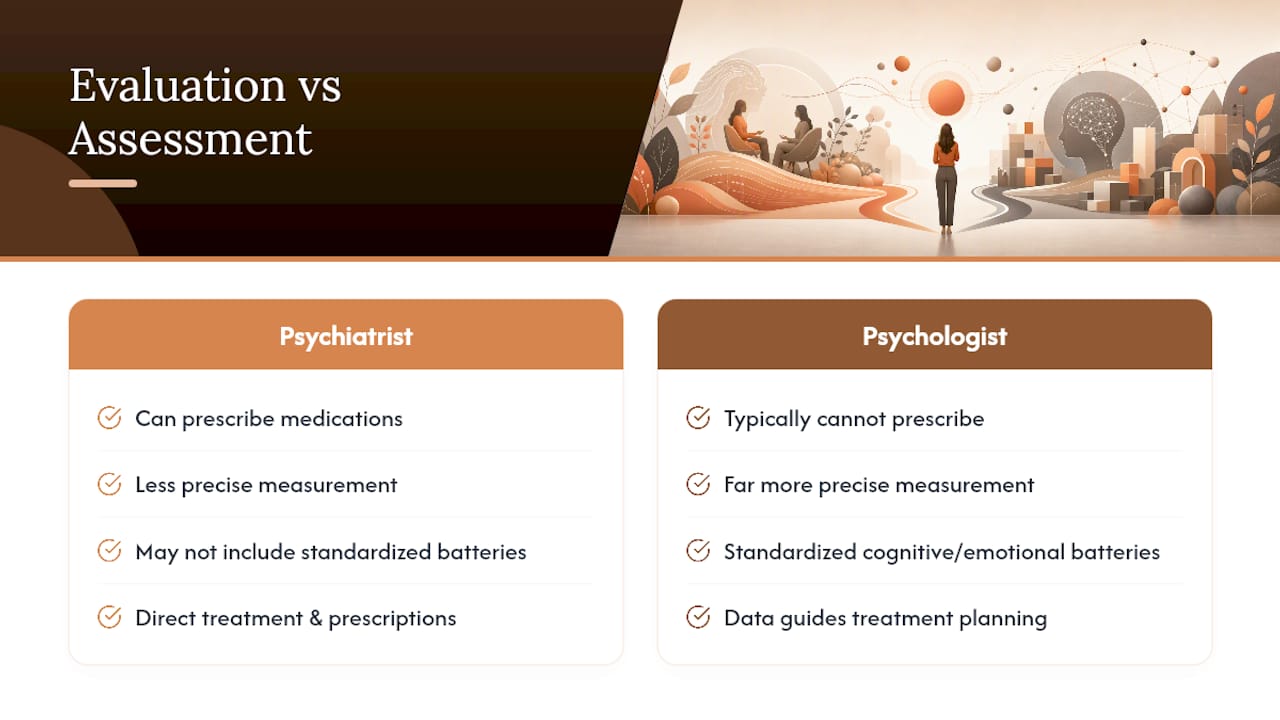
Most explainers on this topic treat “evaluation” and “assessment” as interchangeable buzzwords, and that’s where readers get stuck picking the wrong service. The real dividing line isn’t semantics. It’s prescriptive authority and depth of measurement. A psychiatrist can prescribe; a psychologist typically cannot but can measure cognitive and emotional functioning with far more precision through standardized batteries.
Conventional advice oversells screening tools. A PHQ-9 or GAD-7 score feels definitive because it’s a number, but numbers from a five-minute questionnaire were never meant to carry that much weight. Treat a positive screen as a reason to book an appointment, not as your diagnosis.
If there’s one thing worth prioritizing, it’s asking direct questions before you book: who is conducting the visit, what license they hold, and whether testing is included. That single habit prevents the most common frustration in this space, which is booking the wrong service and losing weeks to a referral loop. A well-run psychiatric evaluation, done right, should feel like a conversation aimed at getting you real answers, not a form to fill out.
— Jamie
Start Your Psychiatric Evaluation With Journey Mental Health
If you’ve read this far and recognize you need medication guidance or a clearer diagnosis rather than a lengthy testing battery, a telehealth psychiatric evaluation is likely your fastest path forward. Journey Mental Health handles this through virtual visits with prescribers, built for adults managing ADHD, anxiety, or depression from home.
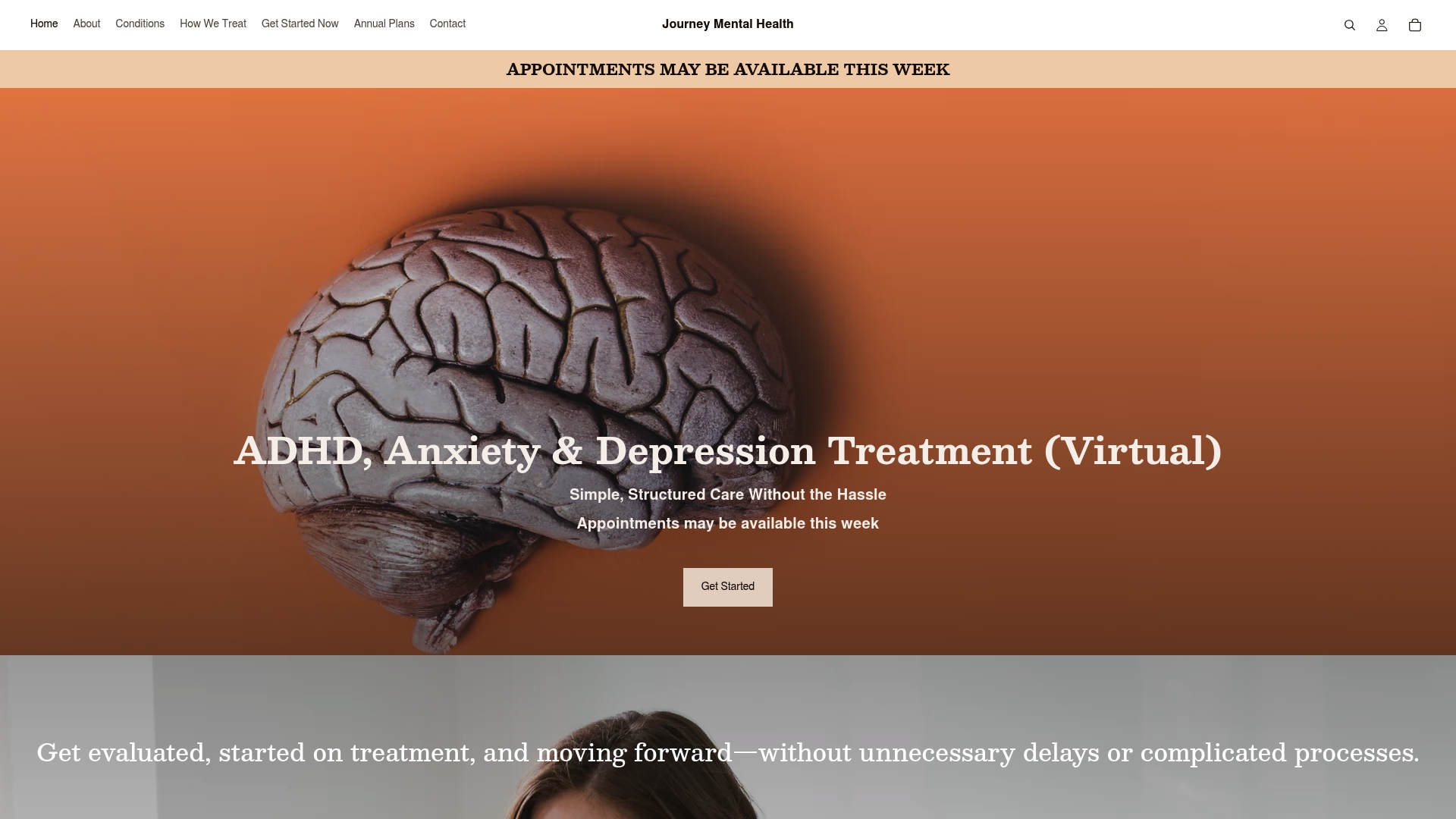
Getting started takes three steps: confirm you’re in a state where Journey Mental Health is licensed, book your evaluation online, and gather your current medication list and a brief symptom summary beforehand. From there, explore ADHD treatment options or anxiety treatment plans built around ongoing medication management, not a single disconnected visit.
This article is general information, not a substitute for advice from a qualified doctor. Consult a qualified healthcare professional about your own circumstances before acting on anything here.
Sources
- The American Psychiatric Association Practice Guidelines for the Psychiatric Evaluation of Adults
- Overview of Psychological Testing — NCBI Bookshelf
- Merck Manual Professional — Initial psychiatric assessment
- Psychological Assessment and Evaluation practice guide (OC Health) — April 2026
FAQ
Is There a Difference Between Assessment and Evaluation?
Yes. Assessment generally emphasizes data collection and integration through interviews and testing, while evaluation often denotes the resulting clinical judgment or diagnostic conclusion, according to research on the distinction. In practice, the terms overlap, but a psychiatric evaluation leans medical while a psychological assessment leans diagnostic and test-based.
Is a Psychiatric Evaluation Worth It?
For anyone dealing with persistent mood, anxiety, or attention symptoms, especially where medication might help, a psychiatric evaluation is usually the fastest way to get an accurate diagnosis and a treatment plan. Services like Journey Mental Health make that first step accessible through telehealth rather than requiring an in-person wait.
What Should You Avoid Saying During a Psychological Evaluation?
There’s no list of forbidden phrases. Being vague or minimizing symptoms to seem “fine” is the most common mistake, since it limits how accurately a psychologist can interpret your test results. Honest, specific answers produce a more useful report.
Can a Psychologist Perform a Psychiatric Evaluation?
Generally, no. Psychiatric evaluations require prescriptive authority, which psychologists typically don’t hold, so they’re performed by psychiatrists or psychiatric nurse practitioners. Psychologists lead psychological assessments instead, focusing on testing and diagnostic clarification rather than medication management.
How Do ADHD Assessments and Screenings Differ?
An ADHD screening, like a symptom checklist, is a brief tool that flags possible attention or impulsivity concerns in a few minutes. A full ADHD assessment goes further, using structured interviews and sometimes cognitive testing to confirm a diagnosis and rule out overlapping conditions.