

PMHNP Texas: Your 2026 Guide to Psychiatric Care
A Psychiatric Mental Health Nurse Practitioner, or PMHNP, is a licensed advanced practice nurse certified to diagnose and treat mental health conditions using evidence-based methods including medication and therapy. In Texas, PMHNPs serve adults struggling with ADHD, anxiety, depression, and related conditions through both in-person and telehealth appointments. They hold board certification from the American Nurses Credentialing Center (ANCC) and are licensed by the Texas Board of Nursing. If you are searching for a PMHNP Texas provider, understanding exactly what these clinicians offer helps you find the right care faster and with more confidence.
What qualifications do Texas PMHNPs have?
Texas PMHNPs complete rigorous academic and clinical training before seeing patients independently. Board-certified PMHNPs hold either a Master of Science in Nursing or a Doctor of Nursing Practice degree, with clinical hours focused entirely on psychiatric care. After graduation, they sit for the ANCC board certification exam, earning the PMHNP-BC credential. The Texas Board of Nursing then licenses them as Advanced Practice Registered Nurses, or APRNs, before they can practice in the state.

Clinical experience matters as much as credentials. Many Texas psychiatric nurse practitioners bring 4 to 20 or more years of nursing experience before practicing independently. That depth of experience shapes how they read symptoms, adjust medications, and recognize when a patient needs a different level of care. Ongoing education and ANCC credential maintenance keep their knowledge current with evolving psychiatric standards.
Here is what to look for when verifying a provider:
- PMHNP-BC credential: Confirms ANCC board certification in psychiatric mental health nursing
- APRN license: Issued by the Texas Board of Nursing; searchable on the state licensing portal
- Degree level: MSN or DNP from an accredited nursing program
- Years of experience: Relevant psychiatric nursing experience prior to independent practice
- Specialty focus: Some providers specialize in adults, others in children or older adults
Pro Tip: Before your first appointment, search the Texas Board of Nursing license verification tool online to confirm your provider holds an active, unrestricted APRN license.
How do PMHNPs diagnose and treat ADHD, anxiety, and depression?
The diagnostic process starts with a thorough psychiatric evaluation. Your provider will gather a detailed history of your symptoms, past treatments, family mental health history, and current medications. This first session is not a quick checklist. It is a structured clinical interview designed to build an accurate picture of your condition before any treatment begins.
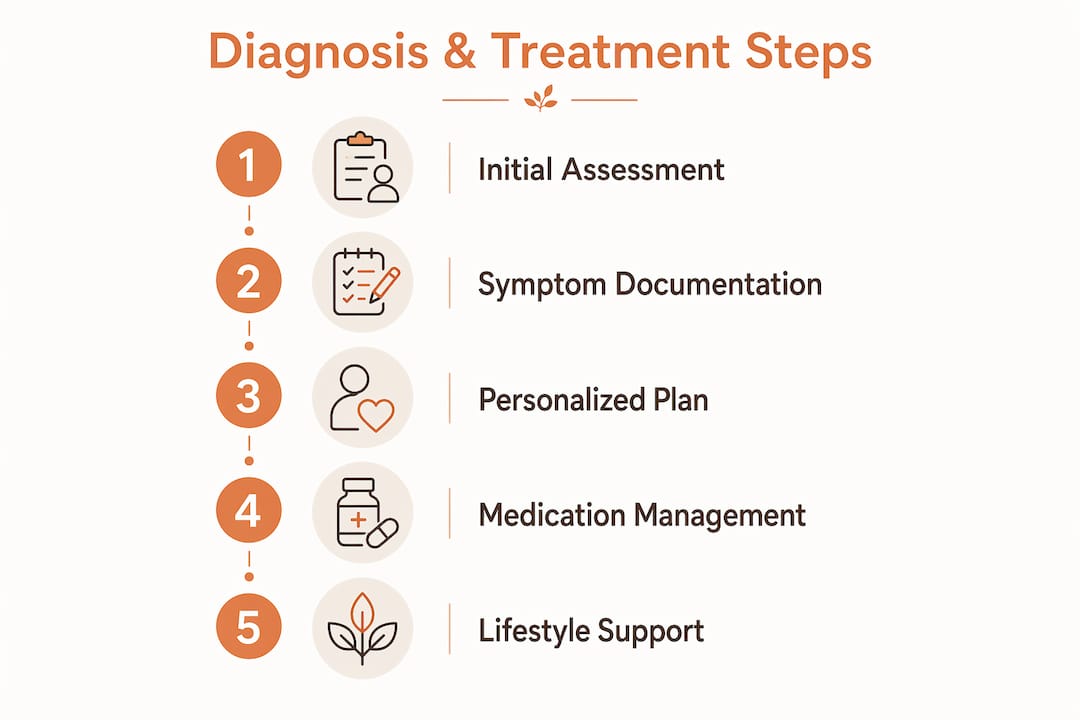
Treatment for conditions like ADHD, anxiety, and depression typically follows these steps:
- Initial psychiatric evaluation: Comprehensive symptom review, history, and functional assessment to establish a diagnosis
- Personalized treatment plan: A written plan covering medication options, therapy recommendations, and lifestyle factors tailored to your specific needs
- Medication management: Evidence-based prescribing with careful attention to dosage, side effects, and your response over time
- Psychotherapy integration: Many PMHNPs are trained in techniques like Cognitive Behavioral Therapy and mindfulness, providing care beyond prescriptions
- Progress monitoring: Regular follow-up appointments to assess how well the current plan is working and make adjustments as needed
- Collaborative referrals: When specialized therapy is needed, your PMHNP coordinates with therapists or other clinicians for integrated care
Medication alone rarely produces the best outcomes. Providers who address both medications and lifestyle factors report better patient results, which is why discussions about sleep, exercise, stress triggers, and coping strategies are a standard part of each visit. For adults managing ADHD treatment in Texas, this integrated approach is especially important because attention and executive function respond well to combined medication and behavioral strategies.
Pro Tip: Write down your three most disruptive symptoms before your first appointment. Specific examples, like “I miss deadlines at work” or “I wake up anxious at 3 a.m.,” give your provider far more useful clinical data than general descriptions.
What are the options for accessing PMHNP care in Texas?
Texas residents have more access options in 2026 than ever before. You can choose between in-person clinics, private psychiatric practices, and telehealth services that cover the entire state. Each option has practical trade-offs worth understanding before you book.
In-person care
Private practices and outpatient mental health clinics operate across major Texas cities including Houston, Dallas, Austin, and San Antonio. In-person visits work well for patients who prefer face-to-face interaction or who need physical assessments alongside psychiatric care. Wait times at in-person practices vary widely depending on location and provider availability.
Telehealth psychiatric care
Telehealth psychiatry by PMHNPs is available statewide in Texas, but providers must hold a Texas license and the patient must be physically located in Texas during the appointment. This licensing rule matters if you travel frequently or split time between states. Telehealth removes commute time, reduces scheduling friction, and makes care accessible for patients in rural areas where in-person psychiatric providers are scarce.
Many practices in 2026 offer online booking or phone intake with initial contact available within 24 hours and appointments often scheduled within 24–48 hours. That speed is a meaningful improvement over traditional psychiatry wait times, which historically stretched weeks or months.
Here is a practical comparison of access formats:
| Access format | Best for | Typical wait time |
|---|---|---|
| In-person clinic | Patients preferring face-to-face care | Days to weeks |
| Private practice | Continuity with a single provider | Varies by provider |
| Telehealth platform | Statewide access, rural patients, busy schedules | 24–48 hours in many cases |
Financial considerations are real. Accepted insurance plans vary by provider. Always confirm whether your PMHNP is in-network before booking. Many telehealth platforms also offer self-pay rates, and some accept HSA or FSA funds. For anxiety treatment in Texas, telehealth has become a preferred entry point because patients can start care without the barrier of finding a local specialist.
What should patients prepare for a successful PMHNP visit?
Preparation directly affects the quality of care you receive. A well-prepared patient gives their provider the clinical detail needed to make accurate diagnoses and effective treatment decisions. Arriving without that information slows the process and can delay the right treatment by weeks.
Bring or prepare the following before your first appointment:
- Symptom log: Note when symptoms occur, how long they last, and what makes them better or worse
- Medication history: List all current and past psychiatric medications, including doses and reasons for stopping
- Medical history: Include any physical health conditions, allergies, and current non-psychiatric medications
- Family mental health history: Conditions like ADHD, depression, and anxiety often run in families and inform diagnosis
- Goals for treatment: Be specific about what you want to improve, whether that is focus at work, sleep quality, or managing panic attacks
Typical intake sessions focus on listening, understanding your challenges, and building an individualized treatment plan together. Expect your provider to ask open-ended questions and to take time before recommending any medication. Honest communication about your symptoms, including the ones that feel embarrassing, produces better outcomes than presenting a polished version of how you are doing.
Follow-up schedules depend on your condition and treatment phase. Patients starting a new medication typically return within two to four weeks for an early check-in. Stable patients may move to monthly or quarterly visits. Integrated care that combines your PMHNP’s medication management with a therapist’s psychotherapy sessions produces the strongest long-term results for conditions like depression and anxiety. For depression treatment in Texas, ask your provider at the first visit whether a therapy referral makes sense alongside medication.
Key Takeaways
A Texas PMHNP is a board-certified advanced practice nurse who provides complete psychiatric care, including diagnosis, medication management, and therapy, for conditions like ADHD, anxiety, and depression.
| Point | Details |
|---|---|
| PMHNP credentials | Look for PMHNP-BC certification from ANCC and an active APRN license from the Texas Board of Nursing. |
| Care goes beyond medication | PMHNPs use CBT, mindfulness, and lifestyle counseling alongside prescriptions for better outcomes. |
| Telehealth is statewide | Texas-licensed PMHNPs can treat patients anywhere in the state via telehealth, often within 24–48 hours. |
| Preparation improves care | Bringing a symptom log, medication history, and clear goals helps your provider make faster, more accurate decisions. |
| Integrated care works best | Combining PMHNP medication management with therapy referrals produces the strongest results for depression and anxiety. |
PMHNPs are more than prescribers, and that distinction matters
The most common misconception I encounter is that seeing a PMHNP means getting a prescription and leaving. That framing undersells what these providers actually do, and it leads patients to underuse the appointment time they have.
A skilled Texas psychiatric nurse practitioner spends the first session building a clinical picture that no algorithm or quick questionnaire can replicate. They are trained to notice what you say, what you avoid saying, and how those patterns connect to your diagnosis. That clinical judgment is the product of years of nursing experience before they ever sat for the ANCC board exam.
Telehealth has changed access in ways that are genuinely significant. Patients in rural West Texas who previously drove three hours for a psychiatric appointment can now see a licensed PMHNP from their phone. That is not a minor convenience. For someone managing untreated depression or ADHD, weeks of delayed care have real costs in relationships, work performance, and quality of life.
My honest recommendation: treat your PMHNP as a partner, not a gatekeeper to a prescription pad. Bring your questions. Push back if a treatment plan does not feel right. Ask about therapy options. The providers who produce the best outcomes are the ones whose patients show up engaged and honest, not just compliant.
— Jamie
Journeymhw connects Texas adults with licensed PMHNP care
Journeymhw is a telehealth mental health platform serving adults in Texas with licensed PMHNP care for ADHD, anxiety, and depression. Appointments are available quickly, and the entire process from evaluation to medication management happens online, without waiting rooms or long referral chains.
Journeymhw’s providers deliver evidence-based psychiatric evaluations and personalized treatment plans built around your specific symptoms and goals. Whether you are managing attention challenges, persistent worry, or low mood, the platform offers structured care pathways designed to reduce the time between recognizing a problem and getting real support. Learn more about ADHD medication management or review the full range of mental health conditions treated to find the right starting point for your care.
FAQ
What does PMHNP stand for in Texas mental health care?
PMHNP stands for Psychiatric Mental Health Nurse Practitioner. In Texas, these are APRN-licensed clinicians certified by the ANCC to diagnose and treat psychiatric conditions including ADHD, anxiety, and depression.
Can a Texas PMHNP prescribe medication?
Yes. Texas PMHNPs hold prescriptive authority as part of their APRN license, allowing them to prescribe psychiatric medications including stimulants, antidepressants, and anti-anxiety medications.
How is a PMHNP different from a psychiatrist?
A psychiatrist holds an MD or DO degree and completed a medical residency, while a PMHNP holds a nursing degree and advanced psychiatric training. Both can diagnose conditions and prescribe medications; PMHNPs often provide more integrated therapy-based care alongside prescriptions.
Is telehealth with a Texas PMHNP covered by insurance?
Coverage varies by insurance plan and provider. Confirm with your insurer that the PMHNP is in-network before booking, and ask the practice directly about accepted plans and self-pay options.
How quickly can I get an appointment with a PMHNP in Texas?
Telehealth practices in Texas often schedule new patient appointments within 24–48 hours. In-person practices vary, with wait times ranging from a few days to several weeks depending on location and provider availability.