

Panic Attack Help: Immediate Relief and Long-Term Control
Panic attack help is defined as a combination of immediate calming techniques and structured, longer-term treatment strategies that reduce symptoms and restore a sense of control. Panic disorder is the clinical term for recurring, unexpected panic attacks paired with persistent worry about future episodes. The most effective approach combines self-help tools like breathing exercises and grounding methods with professional treatments including cognitive-behavioral therapy (CBT) and medication. This guide covers what to do during an attack, how CBT and medications work, and which lifestyle changes build lasting resilience.
What is the best panic attack help right now?
The fastest relief during a panic attack comes from slowing your breathing and grounding your senses. These two techniques work because they interrupt the physical feedback loop that makes symptoms feel uncontrollable. The NHS recommends staying where you are if possible, breathing slowly and deeply, and reminding yourself that the attack will pass and is not life threatening. That last point matters more than most people realize. Believing you are in danger amplifies every symptom.
Here are the steps to follow during an attack, in order:
- Stay where you are. Moving around or fleeing a situation reinforces the idea that the environment is dangerous.
- Breathe slowly. Inhale for four counts, hold for two, exhale for six. Repeat until your heart rate begins to settle.
- Use the 5-4-3-2-1 grounding method. Cigna Healthcare recommends naming five things you can see, four you can hear, three you can touch, two you can smell, and one you can taste. This pulls your attention away from internal symptoms and back to the present moment.
- Practice progressive muscle relaxation. Tense each muscle group for five seconds, then release. Mayo Clinic highlights progressive muscle relaxation as one of the most effective physical techniques for calming panic symptoms.
- Remind yourself it will pass. Panic attacks typically peak within 10 minutes. Knowing this in advance reduces the fear of the fear itself.
The most common mistake people make is trying to fight or suppress the sensations. Resistance increases intensity. Accepting that the symptoms are uncomfortable but not dangerous is itself a calming act.
Pro Tip: Practice your breathing and grounding techniques when you are calm, not just during attacks. Harvard Health notes that rehearsing calming responses outside of episodes makes them more automatic when you need them most.
How does CBT help manage panic attacks long term?
Cognitive-behavioral therapy is the first-line psychotherapy for panic disorder, and it works by changing how you interpret and respond to physical sensations. Most people with panic disorder have learned to treat normal bodily feelings, like a racing heart or shortness of breath, as signals of danger. CBT corrects that interpretation. Mayo Clinic states that CBT helps people learn panic symptoms are not dangerous by gradually recreating them in a safe setting to reduce fear over time.
The therapy targets three interconnected problems:
- Distorted thinking. CBT teaches you to identify catastrophic thoughts (“I am dying”) and replace them with accurate ones (“This is uncomfortable but temporary”).
- Avoidance behavior. Avoiding places or situations where attacks have occurred feels protective but actually strengthens panic disorder. The Merck Manual explains that CBT uses gradual exposure to panic-provoking situations to desensitize the fear response.
- Interoceptive exposure. This is a specific CBT technique where a therapist deliberately triggers mild physical sensations, like spinning in a chair to cause dizziness, so you learn those sensations are safe. It is one of the most effective tools in the panic disorder toolkit.
The NHS frames therapy not as a way to stop feelings instantly but as a way to change your reactions and develop calmer response patterns over time. That distinction matters. You are not trying to eliminate anxiety. You are learning to move through it without escalating.
CBT typically runs for 12–20 sessions. Skills practiced inside therapy must be applied outside it. Journaling thought records, doing exposure exercises between sessions, and using breathing techniques daily all accelerate progress. You can also explore talking therapies and behavioral treatment options that go beyond standard CBT, including mindfulness-based approaches.

Pro Tip: Ask your therapist specifically about interoceptive exposure. Many patients are not offered it, but it is one of the most direct ways to break the fear-of-symptoms cycle that drives panic disorder.
What medication options support panic attack treatment?
Medication is not a replacement for therapy, but it is a clinically proven tool that reduces the frequency and intensity of panic attacks, especially in the early stages of treatment. Harvard Health confirms that many patients benefit most from a combination of medication and cognitive-behavioral therapies together.
| Medication Type | Examples | Role | Key Consideration |
|---|---|---|---|
| SSRIs | Fluoxetine, Paroxetine, Sertraline | First-choice treatment | Low serious side effects; takes 2–4 weeks to work |
| SNRIs | Venlafaxine | Alternative if SSRIs unsuitable | Similar profile to SSRIs |
| Tricyclic antidepressants | Imipramine | Second-line option | Effective but more side effects |
| Benzodiazepines | Clonazepam, Alprazolam | Short-term symptom relief | Dependency risk with prolonged use |
| Anti-epilepsy medications | Pregabalin | Used when other options fail | Prescribed by specialist |
Mayo Clinic identifies SSRIs like fluoxetine, paroxetine, and sertraline as the first-choice medications for panic disorder. They carry a low risk of serious side effects and are safe for long-term use. Benzodiazepines like clonazepam provide faster relief but carry a real dependency risk. They are appropriate for short-term use during a crisis period, not as a daily maintenance strategy.
A few important points about medication:
- Never stop an SSRI abruptly. Taper under medical supervision to avoid discontinuation symptoms.
- Medication works best when paired with therapy. Pills reduce symptoms; therapy changes the underlying patterns.
- If you are unsure which option fits your situation, a psychiatric evaluation clarifies the picture. You can review antidepressant medication options in detail before your first appointment.
Getting a medical evaluation for your first panic-like episode is also critical. The Merck Manual Professional stresses ruling out life-threatening physical conditions before attributing symptoms to panic disorder. Chest pain and shortness of breath can have cardiac causes. A clean medical evaluation gives you confidence to use self-help tools without second-guessing every symptom.
How can lifestyle changes prevent and reduce panic attacks?
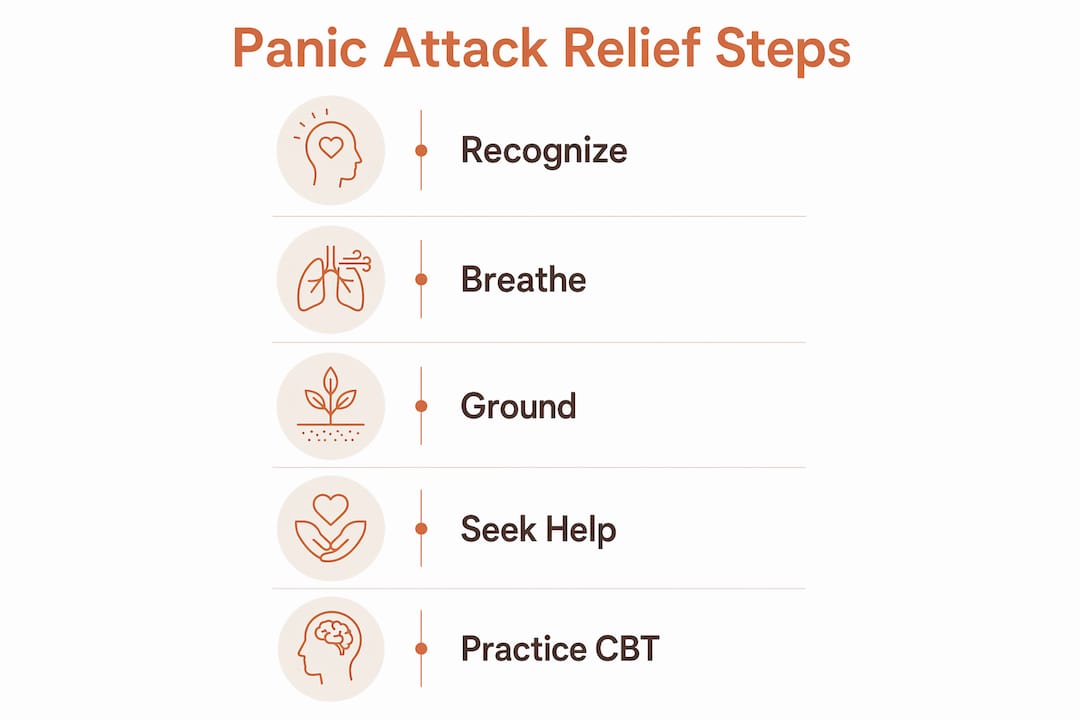
Lifestyle adjustments are not optional extras. They are a core part of reducing attack frequency and building the physical and mental resilience that makes other treatments more effective. The NHS recommends a specific set of lifestyle changes for people managing panic disorder.
The most impactful changes, ranked by evidence:
- Cut caffeine, alcohol, and nicotine. All three directly stimulate the nervous system or disrupt sleep, both of which increase vulnerability to attacks. Many people are surprised to find that cutting coffee alone reduces their attack frequency within two weeks.
- Exercise regularly. Aerobic exercise reduces baseline anxiety by lowering cortisol and increasing endorphins. Aim for at least 30 minutes of moderate activity, five days per week.
- Practice yoga or meditation. Both activate the parasympathetic nervous system, the body’s natural calming response. Even 10 minutes of guided meditation daily produces measurable reductions in anxiety over time.
- Prioritize sleep. Sleep deprivation lowers your threshold for panic. Seven to nine hours per night is not a luxury for someone managing panic disorder. It is a clinical necessity.
- Read CBT-based self-help books. Titles like Panic Attacks Workbook by David Carbonell or Don’t Panic by R. Reid Wilson give you structured tools to use between therapy sessions.
- Join a support group. Connecting with others who experience panic disorder reduces isolation and provides practical coping strategies from people with lived experience.
The Merck Manual notes that relaxation skills reduce anxiety and improve engagement with psychotherapy. That means lifestyle work is not separate from clinical treatment. It makes clinical treatment more effective. You can find a practical starting point in this Colorado anxiety care guide, which covers stress management and trigger reduction in detail.
Pro Tip: Track your attacks in a simple journal. Note the time, location, what you ate, how much you slept, and your stress level that day. Patterns emerge within two to three weeks, and they often reveal triggers you had not consciously connected to your attacks.
Key takeaways
Effective panic attack management requires combining immediate calming techniques, structured therapy like CBT, appropriate medication, and consistent lifestyle changes to reduce both frequency and intensity of attacks.
| Point | Details |
|---|---|
| Use grounding during attacks | The 5-4-3-2-1 sensory method and slow breathing are the fastest tools for relief during an episode. |
| CBT is the gold-standard therapy | Cognitive-behavioral therapy, including interoceptive exposure, changes the fear response at its root. |
| SSRIs are the first medication choice | Fluoxetine, paroxetine, and sertraline are first-line options; benzodiazepines are for short-term use only. |
| Lifestyle changes reduce attack frequency | Cutting caffeine, exercising regularly, and improving sleep directly lower your vulnerability to attacks. |
| Practice skills when calm | Rehearsing breathing and grounding outside of attacks makes them automatic when you need them most. |
What i have learned about managing panic attacks
I have worked with enough people navigating panic disorder to say this clearly: the technique matters less than the practice. Most people learn the 5-4-3-2-1 method or diaphragmatic breathing in a session or from an article like this one, and then they wait for an attack to try it. That approach almost never works well. The nervous system does not perform new skills under pressure without rehearsal.
The other thing I have seen consistently is that anticipatory anxiety, the dread of having another attack, often causes more daily suffering than the attacks themselves. Avoiding the grocery store, the highway, or a crowded office because an attack might happen is how panic disorder quietly shrinks your life. Exposure therapy addresses this directly, and it is the piece most people resist the longest. The discomfort of doing exposures feels like evidence that they are dangerous. It is not. It is evidence that they are working.
My honest observation is that the people who recover most fully are not the ones who found the perfect technique. They are the ones who stopped treating panic as an emergency to be escaped and started treating it as a sensation to be observed. That shift does not happen overnight, and it rarely happens without professional support. Combining self-help with structured care from a qualified provider is not a sign that self-help failed. It is the most effective strategy the evidence supports.
— Jamie
How Journeymhw supports your path to relief
If you are ready to move beyond self-help and into structured care, Journeymhw makes that step straightforward. Journeymhw is a telehealth platform serving patients in Texas and Colorado, offering online psychiatric evaluations, medication management, and personalized treatment plans for anxiety and panic disorder.
You do not need to travel to a clinic or wait months for an appointment. Journeymhw connects you with experienced providers who specialize in conditions like panic disorder, and the process starts with a simple online assessment. Whether you need therapy, medication, or both, the team builds a care plan around your specific situation. Visit the Journeymhw anxiety treatment page to learn more about what structured panic disorder care looks like, or explore the Journeymhw about page to understand the platform’s approach and mission.
FAQ
What should i do first during a panic attack?
Stay where you are, breathe slowly, and use the 5-4-3-2-1 grounding method to focus on your senses. The NHS confirms these steps reduce symptom intensity and help you recognize the attack will pass on its own.
How long does it take for CBT to work for panic disorder?
Most people see meaningful improvement within 12–20 CBT sessions, though some notice changes sooner. Skills practiced consistently outside of therapy sessions accelerate results.
Are medications safe for long-term panic disorder treatment?
SSRIs like sertraline and paroxetine are safe for long-term use and carry low serious side effects. Benzodiazepines like clonazepam are effective short-term but carry dependency risk and are not recommended for ongoing daily use.
Can lifestyle changes alone stop panic attacks?
Lifestyle changes reduce attack frequency and severity but rarely eliminate panic disorder on their own. The NHS recommends combining exercise, sleep hygiene, and caffeine reduction with therapy for the best outcomes.
When should i see a doctor about panic attacks?
See a doctor after your first panic-like episode to rule out cardiac or other medical causes. The Merck Manual stresses that a medical evaluation is the necessary first step before relying on self-help strategies.
Recommended
- What Is Health Anxiety Disorder? Symptoms and Help – Journey Mental Health
- Your Colorado Mental Health Anxiety Care Plan Guide – Journey Mental Health
- Anxiety Treatment in Texas & Colorado | Online Anxiety Help & Medication – Journey Mental Health
- Anxiety Treatment in Texas & Colorado | Online Anxiety Help & Medication – Journey Mental Health