

Online Psychiatric Evaluation Cost: What You'll Really Pay in 2026
Most adults pay between $200 and $500 out of pocket for an initial online psychiatric evaluation, and $75 to $200 for follow-up medication management visits. Insurance is the single biggest factor: with an in-network telepsychiatry benefit, your cost often drops to a modest copay. Provider type and visit length matter too, but coverage decides the bulk of your bill.
TL;DR:
- The median out-of-pocket cost for an initial online psychiatric evaluation is generally between $200 and $500, depending on the platform and location.
- Insurance coverage often reduces costs significantly through copays, with some plans offering virtual visits at parity with in-person care, but verifying network status is essential.
- Follow-up medication management visits typically cost between $75 and $200 and are shorter, which makes them less expensive than the initial assessment.
- Provider type influences cost, with psychiatrists charging more than nurse practitioners, and longer, in-depth evaluations priced accordingly.
- Different payment options, such as sliding scales, subscription plans, and employer-provided benefits, can lower overall expenses, especially when insurance coverage is limited.
Table of Contents
- How Much Does an Online Psychiatric Evaluation Cost?
- How Does Insurance Change Your Out-Of-Pocket Cost?
- Does Seeing a Psychiatrist Instead of an NP Cost More?
- Ways to Lower the Cost of an Online Evaluation
- How Do You Get an Accurate Cost Estimate Before Booking?
- How Journey Mental Health Approaches Pricing and Access
- Speed Versus Cost: What Actually Matters When You Need Care
- Getting Started With Journey Mental Health
- Sources
- FAQ
How Much Does an Online Psychiatric Evaluation Cost?
The initial evaluation is the most expensive visit you’ll book, and for good reason. It typically runs 45 to 75 minutes, covers your full psychiatric, medical, and family history, and results in a diagnosis and treatment plan. Providers usually bill this under CPT code 90792, and cash-pay rates for this visit generally land between $200 and $500.
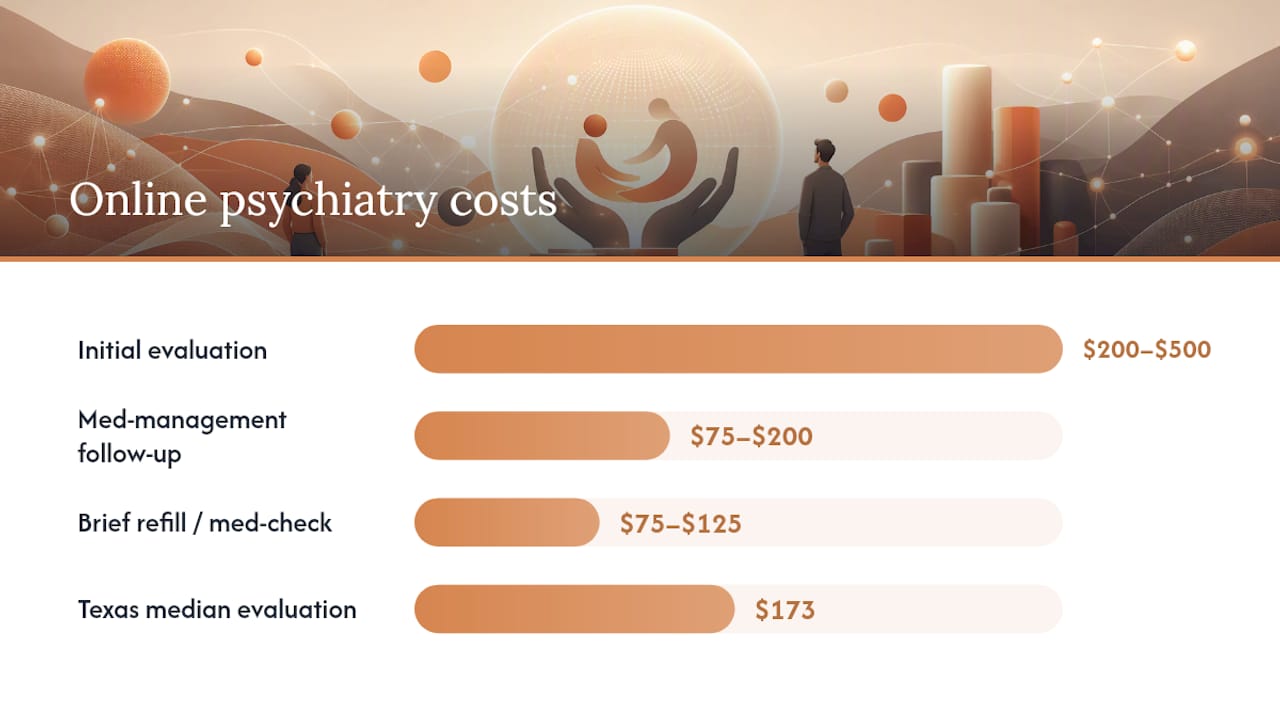
Follow-up visits cost considerably less because they’re shorter and more focused. A standard medication-management follow-up, often billed under CPT 99213 or 99214, runs 15 to 30 minutes and typically costs $75 to $200. A brief refill or med-check visit, sometimes just 10 to 15 minutes, tends to fall in the $75 to $125 range.
Real-world pricing varies more than those averages suggest, except for high-cost forensic cases that often require specialized court-ordered evaluations described by Executive Treatment Solutions. Doctor On Demand publishes online psychiatry visit pricing that ranges from $0, when an employer or insurance plan fully covers the visit, up to $299 for patients paying without coverage. Some telehealth practices publish flat self-pay rates instead of ranges: TelepsychHealth lists initial evaluations from $225 to $450 depending on whether you see a psychiatrist or a nurse practitioner, with follow-ups from $150 to $225. Upfront-purchase platforms show just how wide the spread can get. Listings on MDsave show psychiatric diagnostic evaluations priced anywhere from roughly $76 to $509 depending on the provider and region.
Statistic Callout: Aggregated telehealth pricing data puts the median initial evaluation cost for cash-pay patients between $200 and $500, while MDsave’s provider-level listings show some initial evaluations priced as low as $76 in certain markets.
If you want a state-specific benchmark, Texas pricing data shows a median cost of $173 for a psychiatric evaluation, which lands well below the national cash-pay average.
How Does Insurance Change Your Out-Of-Pocket Cost?
Three terms determine your actual bill: copay, coinsurance, and deductible. A copay is a flat fee, often $20 to $60 for a specialist visit. Coinsurance is a percentage of the visit cost you owe after your deductible is met, commonly 10% to 30%. If you haven’t met your deductible yet, you may owe the full negotiated rate, which is usually lower than the cash-pay price but still significant.
In-network coverage is what makes telepsychiatry affordable. Many plans now cover virtual psychiatric visits at parity with in-person care, but that isn’t universal, so confirming network status before booking matters more than almost any other step you can take. If you’re in Texas or Colorado, coverage details for those states are worth reviewing directly.
You also have federal protections. Under CMS’s No Surprises guidance, patients have a right to a written good-faith estimate before receiving care, and a formal dispute process if you’re billed more than that estimate by a significant margin.
Before you book, work through this short list:
- Confirm the provider’s in-network status with your specific plan, not just “accepts insurance” in general.
- Ask what CPT codes will be billed and what your plan pays toward each one.
- Check whether you’ve met your deductible for the year.
- Request a written estimate in advance.
Pro Tip: Call your insurer’s member services line and ask them to confirm telepsychiatry parity in writing, either by email or through your online member portal. A verbal “yes” from a call center rep isn’t enough if a dispute comes up later.
Does Seeing a Psychiatrist Instead of an NP Cost More?
Yes, and the gap is real. A board-certified psychiatrist (MD or DO) typically charges more per visit than a psychiatric nurse practitioner (NP) or physician assistant (PA), reflecting the additional years of medical training. TelepsychHealth’s published rates illustrate this directly, with initial evaluations priced higher for physicians than for advanced practice clinicians within the same $225 to $450 range.
Visit length also drives price through CPT coding. A 90792 initial evaluation costs more than a 99213 brief follow-up simply because it takes longer and requires more clinical documentation. Shorter refill visits cost less precisely because they’re coded and billed as less intensive care.
Your care model matters just as much as your provider:
- Fee-for-service means you pay per visit, which suits people who need occasional check-ins.
- Subscription plans charge a flat recurring fee covering a set number of visits, which can lower your effective per-visit cost if you need ongoing management.
- Upfront platforms let you pay a fixed price before the visit, removing billing surprises entirely.
Subscriptions trade predictability for commitment. They save money if you use the visits included, but cost more than fee-for-service if your needs turn out to be lighter than expected.
Ways to Lower the Cost of an Online Evaluation
You have more options than a flat cash-pay rate if a provider’s list price feels out of reach.
- Upfront-purchase platforms like MDsave suit people without insurance, since you see the exact price before you commit and can compare listings across providers.
- Sliding-scale community clinics and university-affiliated clinics price visits based on income, and Mental Health America’s guidance on paying for care is a solid starting point for finding them.
- Telehealth platforms with published flat rates remove the guesswork that comes with negotiated insurance pricing.
- Employee Assistance Programs (EAPs) often cover a set number of free mental health sessions before you ever see a bill.
- HSA and FSA funds can cover psychiatric evaluations and medication management, and many pharmacies offer manufacturer assistance programs that cut prescription costs separately.
Pro Tip: If your employer offers an EAP, use those sessions first, even if you plan to switch to a regular psychiatric provider afterward. It’s a free way to get an initial assessment on the books while you sort out insurance details.
How Do You Get an Accurate Cost Estimate Before Booking?
Getting a real number instead of a vague range takes about four questions and one phone call.
- Ask the provider: “Are you in-network with my specific plan, and what CPT code will you bill for this visit?”
- Ask the provider: “Can you send me a written good-faith estimate before I book?”
- Ask your insurer: “Is this provider in-network, and what’s my copay or coinsurance for this visit type?”
- Ask your insurer: “Have I met my deductible this year?”
| Question | Ask who | Why it matters |
|---|---|---|
| In-network status? | Provider and insurer, separately | Confirms the price you’ll actually be billed |
| CPT code and duration | Provider | Determines whether it’s an initial eval or a shorter follow-up rate |
| Deductible met? | Insurer | Decides if you pay full rate or a lower coinsurance amount |
| Written estimate provided? | Provider | Gives you recourse under CMS billing rights if the bill runs higher |
If a bill comes in well above your written estimate, CMS’s dispute process gives you a formal channel to challenge it.
How Journey Mental Health Approaches Pricing and Access
Evaluations and medication management are provided through telehealth in specific states, with published pricing you can review before you book. The platform lists specific costs for initial evaluations and follow-up visits alongside structured plan options.
- Virtual psychiatric evaluations and ongoing medication management, without an in-person office visit
- A structured annual plan option, priced at a discount compared to paying per visit
- Fast-tracked scheduling designed to reduce the wait between reaching out and getting seen
A bundled plan can lower your total annual spend if you know you’ll need several visits, while a single evaluation makes more sense if you’re not sure yet what ongoing care looks like.
Speed Versus Cost: What Actually Matters When You Need Care
If your symptoms are urgent or medication is time-sensitive, paying more for the fastest available slot is usually justified. If you’re due for a routine follow-up, saving money by waiting a few extra days rarely costs you anything clinically. Either way, verify coverage and get a written estimate before you commit.
— Jamie
Getting Started With Journey Mental Health
If you’ve read this far, you already know the two things that determine your real cost: your insurance status and the provider you choose. The platform gives residents in certain states a way to see both before committing, with published visit pricing and plan options you can compare against your own coverage instead of guessing.
You can check pricing and insurance details directly on the site and request a written estimate before your first appointment, which keeps you protected under your federal billing rights either way. If you suspect ADHD is behind your symptoms, Texas and Colorado residents can start an evaluation directly through Journey Mental Health’s site. If anxiety or depression is the concern, the anxiety treatment and depression treatment pages walk through what a first evaluation covers and what it costs. Reach out through the site to get pricing confirmed for your specific plan before you book.
This article is general information, not a substitute for advice from a qualified doctor. Consult a qualified healthcare professional about your own circumstances before acting on anything here.
Sources
- CMS — Know your rights: No insurance
- Telehealth Psychiatry Cost 2025–2026: What Evaluations and Visits Actually Cost — TherapyCostGuide
- Mental Health America — Paying for care
FAQ
How expensive is a psychiatric evaluation?
A typical online psychiatric evaluation costs $200 to $500 out of pocket without insurance, though published provider rates range as low as $76 to as high as $509 depending on the platform and location.
Can I get a psychiatric evaluation online?
Yes, licensed telepsychiatry providers conduct full diagnostic evaluations over video, and these services are offered with published pricing you can review before booking.
Where can I get a full psychiatric evaluation in the U.S.?
You can book one through telehealth platforms, community mental health clinics, university-affiliated clinics, or a psychiatrist or psychiatric nurse practitioner’s practice, with sliding-scale options available through resources like Mental Health America.
How do I get myself a full psychiatric evaluation?
Start by confirming your insurance’s in-network telepsychiatry coverage, then book an initial evaluation, which usually runs 45 to 75 minutes and covers your full psychiatric and medical history before your provider sets a treatment plan.
Is an online evaluation cheaper than an in-person one?
Costs are often comparable, since both bill under the same CPT codes, but telepsychiatry can reduce wait times and cuts travel costs and missed work time that add to the real expense of in-person care.