

Nervous System Regulation: Techniques That Actually Work
Nervous system regulation is defined as your body’s capacity to shift flexibly between states of stress activation and calm recovery, maintaining mental and physical balance. Clinically, this process is governed by the autonomic nervous system, which coordinates the sympathetic “fight or flight” response and the parasympathetic “rest and digest” state. Polyvagal theory, developed by Dr. Stephen Porges, adds a third layer: the ventral vagal state, which supports social connection and emotional safety. When these systems work together with flexibility, you feel grounded, resilient, and able to handle daily stress. When they don’t, the effects show up in your body, your mood, and your relationships.
What is nervous system dysregulation?
Dysregulation is not simply feeling stressed. It means your nervous system gets stuck in a prolonged activation state, or swings into shutdown, without completing the recovery cycle. Chronic stress activation without adequate recovery is the core driver of dysregulation, according to Dr. Aaron Block.
Think of it this way: a healthy stress response is like a fire alarm that turns off after the danger passes. Dysregulation is the alarm that keeps ringing long after the smoke has cleared. Your body stays primed for threat even when none exists.
Common signs of dysregulation include:
- Persistent anxiety or irritability with no clear cause
- Brain fog and difficulty concentrating, even after rest
- Fatigue that sleep does not fix, often called “wired but tired”
- Emotional overwhelm from situations that previously felt manageable
- Physical tension, including jaw clenching, shallow breathing, or a tight chest
- Poor sleep quality, including trouble falling or staying asleep
Chronic dysregulation symptoms like poor sleep, irritability, and brain fog signal the nervous system is stuck in stress mode without adequate recovery. This matters because dysregulation is not just uncomfortable. It actively impairs your immune function, cognitive performance, and emotional processing over time. The difference between transient stress and chronic dysregulation is recovery. Transient stress resolves. Chronic dysregulation does not, without deliberate intervention.
People managing ADHD, anxiety, or depression are especially vulnerable to chronic dysregulation, since these conditions already tax the autonomic nervous system’s baseline capacity.
How to regulate your nervous system: techniques that work
Effective autonomic nervous system control does not require expensive equipment or hours of daily practice. The most validated methods work because they directly influence vagal tone, the measure of how well your parasympathetic system can engage.
Breathwork techniques
-
Physiological sigh. Take a double inhale through the nose, then release a long, slow exhale through the mouth. The physiological sigh produces measurable heart rate changes within seconds, making it the fastest evidence-backed calming tool available. Use it before a difficult conversation, during a panic spike, or at any moment of acute stress.
-
Box breathing. Inhale for 4 counts, hold for 4, exhale for 4, hold for 4. This technique is used by Navy SEALs and emergency responders to maintain performance under pressure. It works by creating a rhythmic pattern that engages the parasympathetic system.
-
Extended exhalation breathing. Make your exhale longer than your inhale, for example, inhale for 4 counts and exhale for 7 or 8. A longer exhale activates the vagus nerve directly, slowing heart rate and reducing cortisol.
Movement and cold exposure
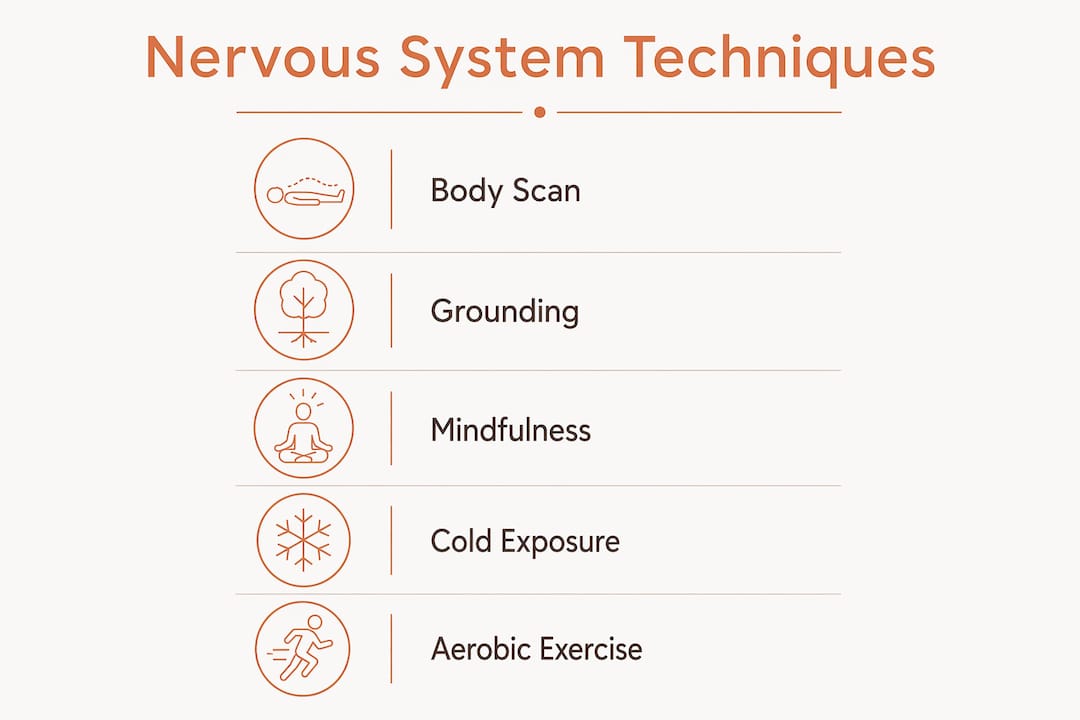
Adults should aim for 150+ minutes of moderate aerobic exercise weekly to reliably support nervous system health and nerve plasticity. Brisk walking, cycling, or swimming for 30–45 minutes, 4–5 times per week, meets this threshold. Exercise does more than burn energy. It trains the nervous system to activate and recover efficiently, building the flexibility that defines good regulation.

Cold water face immersion activates the dive reflex, sending vagus nerve signals that rapidly slow heart rate and reduce acute stress. Splashing cold water on your face or holding your breath briefly with your face submerged in cold water can produce a measurable calming effect within 30 seconds.
Somatic practices and social connection
Body scanning, grounding techniques like the 5-4-3-2-1 sensory method, and mindfulness all work by directing attention to present physical experience rather than future threat. Mindfulness supports regulation not merely as relaxation, but as emotional navigation, helping you experience and move through stress without avoidance. That distinction matters. Mindfulness practiced as suppression (“I will not feel anxious”) backfires. Practiced as observation (“I notice anxiety and I can stay with it”), it builds genuine resilience.
Co-regulation through safe social connection activates the ventral vagal system, enabling nervous system calming through prosodic voice, eye contact, and trusted touch. This means that a calm, trusted person nearby can literally help regulate your nervous system. Talking to someone you trust, even briefly, is a biological intervention, not just emotional support.
Pro Tip: Start with one technique per day rather than trying all of them at once. Consistency over two weeks builds more lasting change than an intensive weekend of practice.
How to build lasting nervous system health
Short-term techniques calm acute stress. Lasting nervous system balance requires consistent habits over weeks and months.
It typically takes 8–12 weeks of consistent practice to observe real, measurable improvements in baseline cognitive function and emotional resilience. That timeline is not a discouragement. It is a realistic expectation that prevents you from abandoning good habits too early.
Key habits that support long-term nervous system recovery include:
- Sleep quality. Sleep deprivation under 7 hours impairs the brain’s glymphatic system, which clears metabolic waste during deep sleep. Without this nightly detox process, cognitive clarity and emotional regulation both decline. Aim for 7–9 hours consistently.
- Nutrition. B vitamins, magnesium, and omega-3 fatty acids directly support nerve function and neurotransmitter production. A diet heavy in ultra-processed foods increases systemic inflammation, which impairs vagal tone over time.
- Balancing activation and rest. Many people schedule intense activity but never schedule genuine recovery. Rest is not laziness. It is the phase where your nervous system consolidates the gains from activation.
- Emotional processing. Suppressing emotions does not regulate the nervous system. It keeps it activated. Journaling, therapy, and honest conversation with trusted people all support the processing that allows the system to complete its stress cycle.
Understanding emotional dysregulation in adults is especially relevant here, since unprocessed emotional patterns often underlie chronic nervous system activation. The mindset shift required is significant: regulation is a skill you build, not a state you achieve once and keep.
Common myths about nervous system regulation
The most widespread misconception is that good regulation means staying calm all the time. It does not.
“Stress is necessary. The issue arises when chronic activation outpaces recovery, leading to dysregulation.” — Dr. Aaron Block, as cited by Healthline
Nervous system regulation is about cultivating flexibility, not eliminating the adaptive sympathetic stress response. Feeling activated is healthy. Getting stuck in activation is not.
A second myth is that composure equals regulation. White-knuckling your way through a stressful situation by suppressing your reaction is not regulation. It is avoidance. True regulation means flexible movement between states, not rigid suppression. People who appear calm through sheer willpower often have higher baseline cortisol than those who express and process their stress openly.
The clinically significant marker of a healthy nervous system is not the absence of activation. A key marker of healthy regulation is the speed and completeness of return to baseline after activation. You can feel intense anger, fear, or grief and still be well-regulated, as long as you return to baseline relatively quickly. That recovery speed is what you are actually training when you practice breathwork, movement, and mindfulness.
This reframe changes everything about how you approach nervous system balance techniques. The goal is not to feel less. The goal is to recover faster.
Key takeaways
Nervous system regulation is a trainable skill defined by how quickly and completely you return to baseline after stress, not by how little stress you feel.
| Point | Details |
|---|---|
| Dysregulation has clear signs | Brain fog, poor sleep, irritability, and emotional overwhelm signal the system is stuck in activation. |
| Breathwork works fast | The physiological sigh produces measurable calming effects within seconds and requires no equipment. |
| Exercise is non-negotiable | 150+ minutes of moderate aerobic activity weekly builds nerve plasticity and recovery capacity. |
| Real change takes 8–12 weeks | Consistent daily practice over this period produces measurable baseline improvements. |
| Regulation means flexibility, not calm | The goal is rapid recovery after activation, not the absence of strong emotions. |
What I’ve learned after years of watching people work on this
People come to nervous system work expecting a fix. They want the breathing technique or the cold shower that will make anxiety stop. What they find, if they stay with it, is something more useful and more permanent: a body that bounces back faster.
The hardest part is not learning the techniques. The hardest part is trusting that subtle daily practice is doing something when you cannot feel it working yet. I have seen people abandon breathwork after two weeks because they “still feel anxious sometimes.” That is like stopping physical therapy because your knee still aches occasionally. The ache is not the measure. The recovery speed is.
What I consistently observe is that the people who make the most progress are not the ones who practice the most intensely. They are the ones who practice the most honestly, meaning they actually notice when they are dysregulated instead of pushing through it. That noticing is itself a regulation skill. You cannot shift a state you have not acknowledged.
If you are dealing with high-functioning depression or chronic anxiety, nervous system work will not replace clinical care. But it will make clinical care more effective. The two are not competing approaches. They are complementary layers of the same recovery process.
— Jamie
How Journeymhw supports your mental wellness
Nervous system work is powerful on its own. For many adults, it works best alongside structured clinical care.
Journeymhw is a telehealth platform specializing in ADHD, anxiety, and depression treatment for adults in Texas and Colorado. The team offers online psychiatric evaluations, medication management, and personalized treatment plans designed to reduce the chronic activation that drives dysregulation. If breathwork and lifestyle changes are not enough on their own, professional support can address the underlying conditions keeping your nervous system stuck. You can book a consultation online and get started without a long wait.
FAQ
What is nervous system regulation?
Nervous system regulation is your body’s ability to shift flexibly between sympathetic activation and parasympathetic calm. It is measured by how quickly you return to baseline after stress, not by how little stress you experience.
What are the fastest ways to regulate the nervous system?
The physiological sigh, a double inhale through the nose followed by a long exhale through the mouth, produces measurable calming effects within seconds. Cold water face immersion activates the dive reflex and slows heart rate almost immediately.
How long does it take to improve nervous system regulation?
Consistent practice over 8–12 weeks produces measurable improvements in baseline cognitive function and emotional resilience. Short-term techniques work faster for acute stress but do not change your baseline without sustained effort.
What does nervous system dysregulation feel like?
Common signs include persistent fatigue that sleep does not fix, brain fog, irritability, emotional overwhelm, and feeling “wired” without being able to wind down. These symptoms indicate the system is stuck in stress mode.
Does mindfulness actually help regulate the nervous system?
Mindfulness supports regulation by helping you experience and move through stress rather than suppress it. Practiced as emotional observation rather than emotional suppression, it builds genuine resilience and strengthens the parasympathetic response over time.
Recommended
- Why ADHD treatment improves daily function in adults – Journey Mental Health
- What Is Non-Stimulant ADHD Treatment? Your Clear Guide – Journey Mental Health
- ADHD Emotional Dysregulation: What Adults Need to Know – Journey Mental Health
- Panic Attack Help: Immediate Relief and Long-Term Control – Journey Mental Health