

learningtosow.com Alternatives: Devotional Blogs & Communities
If you’re looking for learningtosow.com alternatives, the closest matches are personal devotional blogs, daily-devotional apps, and small-group platforms that center vulnerable, narrative-driven writing. Learning to Sow is a faith-based devotional blog, not a gardening or course site, so the best replacements share its emphasis on voice, authenticity, and spiritual community rather than structured curriculum.
Here are the top picks:
- SheReadsTruth — app and blog combining Scripture reading plans with a warm, community-driven format
- YouVersion / The Bible App — free devotional bundles with group-reading and comment features
- Ann Voskamp (A Holy Experience) — poetic, vulnerable long-form devotional writing with a large reader community
- First5 by Proverbs 31 Ministries — daily five-minute devotionals with email and app delivery
- The Gospel Coalition — theologically grounded devotional and essay content with clear editorial credentials
- Patheos — a hosted platform for diverse faith bloggers, including many personal-voice writers
- Ruth Chou Simons / GraceLaced — art-integrated devotional writing with a strong Instagram and blog community
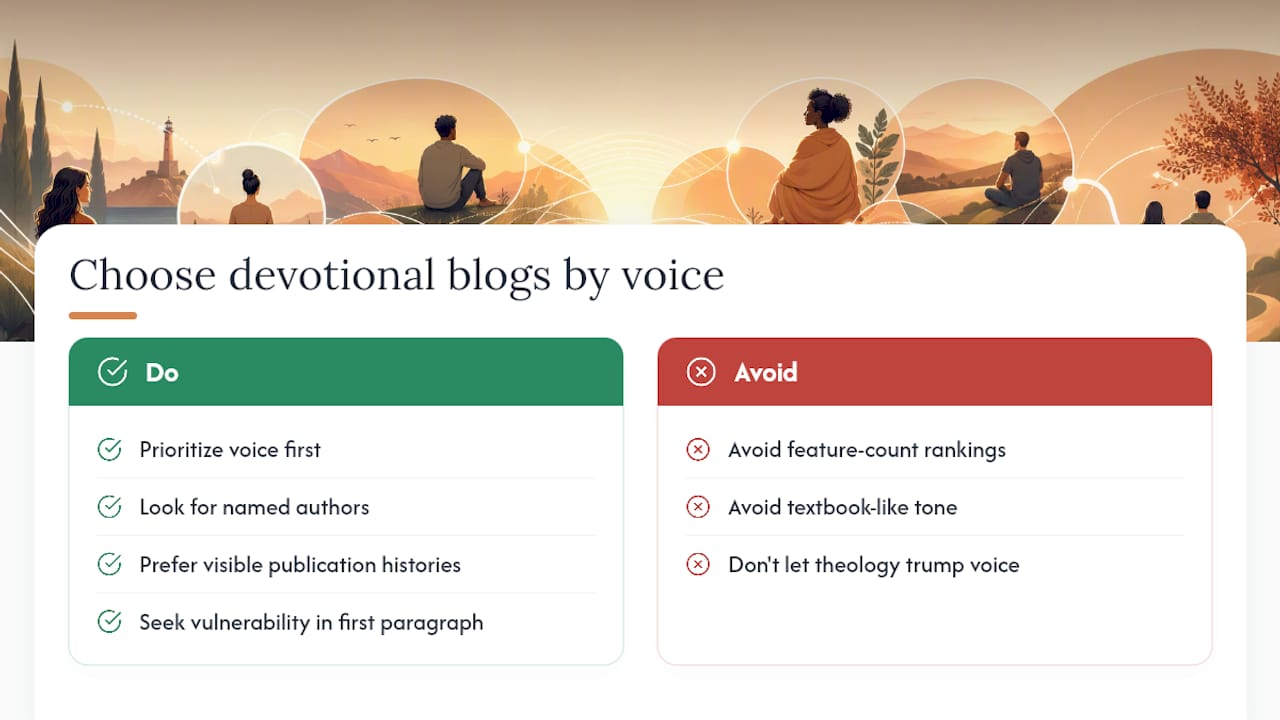
The shortlist prioritizes voice, vulnerability, and community over feature count because that is what readers of sites like Learning to Sow are actually seeking.
Table of Contents
- How do these alternatives compare at a glance?
- Short profiles of each alternative and how they compare
- How to pick the right alternative for your needs
- Did you mean gardening “sow” sites? Here’s where to go
- When devotional reading surfaces deeper distress
- Key Takeaways
- Why voice is the only metric that actually matters
- When spiritual struggle and mental health overlap
- Useful sources and links
How do these alternatives compare at a glance?
| Dimension | Author-driven blog | Daily-devotional app | Community network | Email devotional |
|---|---|---|---|---|
| Format | Long-form blog posts | App-based reading plans | Forum, groups, social | Weekly or daily email |
| Tone / voice | Personal, vulnerable, narrative | Warm, structured, brief | Varies by community | Intimate, conversational |
| Best for | Deep reflection | Daily quick devotion | Accountability, small groups | Consistent rhythm |
| Community features | Blog comments, social media | In-app groups, reactions | Active moderation, events | Reply threads, subscriber groups |
| Cost | Free (donations or books) | Free with optional premium | Free or low-cost membership | Free or paid subscription |
| Frequency | Irregular to weekly | Daily | Ongoing | Daily or weekly |
| US app support | Web / mobile browser | iOS and Android | Web and mobile | Email client, any device |
When scanning this table, look for trust signals: a named author with visible credentials, visible publication dates, and evidence of active comments or group signups. Those three signals separate a living community from an abandoned blog.
Short profiles of each alternative and how they compare
SheReadsTruth publishes structured Bible reading plans alongside personal reflection essays. The tone is warm and communal, and the app lets readers leave comments on daily readings. It suits readers who want the narrative intimacy of a personal blog paired with a consistent daily rhythm. Access is free with a paid subscription tier for premium plans.
YouVersion / The Bible App hosts thousands of devotional reading plans from independent authors and ministries. Its community features, including shared reading with friends and in-app reactions, make it one of the most interactive free options available. It works best as a daily short-read habit rather than a place for long-form reflection.
Ann Voskamp’s A Holy Experience is the closest match to Learning to Sow’s literary, vulnerable style. Voskamp’s writing is poetic and deeply personal, rooted in her book One Thousand Gifts. The blog publishes irregularly but draws a large, engaged readership. Free to read; books and courses are available for purchase.
First5 by Proverbs 31 Ministries delivers a five-minute morning devotional through its app and email. The editorial team is credentialed and the theological stance is clearly evangelical. It is ideal for readers who want a brief, grounded daily practice rather than longer narrative essays.
The Gospel Coalition leans more expository than personal, but its devotional content is theologically transparent and editorially rigorous. Authors are named and credentialed. Best for readers who want doctrinal depth alongside devotional warmth. Entirely free.
Patheos functions as a hosted blogging platform for writers across many faith traditions. Quality and voice vary by author, so it rewards browsing. Look for bloggers who publish regularly, respond to comments, and display a clear “About” page. Free to read.
Ruth Chou Simons / GraceLaced integrates hand-lettered art with devotional writing, creating a visually distinctive experience. Her blog and Instagram community are active, and she publishes books and courses. Best for readers who respond to beauty as part of their devotional practice.
Pro Tip: Before committing to any platform, check the author’s “About” page for a stated theological perspective and scroll to the three most recent posts. If the last post is older than three months and comments are sparse, the community may no longer be active.
How to pick the right alternative for your needs
Start here: match voice and community first, then worry about format and cost. A devotional that sounds nothing like you will not hold your attention regardless of how many features it offers.
Use this checklist when evaluating any option:
- Does the writing voice feel personal and honest, or polished and distant?
- Is the author’s theological stance stated clearly (denominational background, doctrinal commitments)?
- How often does new content publish, and does that cadence fit your life?
- Are comments open and recent? Do readers respond to each other, or only to the author?
- Is the author or editorial team named and credentialed?
- Is there a visible contact or “About” page with a publication date on recent posts?
- What does it cost, and is there a free tier to trial before committing?
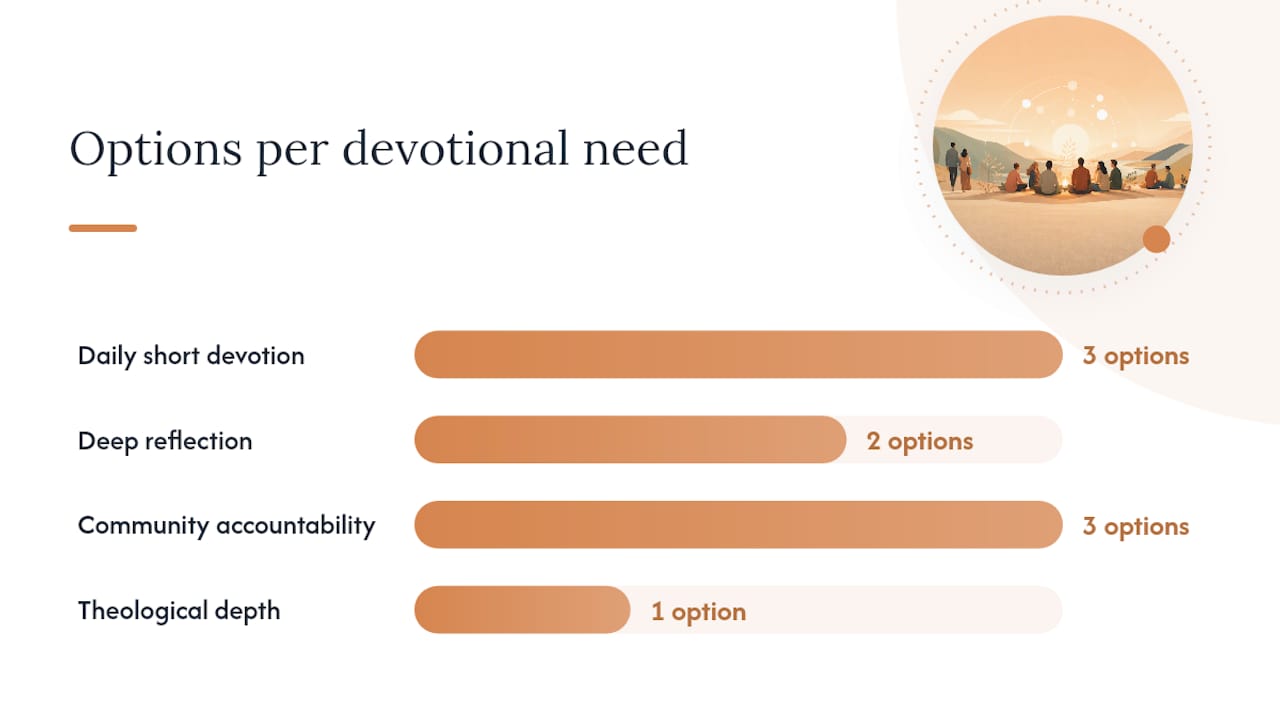
Then use this short decision flow:
- Daily short devotion → First5, YouVersion, or SheReadsTruth app
- Deep reflection and literary writing → Ann Voskamp or Ruth Chou Simons
- Community accountability and small-group feel → SheReadsTruth groups, YouVersion friend reading, or a Patheos blogger with active comments
- Theological depth → The Gospel Coalition
Pro Tip: Spend two weeks reading one platform before adding another. Devotional fatigue sets in quickly when you subscribe to five feeds at once and none of them gets your full attention.
Did you mean gardening “sow” sites? Here’s where to go
Learning to Sow is authored by Liz Mallas and is entirely devotional. If you searched “sow” intending horticulture, you were looking for something different. Some search results for “learning” and “sow” also surface unrelated education platforms (STEM tools, course marketplaces) that have nothing to do with either devotionals or gardening, so confirming your intent saves time.
If you meant gardening courses, these are reputable options:
- Coursera’s Introduction to Ecological Gardening — a structured university-backed specialization covering plant science and sustainable practices
- OSU Home Horticulture Online — Oregon State University’s continuing education course for home gardeners
- UConn Master Gardener Fundamentals — a structured program from UConn Extension covering core gardening skills
- Gardens Illustrated’s top online gardening courses — a curated list including MasterClass and expert-led short courses
The search space around “learning” is noisy. Course-platform comparison articles dominate many “learning” queries, which is why devotional seekers sometimes land on irrelevant results. Confirm your intent, then go directly to the resources above.
When devotional reading surfaces deeper distress
Devotional content can bring difficult emotions to the surface. If what you’re feeling goes beyond spiritual dryness and starts affecting your daily function, that is a signal worth taking seriously.
Consider reaching out for clinical support when you notice:
- Persistent low mood lasting more than two weeks
- Anxiety that interferes with work, sleep, or relationships
- Thoughts of self-harm or suicide (call or text 988 now)
- Difficulty concentrating or completing daily tasks
To get started with care in the U.S.: speak with your primary care provider, contact SAMHSA’s National Helpline at 1-800-662-4357, or access telehealth psychiatric services if you are in Texas or Colorado. Our practical guide to starting mental health treatment online walks through what to expect at each step.
Pro Tip: Before your first appointment, spend a few days noting your symptoms in a simple log: what you felt, when it happened, and how long it lasted. That pattern is more useful to a clinician than a general description of “feeling off.”
Statistic callout: According to SAMHSA, a limited proportion of U.S. adults with a mental health condition receive treatment in a given year, with cost and access cited as the primary barriers. Telehealth has meaningfully reduced both.
This article provides general information, not clinical advice. Please consult a qualified mental health professional or your primary care provider to assess your specific situation.
Key Takeaways
The closest learningtosow.com alternatives prioritize voice, vulnerability, and active community over feature count — and knowing when devotional struggle needs clinical support is as important as finding the right platform.
| Point | Details |
|---|---|
| Voice match first | Choose an alternative whose writing tone feels personal and honest before evaluating features or cost. |
| Trial before committing | Spend two weeks with one platform before adding others to avoid devotional fatigue. |
| Community signals matter | Look for recent comments, named moderators, and scheduled events as signs of a living community. |
| Clarify your search intent | Learning to Sow is devotional, not horticultural; if you meant gardening, OSU, UConn, and Coursera offer structured courses. |
| Journeymhw for clinical needs | When devotional distress meets clinical thresholds, Journeymhw offers virtual psychiatric evaluations for ADHD, anxiety, and depression in Texas and Colorado. |
Why voice is the only metric that actually matters
Most “alternatives” lists rank platforms by feature count. That misses the point entirely for devotional readers. What keeps someone returning to a site like Learning to Sow is not a feature; it is the sense that a real person wrote something true and left it on the page for you to find. Liz Mallas built that through her background in international development and ministry, and through a deliberate commitment to vulnerability as a devotional practice. The alternatives worth your time are the ones where you can feel the same thing in the first paragraph.
Theological stance matters too, but it is secondary to voice. A doctrinally precise blog that reads like a textbook will not sustain a daily practice. Find the voice first, then check whether the theology is one you can sit with. The shortlist above covers a range of evangelical and broadly Protestant perspectives, all with named authors and visible publication histories.
For readers whose spiritual communities also intersect with questions about mental health, exploring spiritual marketplace alternatives can surface additional platforms worth considering alongside the devotional blogs listed here.
When spiritual struggle and mental health overlap
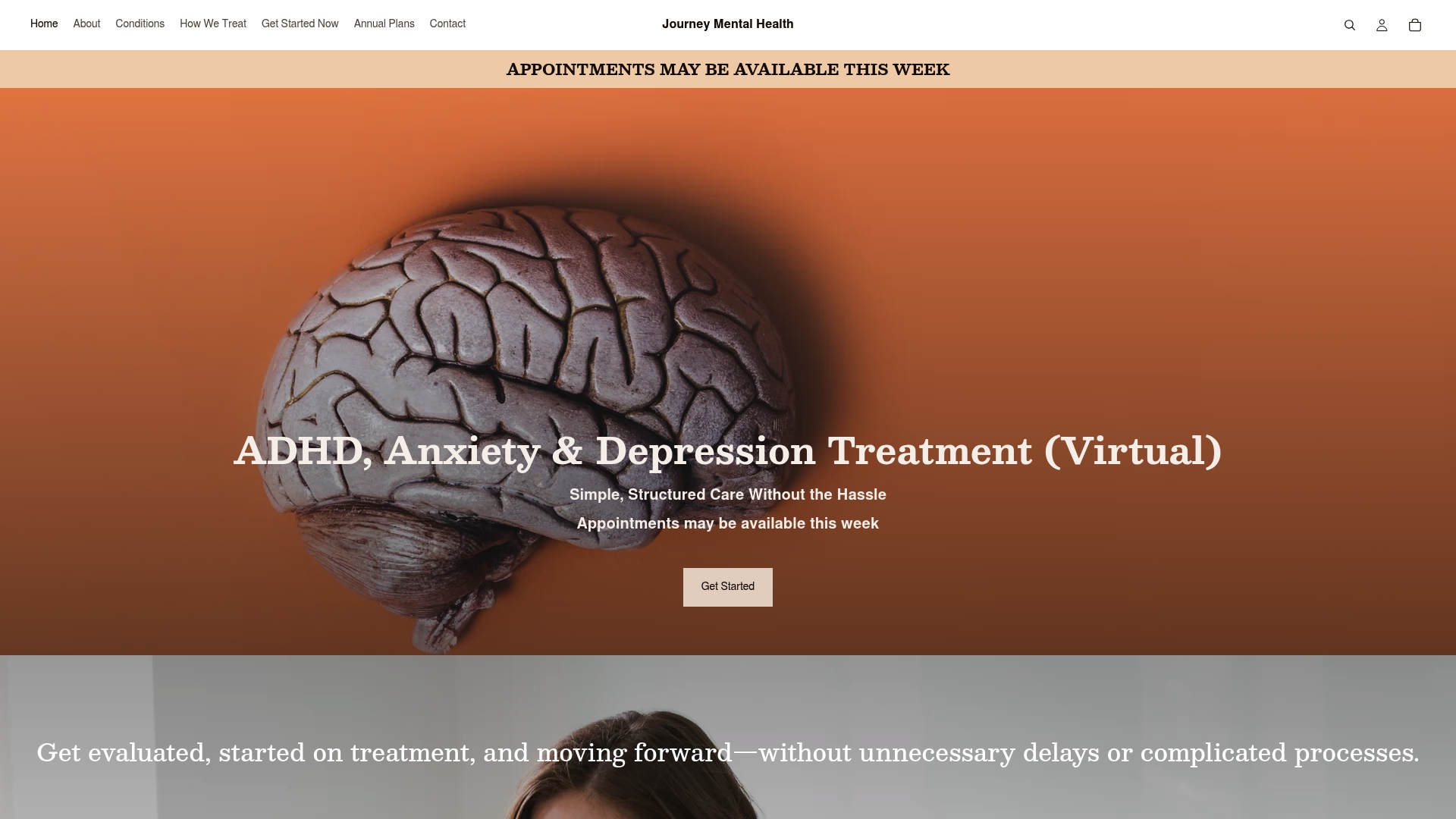
Some readers arrive at devotional content because they are carrying something heavier than a spiritual question. Journeymhw is a clinician-led telehealth platform offering virtual psychiatric evaluations and medication management for adults dealing with ADHD, anxiety, or depression. It is not a replacement for faith resources; it is a parallel support when symptoms cross a clinical threshold.
What Journeymhw offers in Texas and Colorado:
- Structured care plans for anxiety, depression, and ADHD, including medication management and follow-up visits
If what you are feeling has moved beyond spiritual dryness into something that affects your sleep, your work, or your sense of safety, a clinical evaluation is a reasonable next step. You can start the process online at journeymhw.com.
Useful sources and links
- Sowing – Learning to Sow
- Me – Learning to Sow
- Vulnerability – Learning to Sow
- 8 Best LearnWorlds Alternatives in 2026 (Tested & Compared) | Teachfloor
- Introduction to Ecological Gardening | Coursera
- OSU Gardening Class: Home Horticulture Online | OSU Continuing Education
- Fundamentals of Home Gardening | Master Gardener Program | UConn Extension
- 10 great online gardening courses | Gardens Illustrated
Recommended
- Top 3 journeypsych.com Alternatives Providers 2026 – Journey Mental Health
- Top 4 journeyofthemindmhc.com Alternatives Providers 2026 – Journey Mental Health
- Top 6 jtihllc.com Alternatives Providers 2026 – Journey Mental Health
- Best OurInnerJourney.com Alternatives for Online Therapy 2026 – Journey Mental Health