

Getting an Anxiety Medication Prescription in Colorado
You can get an anxiety medication prescription in Colorado after a licensed clinical evaluation, either in person or through telehealth, conducted by a psychiatrist, psychiatric nurse practitioner (PMHNP), or primary care clinician. The evaluation comes first. The prescription follows from what that evaluation finds.
Here’s what to do right now:
- Schedule a psychiatric evaluation. Telehealth works for most anxiety medications; some controlled substances require closer verification.
- Gather your medication and medical history before the appointment.
- Write down your symptoms, including when they started and what triggers them.
- Confirm your insurance coverage or ask about self-pay pricing.
Pro Tip: If you’re not sure whether your situation needs a controlled medication, book the evaluation anyway. Your clinician will tell you what’s clinically appropriate and legally required for your case.
| Point | Details |
|---|---|
| Who prescribes | Psychiatrists, PMHNPs, and primary care clinicians can all prescribe anxiety medication after evaluation. |
| Telehealth works for most cases | SSRIs, SNRIs, and buspirone are commonly prescribed virtually in Colorado. |
| Controlled meds need extra steps | Benzodiazepines often require added verification or in-person assessment. |
Key Takeaways
Getting an anxiety medication prescription in Colorado requires a licensed clinical evaluation first, with telehealth covering most noncontrolled medications and stricter rules applying to benzodiazepines.
| Point | Details |
|---|---|
| Evaluation comes first | No prescription is issued without a clinical interview, history review, and risk screening. |
| Telehealth covers most meds | SSRIs, SNRIs, and buspirone are commonly prescribed virtually in Colorado. |
| Controlled meds need extra checks | Benzodiazepines often require PDMP verification or an in-person visit. |
| Prepare your history in advance | A written symptom timeline and medication list speeds up your first appointment. |
| Journeymhw offers a telehealth path | Virtual evaluations and medication management, including The Simple Plan, are available for Colorado residents. |
This article is general information, not a substitute for advice from a qualified doctor. Consult a qualified healthcare professional about your own circumstances before acting on anything here.
Table of Contents
- What Happens During an Anxiety Medication Evaluation?
- Which Anxiety Medications Are Commonly Prescribed?
- Does Colorado Allow Telehealth for Anxiety Prescriptions?
- How Does Medication Management Work After the First Visit?
- What Should You Bring to Your Evaluation?
- What Does It Cost and How Long Does It Take?
- How Journey Mental Health Fits Colorado’s Prescribing Process
- Ready to Talk to a Licensed Colorado Prescriber?
- Sources
What Happens During an Anxiety Medication Evaluation?
A clinical evaluation for anxiety medication is a structured conversation, not a quick checklist. Clinicians conduct a full psychiatric interview covering your symptom history, current medications, past treatments, medical conditions, and substance use. Most will also screen for suicidal thoughts, since that risk assessment shapes which medications are safe to start.

The diagnosis itself matters because it determines the medication path. Generalized anxiety disorder (GAD), panic disorder, social anxiety, PTSD, and adjustment disorder don’t always respond to the same drugs, and a clinician following American Psychiatric Association guidance will tailor the choice to your specific presentation.
Many clinicians use standardized screening tools like the GAD-7 questionnaire to quantify symptom severity. It’s a short set of questions, but the score gives your clinician an objective baseline to track whether treatment is working over time.
- Structured clinical interview and psychiatric history
- Current medication and substance use review
- Suicidality risk screening
- Standardized symptom measures like the GAD-7
Pro Tip: Write a one-page symptom timeline before your appointment. Include when anxiety started, what makes it worse, and any medications you’ve already tried. This alone can cut your intake time in half.
Which Anxiety Medications Are Commonly Prescribed?
Most Colorado prescribers work from five medication categories, and each serves a different clinical purpose.
SSRIs like sertraline and escitalopram are typically first-line for chronic anxiety and GAD. According to Mayo Clinic, these medications usually take several weeks to produce a noticeable effect, so patience matters during the first month.
SNRIs such as venlafaxine and duloxetine work similarly to SSRIs but also target norepinephrine. Clinicians often reach for these when SSRIs haven’t worked well or when anxiety overlaps with chronic pain or depression.
Benzodiazepines like lorazepam and clonazepam act fast, sometimes within an hour, making them useful for acute symptom spikes. But NIMH and Cleveland Clinic both flag dependence risk with extended use, which is why most clinicians limit them to short courses.
Buspirone offers a non-sedating alternative for generalized anxiety with a much lower dependence profile.
Beta-blockers are sometimes prescribed off-label for situational anxiety, like public speaking or performance nerves, rather than daily generalized symptoms.
- SSRIs: sertraline, escitalopram — first-line, gradual onset
- SNRIs: venlafaxine, duloxetine — alternative when SSRIs underperform
- Benzodiazepines: lorazepam, clonazepam — fast but short-term use preferred
- Buspirone: low-dependence option for GAD
- Beta-blockers: off-label, situational use only
Does Colorado Allow Telehealth for Anxiety Prescriptions?
Colorado permits telehealth psychiatric evaluations, and most noncontrolled anxiety medications, including SSRIs, SNRIs, and buspirone, can be prescribed this way without an in-person visit. Controlled substances are a different story. Benzodiazepine prescribing through telehealth often comes with stricter identity verification, video visit requirements, and closer documentation.
Every licensed prescriber checks Colorado’s prescription drug monitoring program (PDMP) before prescribing controlled substances, a database that flags prior prescriptions across pharmacies to prevent duplicate or conflicting scripts. This isn’t a bureaucratic hurdle designed to slow you down. It’s a safety check that protects you as much as anyone else.
As a rule of thumb: SSRIs, SNRIs, and buspirone are handled comfortably through virtual visits. Benzodiazepines are more likely to require an in-person evaluation or added safeguards, depending on the prescriber’s own policy.
- Noncontrolled meds: telehealth is standard practice
- Controlled meds: expect PDMP checks and possibly in-person requirements
- Policies vary by clinician and clinic
Pro Tip: Before booking, ask any prospective provider directly about their telehealth policy for controlled substances. One phone call can save you a wasted appointment.
How Does Medication Management Work After the First Visit?
Getting the prescription is step one. What happens next determines whether the medication actually helps.
Your clinician selects a starting medication based on your diagnosis, medical history, current drugs (to check for interactions), and your own preferences about side effects and dosing schedule. Most SSRIs and SNRIs start at a low dose that increases gradually, called titration, over the following weeks.
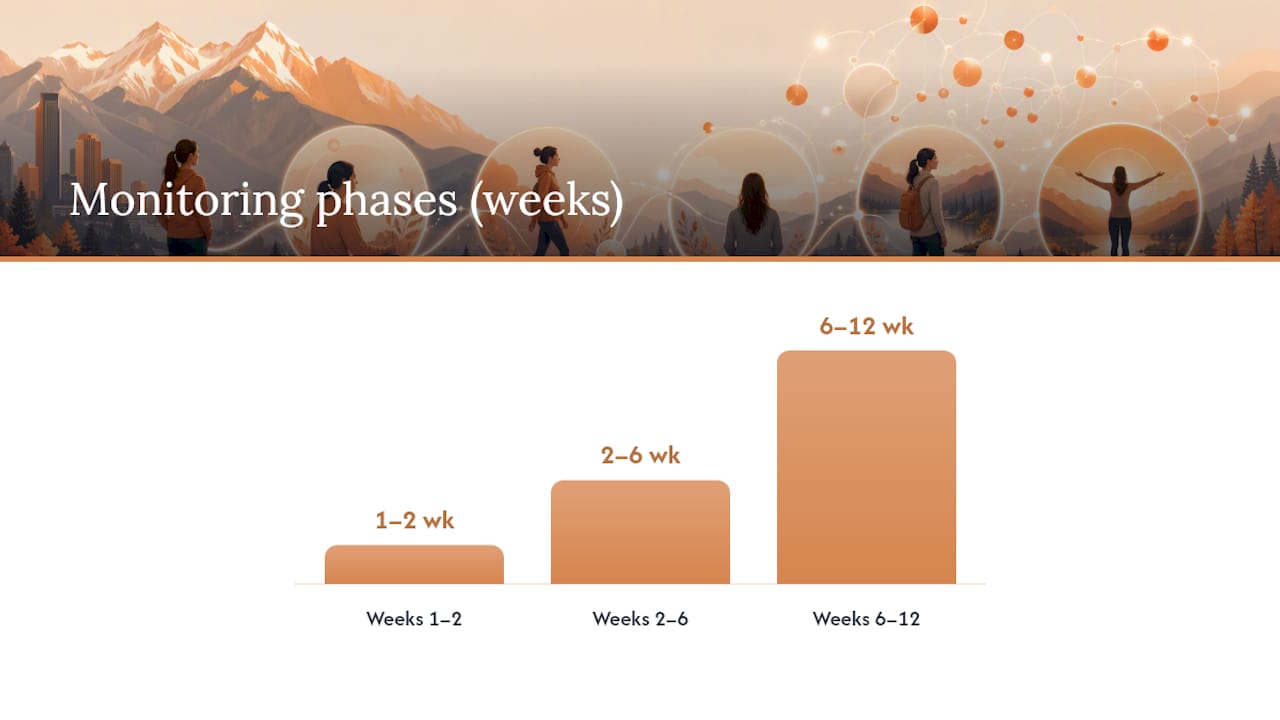
- Weeks 1-2: Start low dose, monitor for early side effects
- Weeks 2-6: Follow-up visit to assess response, adjust dose if needed
- Weeks 6-12: Continued monitoring, dose optimization, symptom reassessment
Follow-up visits typically happen every two to six weeks early in treatment, tapering to monthly or quarterly checks once your dose stabilizes. Your clinician will track side effects, review any mood changes, and reconcile your full medication list at each visit.
A realistic window looks like this: evaluation in week one, medication start soon after, a follow-up around week four, and a fuller review by week eight to twelve. That’s the general shape, though your own timeline depends on how your body responds.
- Watch for side effects in the first two weeks
- Expect a follow-up visit within a month of starting
- Report any worsening mood or new symptoms immediately
What Should You Bring to Your Evaluation?
Preparation makes the difference between a rushed first visit and one that actually gets you the right medication faster.
- A list of current medications, including over-the-counter and herbal supplements
- Past psychiatric medications you’ve tried and how you responded
- A written symptom timeline
- Major medical history, especially heart, liver, or kidney conditions
- Substance use history, including alcohol and recreational drug use
Bring your insurance card, a photo ID, and any recent primary care notes or lab results if you have them. It also helps to write down your questions in advance: how side effects are managed, whether you prefer a short-term or long-term medication approach, and what the clinician’s telehealth policy is for controlled substances.
- Medication and symptom lists
- Insurance card and ID
- Written questions about side effects and treatment duration
What Does It Cost and How Long Does It Take?
Most Colorado telehealth providers use one of two pricing models: pay-per-visit fees for the initial evaluation and follow-ups, or a subscription-style annual plan that bundles care into one predictable cost. Insurance reimbursement varies significantly by plan, so it’s worth confirming network status before your first appointment.
Timeline-wise, noncontrolled medications like SSRIs or buspirone can often move from evaluation to prescription within the same week, sometimes within days. Controlled substances usually take longer because of PDMP checks and added verification steps.
Colorado Health Institute research on state-level access barriers shows how stigma and provider shortages slow down specialty mental health care in many parts of Colorado, which is part of why telehealth has become such a practical workaround for reaching a prescriber faster.
- Ask upfront whether the clinician is in-network
- Confirm refill cadence and e-prescribing to your local pharmacy
- Noncontrolled meds: often same-week to two to three weeks; controlled meds: longer
Pro Tip: Ask about e-prescribing during your first call. A provider who sends prescriptions directly to your pharmacy saves you an extra errand every time you need a refill.
How Journey Mental Health Fits Colorado’s Prescribing Process
Journeymhw offers virtual psychiatric evaluations and ongoing medication management for anxiety, structured around the same clinical steps described above: intake, evaluation, treatment plan, and follow-up care, all delivered through telehealth for Colorado residents.
Journey Mental Health is a telehealth platform built around reducing delays between recognizing a mental health need and getting a licensed clinical evaluation. For anxiety care specifically, that means a structured intake, a clinical evaluation with a licensed prescriber, and a treatment plan that includes medication management when appropriate, backed by scheduled follow-up visits rather than a one-and-done appointment.
The service includes structured plans like The Simple Plan, which bundles evaluation and ongoing care into one predictable path rather than piecemeal visits. For noncontrolled medications such as SSRIs, SNRIs, or buspirone, the entire process, from first appointment to prescription, can happen without ever leaving home.
- Virtual psychiatric evaluation and diagnosis
- Medication management with scheduled follow-ups
- Structured plans like The Simple Plan for ongoing care
- Availability across Colorado
A practical note on choosing your route
Prioritize licensed prescribers with a clear safety plan and a transparent telehealth policy. Choose in-person care when your history is complex, involves substance use, or likely needs a controlled medication.
Ready to Talk to a Licensed Colorado Prescriber?
Journeymhw gives you a faster path to an anxiety evaluation than hunting for an in-network psychiatrist with open slots, which in many parts of Colorado can mean weeks of waiting given the access barriers documented by the Colorado Health Institute. The entire process happens through licensed telehealth: intake, clinical evaluation, and a medication plan tailored to your diagnosis and history.
If SSRIs, SNRIs, or buspirone fit your situation, you can often complete the evaluation and get a prescription plan without an in-person visit at all. Journeymhw also offers structured plans, including The Simple Plan, so ongoing follow-ups and medication adjustments happen on a set schedule instead of ad hoc scheduling.
Every prescription is individualized. Treatment decisions, including whether medication is clinically appropriate at all, follow directly from your evaluation. If you’re ready to move forward, you can book an evaluation now and ask about insurance or self-pay options during scheduling.
Sources
- Anxiety Disorders | NIMH
- Anxiety disorders - Symptoms and causes - Mayo Clinic
- Anxiety disorders | American Psychiatric Association
- Anxiety disorders - Cleveland Clinic
- Stigma and systemic barriers to mental health care | Colorado Health Institute
Recommended
- Anxiety Disorder Treatment in Colorado Explained – Journey Mental Health
- Anxiety Treatment in Texas & Colorado | Online Anxiety Help & Medication – Journey Mental Health
- ADHD Treatment in Colorado – Journey Mental Health
- Anxiety Medication Management Options in Texas: 2026 Guide – Journey Mental Health