

Emotional Numbness and Depression: What Adults Need to Know
Emotional numbness in depression is defined as a significant reduction in the ability to feel emotions, both painful and positive. Clinically, this is called emotional blunting or anhedonia, and it is distinct from ordinary sadness. Many adults with depression describe it as feeling hollow, disconnected, or like watching their own life from behind glass. Treatments including SSRIs, CBT, and DBT all address this symptom, but each works differently. Understanding what drives emotional numbness depression is the first step toward recovering your full emotional range.
What causes emotional numbness in depression?
Emotional numbness stems from multiple overlapping causes, not a single trigger. Depression alters neurotransmitter activity in the brain’s emotional circuits, particularly dopamine and serotonin pathways. When these systems are disrupted, the brain loses its ability to generate or sustain emotional responses. The result is a flatline of feeling rather than the sharp pain most people associate with depression.
Chronic stress, trauma, and burnout are also significant contributors. A 2024 JAMA study with 1,440 trauma-exposed individuals showed how the nervous system oscillates between threat and shutdown states, with emotional numbness representing the shutdown phase. That finding matters because it confirms numbness is a biological response, not a character flaw.
Medication is another major factor. SSRIs can blunt both painful lows and positive highs, which means a person may feel less depressed but also less joyful, less connected, and less motivated. This is called antidepressant-induced emotional blunting, and it affects a meaningful portion of people on these medications.
- Depression: Disrupts dopamine and serotonin circuits, reducing emotional responsiveness
- Chronic stress and burnout: Push the nervous system into a protective shutdown state
- Trauma and PTSD: Trigger dissociative responses that overlap with emotional numbness
- SSRIs and other antidepressants: Can reduce emotional intensity as a side effect
- Emotional invalidation: Repeated experiences of having feelings dismissed train the brain to suppress them
Pro Tip: If you suspect your antidepressant is causing emotional blunting, do not stop taking it without talking to your prescriber first. Dosage adjustments or medication changes can often reduce this side effect while keeping depression under control.
What are the signs of emotional numbness linked to depression?
The signs of emotional numbness include feeling like an observer in your own life, physical numbness, and social disconnection. These go well beyond simply not feeling sad. Many adults describe a complete flatline of emotion, where neither good news nor bad news produces a real reaction.

Anhedonia is one of the most recognized symptoms. It is the loss of interest or pleasure in activities that once felt meaningful, from hobbies to relationships to food. Anhedonia appears in both depression and emotional numbness, and its presence is a strong clinical signal that the emotional system is impaired, not just temporarily low.
Social disconnection is another key sign. Adults experiencing depression and lack of feelings often withdraw from friends and family, not out of preference but because connection feels effortless and hollow at the same time. Relationships that once felt warm begin to feel like obligations. This withdrawal then deepens the depression, creating a cycle that is hard to break without support.
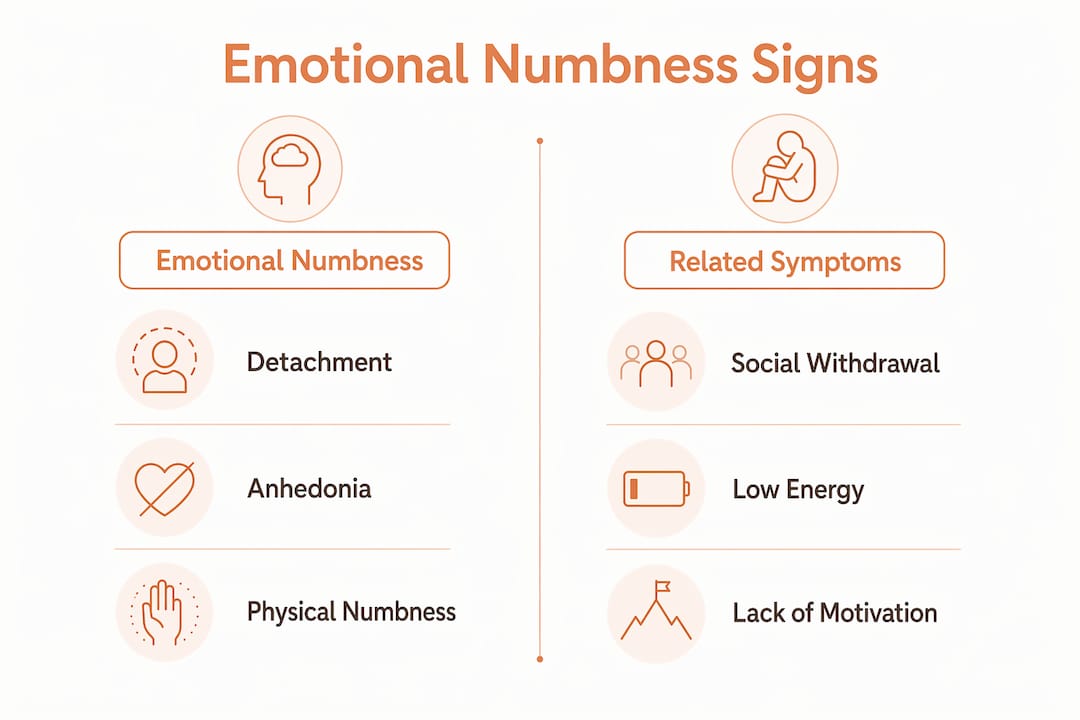
Physical symptoms also appear. Some people report a literal flatline of emotions alongside reduced physical sensation, fatigue, and a sense of moving through the world in slow motion. These physical signs are often mistaken for laziness or low motivation, which is why emotional numbness is so frequently misunderstood.
Common signs to watch for:
- Loss of interest in activities you previously enjoyed (anhedonia)
- Feeling like a detached observer of your own experiences
- Difficulty connecting emotionally with people you care about
- Flat affect, meaning your facial expressions and voice tone feel muted
- Physical sensations of heaviness, fatigue, or reduced sensation
- Difficulty making decisions or feeling motivated
How does depression-related numbness differ from dissociation or trauma responses?
Depression emotional detachment and trauma-induced dissociation share surface features but have different origins and treatment paths. Accurate diagnosis matters because the wrong treatment approach can make either condition worse.
| Feature | Depression-related numbness | Trauma-related dissociation |
|---|---|---|
| Primary cause | Neurotransmitter disruption, burnout | Acute or chronic trauma response |
| Onset | Gradual, tied to depressive episode | Often sudden, triggered by reminders |
| Awareness | Person usually knows they feel numb | Person may feel unreal or detached from identity |
| Best treatment | CBT, DBT, medication review | Trauma-focused CBT, EMDR, somatic therapy |
| Risk of misdiagnosis | Often mistaken for laziness or apathy | Often mistaken for depression alone |
Emotional safety means experiencing a full range of emotions without being overwhelmed. Numbness is not safety. It is a maladaptive defense mechanism that blocks connection and emotional regulation. This distinction is clinically important because patients sometimes interpret their numbness as feeling better, when in fact they are still unwell.
Therapists consistently reframe numbness as a physiological circuit breaker triggered by chronic overwhelm or invalidation, not a personality trait. That reframe helps patients engage with treatment more constructively. When you understand that your nervous system is protecting you, rather than failing you, the path forward becomes clearer.
Burnout can also produce symptoms that look like depression-related numbness. The difference between burnout and depression matters for treatment planning, since burnout responds well to rest and boundary changes while depression typically requires clinical intervention.
How to overcome emotional numbness in depression: effective strategies
Recovery from emotional numbness does not happen by forcing yourself to feel more. Building emotional tolerance gradually is the clinically supported approach, respecting the nervous system’s protective function rather than overriding it.
- Start with CBT (Cognitive Behavioral Therapy). CBT helps you identify thought patterns that maintain emotional shutdown and replace them with more accurate, flexible responses. It does not force emotion but creates the conditions where emotion can safely return.
- Add DBT (Dialectical Behavior Therapy) skills. DBT was specifically designed to build emotional tolerance. Skills like mindfulness, distress tolerance, and interpersonal effectiveness give you practical tools to sit with discomfort without shutting down.
- Practice behavioral activation. Depression emotional detachment often leads to inactivity, which deepens numbness. Behavioral activation means scheduling small, manageable activities, not because they feel good yet, but to rebuild the behavioral patterns that support emotional engagement.
- Use sensory engagement techniques. Cold water, textured objects, strong scents, and physical movement can stimulate the nervous system gently. These are not cures, but they can interrupt the shutdown cycle temporarily.
- Review your medications with your prescriber. If you are on an SSRI and experiencing antidepressant-induced blunting, a dosage adjustment or switch to a different medication class may reduce numbness without sacrificing depression control.
- Seek professional support when numbness is persistent. If feeling numb and depressed has lasted more than two weeks, or if it is affecting your relationships and work, a structured evaluation is warranted. Online psychiatric platforms like Journeymhw make that evaluation accessible without a long wait.
Pro Tip: Patients must first tolerate minor unpleasant emotions before reconnecting with positive feelings. Trying to force happiness before you have built that tolerance can worsen numbness. Work with your therapist to set a phased emotional rebuilding plan.
What lifestyle practices support emotional recovery from numbness?
Lifestyle changes do not replace clinical treatment, but they create the conditions where treatment works better. Social connection is the most powerful lifestyle factor. Safe, consistent relationships provide the nervous system with evidence that emotional engagement is not dangerous.
Sleep and exercise are the two most evidence-supported lifestyle interventions for depression. Poor sleep disrupts emotional regulation directly. Regular aerobic exercise increases dopamine and serotonin activity, which addresses the same neurochemical deficits that drive numbness.
Mindfulness practice builds the capacity to notice emotions without being overwhelmed by them. This is exactly the skill that emotional numbness erodes. Even ten minutes of daily mindfulness, using apps like Headspace or Calm, builds the neural pathways that support emotional awareness over time.
Lifestyle factors that support emotional recovery:
- Prioritize 7–9 hours of sleep per night to support emotional regulation
- Engage in regular aerobic exercise at least three times per week
- Maintain at least one consistent, safe social relationship
- Practice daily mindfulness to rebuild emotional awareness
- Pursue mastery experiences, small tasks you can complete successfully, to rebuild a sense of agency
- Avoid environments or relationships that consistently invalidate your feelings
The early signs of depression often include subtle emotional changes before full numbness sets in. Catching those signs early and making lifestyle adjustments can prevent the deeper shutdown that makes recovery harder.
Key Takeaways
Emotional numbness in depression is a treatable neurological response, not a personal failure, and recovery requires a phased approach combining therapy, medication review, and consistent lifestyle support.
| Point | Details |
|---|---|
| Numbness is not sadness | Emotional blunting in depression means reduced feeling across all emotions, not just low mood. |
| SSRIs can cause blunting | Antidepressants may reduce emotional intensity; discuss dosage adjustments with your prescriber. |
| CBT and DBT are first-line therapies | Both therapies build emotional tolerance gradually, which is the clinically supported recovery path. |
| Lifestyle changes amplify treatment | Sleep, exercise, and safe social connection directly support the neurochemical recovery from numbness. |
| Early recognition speeds recovery | Identifying signs like anhedonia and social withdrawal early reduces the depth and duration of emotional shutdown. |
What I have learned about emotional numbness that most articles miss
The most common mistake I see adults make when they are feeling numb and depressed is assuming the numbness means they are broken beyond repair. That belief is both understandable and wrong. Numbness is the nervous system doing exactly what it was designed to do: protect you from more than you can currently handle.
What surprises most people is that the path back to feeling is not about pushing harder. The adults who recover most fully are the ones who learn to tolerate small discomforts first, a moment of mild sadness, a flicker of frustration, before they try to access joy. Trying to skip that step is like trying to run before you can walk. The nervous system does not respond well to being forced.
The other thing I want you to know is that numbness is not the same as being emotionally unavailable forever. Therapy, particularly DBT, has a strong track record with this specific symptom. The skills are learnable. The recovery is real. Patience with yourself is not weakness. It is the most clinically sound thing you can do.
— Jamie
How Journeymhw supports adults with depression and emotional numbness
If you have recognized yourself in this article, you are not alone, and you do not have to figure out the next step by yourself. Journeymhw is a telehealth platform that specializes in depression treatment in Texas and Colorado, offering virtual psychiatric evaluations, medication management, and structured care pathways from your home.
We work with adults experiencing emotional blunting, anhedonia, and depression emotional detachment, connecting them with licensed providers who understand these symptoms. Whether you need a medication review, a referral to CBT or DBT, or simply a clear diagnosis, Journeymhw makes that process fast and accessible. Appointments are available quickly, and our structured treatment plans are designed to reduce the time between recognizing a problem and getting real support.
FAQ
What is emotional numbness in depression?
Emotional numbness in depression is a reduced ability to feel both positive and negative emotions, clinically called emotional blunting or anhedonia. It is a distinct symptom of depression, not simply feeling sad.
Can antidepressants cause emotional numbness?
Yes. SSRIs and related antidepressants can cause emotional blunting as a side effect, reducing the intensity of both painful and positive emotions. Patients should discuss dosage adjustments with their prescriber rather than stopping medication on their own.
How is depression-related numbness different from dissociation?
Depression-related numbness develops gradually alongside a depressive episode, while dissociation is typically triggered by trauma reminders and involves a sense of unreality or detachment from identity. Both require professional evaluation for accurate diagnosis.
How long does emotional numbness from depression last?
Emotional numbness linked to depression can persist for weeks or months without treatment. With appropriate therapy such as CBT or DBT and medication management, most adults see gradual improvement in emotional responsiveness.
When should I seek professional help for emotional numbness?
Seek professional support if feeling numb and depressed has lasted more than two weeks, or if it is affecting your relationships, work, or daily functioning. A structured psychiatric evaluation is the most reliable way to identify the cause and the right treatment path.