

Comorbid ADHD and Anxiety: What You Need to Know
If you’ve been managing what feels like racing thoughts, constant worry, and an inability to focus all at once, you may already be living with what is comorbid ADHD and anxiety. This combination is far more common than most people realize, and it’s frequently misunderstood. Many assume that anxiety is simply a side effect of ADHD, or that the two are interchangeable. They’re not. Comorbidity means both conditions exist independently at the same time, each with its own symptoms, triggers, and treatment needs. Understanding the difference changes everything about how you approach getting help.
Table of Contents
- Key Takeaways
- What is comorbid ADHD and anxiety
- How common is the comorbidity of ADHD and anxiety
- Getting a correct diagnosis
- Treatment for ADHD and anxiety together
- Daily management strategies for ADHD and anxiety
- My perspective on what most people get wrong
- Getting structured care for ADHD and anxiety
- FAQ
Key Takeaways
| Point | Details |
|---|---|
| Comorbidity is common | Nearly half of adults with ADHD also have an anxiety disorder, making it one of the most frequent pairings in mental health care. |
| Symptoms overlap but differ | Both conditions cause restlessness and concentration problems, but the triggers and contexts are clinically distinct. |
| Diagnosis requires a multi-step evaluation | Accurate identification of both conditions requires assessing which is most impairing and how they interact. |
| Treatment must be carefully sequenced | Stimulant medications can worsen anxiety, so clinicians prioritize the most impairing condition before adding treatments. |
| CBT and medication work best together | Integrated care combining therapy and medication management produces the strongest outcomes for comorbid patients. |
What is comorbid ADHD and anxiety
Comorbid ADHD and anxiety refers to the co-occurrence of Attention-Deficit/Hyperactivity Disorder and an anxiety disorder in the same person at the same time. These are two separate diagnoses, not one causing the other, though they do influence each other significantly.
ADHD is a neurodevelopmental condition marked by persistent inattention, impulsivity, and sometimes hyperactivity. Anxiety disorders, which include generalized anxiety disorder, social anxiety, and panic disorder, involve excessive fear or worry that is difficult to control and interferes with daily life. Both affect how you think, feel, and function. When they occur together, the challenges multiply.
The ADHD and anxiety overlap can make it hard to know where one condition ends and the other begins. Here is a comparison that helps clarify:
| Symptom | ADHD presentation | Anxiety presentation |
|---|---|---|
| Difficulty concentrating | Struggles even in calm, low-stress situations | Focus drops specifically during periods of worry or fear |
| Restlessness | Physical hyperactivity or mental racing | Inner tension, feeling on edge |
| Sleep problems | Difficulty winding down, racing thoughts at night | Worry-driven insomnia, difficulty falling asleep |
| Irritability | Frustration from impulsivity or task demands | Triggered by anxious anticipation of negative events |
| Avoidance | Avoids tasks due to boredom or difficulty starting | Avoids situations that trigger fear or worry |
One of the most useful clinical distinctions: focus ability when calm is a key differentiator. People with ADHD tend to struggle with attention regardless of their emotional state. People with anxiety may focus well when they feel safe, but concentration collapses under worry.
Common signs of ADHD and anxiety appearing together include:
- Feeling overwhelmed by small tasks while also being unable to start them
- Worrying obsessively about forgetting something while actually forgetting it
- Avoiding social situations both out of fear and because managing attention feels exhausting
- Experiencing chronic stress that feels both physical and cognitive at the same time
Pro Tip: If you notice that your concentration problems get significantly worse during stressful periods but are also present during calm ones, mention both patterns to your provider. That distinction is clinically meaningful.
How common is the comorbidity of ADHD and anxiety
The numbers are striking. Anxiety disorders affect 25 to 50% of individuals with ADHD, and a recent Danish study found that nearly 46.7% of individuals receiving ADHD treatment had at least one comorbidity, with anxiety being the most common.
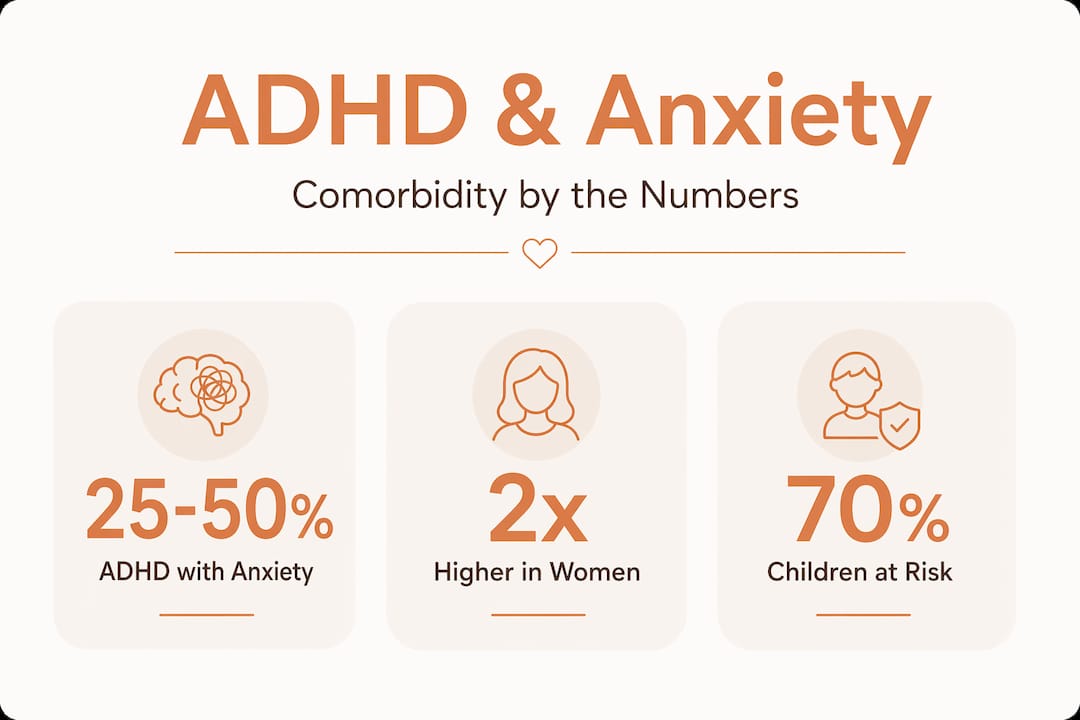
| Group | Prevalence of anxiety comorbidity |
|---|---|
| Adults with ADHD (general) | 25 to 50% |
| Adults with ADHD in active treatment | Approximately 46.7% |
| Females with ADHD vs. females without | 4.5 times higher odds of comorbidities |
Gender differences matter here. Females with ADHD show significantly higher rates of internalizing disorders like anxiety and depression compared to males. This difference in how symptoms present, often more internally for women and more externally for men, contributes to underdiagnosis and delayed treatment in female patients.
The impact of carrying both diagnoses goes well beyond managing two sets of symptoms. Comorbid anxiety in ADHD leads to higher disease burden, longer illness duration, and reduced treatment effectiveness compared to either disorder alone. Emotional dysregulation becomes more intense. The risk of academic underperformance, social difficulties, and in more severe cases, heightened risk of self-harm, increases substantially.

There is also a self-perpetuating dynamic at play. Chronic stress from ADHD and the daily experience of struggling in environments that weren’t built for your brain often generates secondary anxiety over time. Rejection Sensitivity Dysphoria, an intense emotional response to perceived criticism or failure, is closely tied to this pattern. So what starts as ADHD can, without proper support, gradually build an anxiety disorder on top of it.
Getting a correct diagnosis
Diagnosis is where things get complicated. Because ADHD and anxiety share so many surface-level symptoms, each can mask the other. A person whose primary struggle is untreated ADHD may appear to have generalized anxiety disorder. A person with severe anxiety may look inattentive and distracted in ways that resemble ADHD.
Clinicians use a multi-dimensional assessment process to sort this out. That typically includes:
- A detailed symptom history, including onset and duration
- Structured clinical interviews and standardized rating scales
- Input from family members or partners who observe behavior across settings
- Review of how symptoms interact and which are most functionally impairing
- Consideration of other possible explanations, including mood disorders or trauma
The bidirectional nature of these conditions adds another layer of complexity. ADHD symptoms contribute to anxiety development, and anxiety worsens ADHD symptoms like inattention and working memory. Working memory deficiencies, in particular, are a significant impairment area that both conditions share and amplify.
One critical clinical insight that often gets overlooked: treating only visible anxiety without identifying and addressing underlying ADHD frequently leads to incomplete recovery. Patients may feel some relief but continue struggling in ways they cannot explain. This is why getting a thorough evaluation rather than a quick symptom checklist matters so much.
Pro Tip: Before your first evaluation, keep a two-week journal of when your symptoms are worst. Note what you were doing, how stressed you felt, and whether the difficulty persisted after the stressor passed. This gives your provider concrete pattern data rather than general impressions.
Treatment for ADHD and anxiety together
Treating comorbid ADHD and anxiety is not simply a matter of prescribing medication for both and moving on. The two conditions can interact in ways that make standard treatments for each less effective or even counterproductive.
Here is how a thoughtful, sequenced treatment approach typically works:
- Identify which condition is causing more impairment. Clinical guidelines recommend treating the most functionally impairing disorder first. If untreated anxiety is making it impossible to engage in daily life, that takes priority before adding ADHD-specific medication.
- Navigate medication carefully. Stimulants for ADHD can sometimes worsen anxiety symptoms. Antidepressants used for anxiety may occasionally worsen ADHD symptoms. A psychiatrist with experience in both conditions knows how to introduce medications gradually and monitor for these interactions.
- Incorporate cognitive-behavioral therapy (CBT). CBT effectively targets anxiety and emotional regulation challenges in people with comorbid conditions. It helps reframe anxious thought patterns, build coping skills, and address the avoidance behaviors that both ADHD and anxiety reinforce. Explore evidence-based anxiety therapy options to understand how different therapeutic formats work.
- Add lifestyle modifications as active treatment, not afterthoughts. Structured routines, regular exercise, sleep hygiene, and reduced caffeine intake all reduce the baseline load on your nervous system, making both therapy and medication more effective.
- Build a personalized care plan and revisit it regularly. Patient-centered care combining medication, CBT, and lifestyle support produces the strongest outcomes. What works in the first six months may need adjustment as your symptoms change.
Pro Tip: Ask your prescriber directly: “Could this medication affect my anxiety or my ADHD symptoms in a negative way?” A good clinician will welcome that question and walk you through the tradeoffs.
Daily management strategies for ADHD and anxiety
Managing both conditions daily requires building structure that your nervous system can actually use. Abstract goals don’t hold up under the combined pressure of ADHD impulsivity and anxiety-driven avoidance. Concrete, repeatable strategies do.
Here are approaches that help when you’re living with both conditions:
- Time-block your day in writing. Externalizing your schedule removes the cognitive burden of holding it in working memory, which reduces both ADHD overwhelm and anxiety about forgetting tasks.
- Practice grounding techniques before high-demand tasks. Box breathing or a brief body scan helps lower physiological arousal before you attempt something that requires sustained focus.
- Communicate your needs to people around you. Whether at work or home, explaining that you need clear deadlines and distraction-reduced environments is not a weakness. It’s self-advocacy.
- Protect your sleep aggressively. Both ADHD and anxiety worsen significantly with sleep deprivation. A consistent sleep schedule, no screens 30 minutes before bed, and a dark, cool room make a measurable difference.
- Build in recovery time after social or cognitively demanding activities. Emotional dysregulation from comorbid anxiety means that overstimulation hits harder and lasts longer. Planning downtime is not optional, it’s part of your treatment.
- Seek professional support rather than waiting until crisis. Learning to manage anxiety fast between appointments, using structured coping tools, is a skill your provider can teach you.
These strategies don’t replace clinical treatment. They amplify it. The more you can stabilize your daily functioning, the more benefit you get from therapy and medication.
My perspective on what most people get wrong
I’ve seen a pattern repeat itself in how people approach comorbid ADHD and anxiety, and I think it deserves to be said plainly. Most people, and honestly many providers, focus on the anxiety first because it’s louder. Anxiety presents with urgency. It demands attention. ADHD, especially in adults, often looks like personality traits or bad habits rather than a medical condition.
What I’ve learned is that treating only the anxiety without addressing the ADHD is like putting a lid on a boiling pot. You suppress the most visible symptom, but the underlying pressure remains. The anxiety often returns, sometimes in a different form, because the ADHD that was generating daily stress and failure experiences was never treated.
The counterintuitive truth is that successfully treating ADHD often reduces anxiety more than anxiety-specific treatment alone. When people stop losing their keys, missing deadlines, and feeling like they’re always one step behind, the chronic low-grade dread that feeds anxiety starts to lift on its own.
What I also believe deeply is that the emotional toll of this comorbidity is underestimated. Living with both conditions is genuinely hard. It takes patience, the right clinical team, and the willingness to advocate for yourself when a treatment isn’t working. That’s not weakness. That’s sophisticated self-awareness. The people who do best are the ones who keep asking questions and stay engaged with their own care.
— Jamie
Getting structured care for ADHD and anxiety
If you recognize yourself in what you’ve read here, the next step is a proper clinical evaluation, not continued self-management. At Journeymhw, we offer virtual psychiatric evaluations and personalized treatment plans designed specifically for adults managing ADHD, anxiety, and related conditions. Whether you’re in Texas or Colorado, you can access ADHD treatment in Texas or ADHD treatment in Colorado from home, with appointments available quickly and care plans tailored to your full clinical picture. We treat the whole person, not just the most visible symptom.
Our team coordinates medication management alongside therapeutic support so that both your ADHD and your anxiety receive the attention they each require. You don’t have to keep sorting through this alone.
FAQ
What does comorbid ADHD and anxiety mean?
Comorbid ADHD and anxiety means a person carries both an ADHD diagnosis and an anxiety disorder diagnosis at the same time. Each condition exists independently, though they interact and often intensify each other’s symptoms.
How do I know if I have ADHD, anxiety, or both?
A clinical evaluation by a mental health professional is the only reliable way to distinguish between ADHD and anxiety or confirm both. Key clues include whether concentration problems occur only during worry or persist even in calm situations.
Can treating ADHD reduce anxiety symptoms?
Yes. Successfully treating ADHD often reduces anxiety because it removes the chronic daily stress of living with unmanaged symptoms. Research shows that addressing underlying ADHD can lead to significant improvement in secondary anxiety.
Do stimulant medications make anxiety worse?
They can. Stimulant medications used for ADHD sometimes exacerbate anxiety symptoms, which is why careful medication sequencing and monitoring by an experienced psychiatrist is critical for comorbid patients.
Is CBT effective for comorbid ADHD and anxiety?
CBT is one of the most effective non-medication tools for this combination. It addresses anxious thought patterns, builds emotional regulation skills, and helps manage the avoidance behaviors that both conditions reinforce when left untreated.