

Common Telehealth Platform Features for Mental Health
A mental health telehealth platform is defined as a digital system that delivers psychiatric evaluation, therapy, and medication management through secure remote communication. The common telehealth platform features for mental health that matter most include HIPAA compliance, Electronic Health Records (EHR) integration, end-to-end encryption, and electronic prescribing. Understanding these features before you choose a platform helps you get faster care, better privacy, and a more consistent treatment experience. Top-rated platforms offer new patient appointments within 1–3 days, which is a meaningful improvement over traditional in-person wait times.
1. What are the primary communication methods on mental health telehealth platforms?
Four primary service formats define how telehealth platforms deliver mental health care: live video, phone-only, asynchronous messaging, and hybrid care. Each format serves a different clinical need and patient situation.
- Live video sessions deliver real-time, face-to-face interaction with high-definition audio and visual quality. This format works best for psychiatric evaluations, medication reviews, and therapy that requires reading nonverbal cues.
- Phone-only sessions serve patients with limited internet bandwidth, low digital literacy, or privacy concerns at home. The clinical value is real, even without video.
- Asynchronous messaging (text and voice) lets patients send messages to their provider and receive responses on a flexible schedule. Messaging therapy suits mild-to-moderate conditions well but is less effective for acute crisis situations.
- Hybrid care models combine virtual and in-person visits within the same care plan. This gives patients flexibility without losing continuity of care.
Pro Tip: If you have anxiety about video calls, ask your provider whether phone-only sessions are available. Many platforms support both formats under the same treatment plan.
2. Which security and compliance features are essential?

Security is the foundation of any credible mental health telehealth platform. Without it, your most sensitive health information is at risk.
Essential platform security features include end-to-end encryption, a HIPAA-compliant environment, and browser-based access that requires no software download. These three elements protect your data at every stage of care.
- HIPAA compliance with a signed Business Associate Agreement (BAA): HIPAA sets the legal floor for patient data protection, but a signed BAA is the specific legal contract that holds your provider accountable. Always verify this document exists before sharing any health information.
- End-to-end encryption: This protects data both in transit (during your session) and at rest (stored in the system). No third party can intercept your session content.
- Access controls: Unique logins and two-factor authentication prevent unauthorized access to your records. These controls are standard on well-built platforms.
- Browser-based access: Platforms that run in a web browser without requiring an app download reduce friction and technical barriers significantly.
Verifying a signed Business Associate Agreement is a critical legal safeguard that goes beyond general HIPAA compliance. It is the document that creates enforceable accountability between you and your provider.
3. How do scheduling and automated reminders improve care?
Scheduling tools directly affect how quickly you get care and how consistently you stay in treatment. A platform with poor scheduling creates delays that interrupt your progress.
- Self-scheduling portals let you book appointments without calling an office. This alone reduces the time between deciding to seek care and actually receiving it.
- Smart waitlists fill canceled slots automatically. If a cancellation opens up, you move up without any manual effort.
- Automated reminders via SMS, email, or patient portals reduce no-show rates. Integrated care features like automated reminders create a more predictable care environment for both patients and providers.
- EHR integration prevents double booking and keeps your appointment history in one place. Clinicians can see your full schedule and documentation without switching systems.
EHR integration is the feature long-term patients prioritize most. It eliminates the need to repeat your history at every appointment and keeps your care team aligned.
Pro Tip: Before your first appointment, check whether the platform sends reminders by text or email. If you tend to forget appointments, a platform with SMS reminders will serve you better than one that relies only on email.
4. Why are electronic prescribing and clinical documentation vital?
For patients managing ADHD, anxiety, or depression, medication is often a central part of treatment. A platform that handles prescribing and documentation within one workflow removes significant friction from your care.
- EPCS (Electronic Prescribing of Controlled Substances): This federal standard allows psychiatrists to prescribe controlled medications, including stimulants for ADHD, directly through the platform during your session. No paper prescriptions, no pharmacy delays.
- Real-time clinical documentation: Providers document your visit notes, diagnoses, and treatment updates within the same platform workflow. This keeps your record accurate and current.
- ICD-10 coding assistance: Platforms that support ICD-10 coding help providers document diagnoses correctly for insurance billing. This reduces claim errors and delays in coverage.
- Treatment plan management: Your provider can update your care plan, adjust medications, and track your progress all in one place.
| Feature | Clinical Benefit |
|---|---|
| EPCS support | Controlled substance prescriptions sent directly to pharmacy |
| Real-time documentation | Visit notes completed during or immediately after session |
| ICD-10 coding | Accurate diagnosis coding for insurance claims |
| Treatment plan tracking | Ongoing medication and therapy adjustments in one record |
EHR-integrated prescribing workflows eliminate double documentation. Clinicians document visits, prescribe medications, and manage billing in one continuous process. That efficiency translates directly into faster, more accurate care for you. If you want a deeper look at how this works in practice, the guide to medication management for mental health covers prescription coordination in detail.
5. What additional features elevate the virtual care experience?
Beyond the core clinical tools, several features make virtual mental health sessions more effective and comfortable. These are the details that separate a functional platform from a genuinely good one.
- Virtual waiting rooms: A dedicated digital space where you wait before your session begins. This preserves the structure of a clinical appointment and signals that your session is about to start.
- Screen sharing and interactive whiteboards: These collaborative tools facilitate therapeutic work that would otherwise require physical materials. A therapist can share a worksheet, diagram, or exercise directly on your screen.
- Secure file sharing: Patients can upload documents, previous records, or completed assessments before or during a session. Providers can share educational materials or care instructions securely.
- Multi-participant sessions: Group therapy and family therapy sessions require platforms that support multiple video participants simultaneously. This feature expands the types of care you can access remotely.
Telehealth is a specialized delivery method that requires specific tools to match the quality of in-person care. Screen sharing and interactive whiteboards are not extras. They are the features that make collaborative therapy possible at a distance.
Key Takeaways
The most effective mental health telehealth platforms combine HIPAA-compliant security, EHR-integrated prescribing, flexible communication formats, and patient-centered scheduling tools to deliver consistent, accessible care.
| Point | Details |
|---|---|
| Security is non-negotiable | Verify HIPAA compliance and a signed BAA before sharing any health information. |
| Communication format matters | Choose a platform that offers live video, phone, and messaging to match your clinical needs. |
| Scheduling tools reduce gaps in care | Self-scheduling, smart waitlists, and SMS reminders keep treatment on track. |
| EHR integration saves time | Integrated prescribing and documentation eliminate repeated paperwork and billing errors. |
| Collaborative tools improve outcomes | Screen sharing and virtual waiting rooms make virtual sessions more structured and effective. |
What I’ve learned about choosing a telehealth platform for mental health
After years of watching patients navigate mental health care, the single biggest barrier I see is not cost or stigma. It is friction. A platform that requires you to download an app, troubleshoot audio, or call an office to reschedule will lose patients before care even begins. Browser-based access that requires no download is not a convenience feature. It is a clinical one. Fewer technical barriers mean fewer missed sessions.
The second thing I would tell anyone evaluating a platform is this: do not separate medication management from therapy scheduling in your mind. The platforms that work best treat prescribing, documentation, and appointment booking as one connected system. When those pieces are integrated, your provider spends less time on paperwork and more time on you. You can read more about navigating treatment options to understand how these systems fit together.
Finally, verify the BAA. Not just HIPAA compliance in general. Ask specifically whether the platform has a signed Business Associate Agreement. That document is what gives you legal recourse if your data is mishandled. Most patients never ask. The ones who do are better protected.
— Jamie
Journeymhw offers structured mental health care built for virtual access
Journeymhw is a HIPAA-compliant telehealth platform focused on diagnosing and managing ADHD, anxiety, and depression through virtual psychiatric evaluations and medication management. The platform is designed for patients in Texas and Colorado who want fast, structured care without the delays of traditional in-person systems.
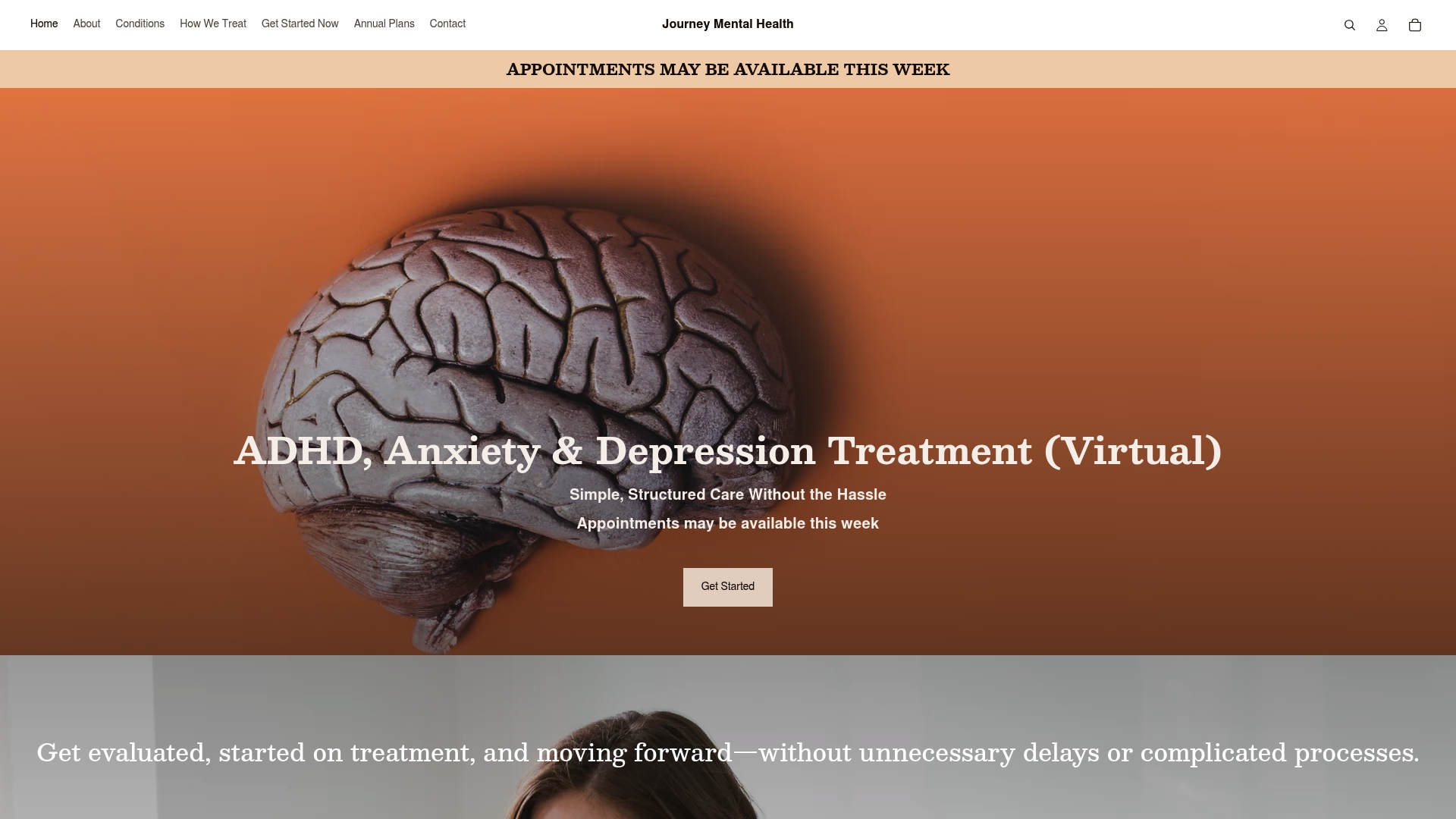
Journeymhw offers ADHD treatment, anxiety treatment, and depression treatment through a clear, structured process that gets you from evaluation to treatment quickly. If you are ready to take the first step, Journeymhw makes it straightforward to begin.
FAQ
What are the most important features of a mental health telehealth platform?
The most important features are HIPAA compliance with a signed BAA, end-to-end encryption, EHR integration, electronic prescribing, and flexible communication formats including live video and secure messaging.
How quickly can I get an appointment on a telehealth mental health platform?
Top-rated mental health telehealth platforms offer new patient appointments within 1–3 days, compared to weeks or months for many in-person providers.
Is asynchronous messaging therapy effective for mental health treatment?
Asynchronous messaging therapy works well for mild-to-moderate conditions and flexible schedules, but it is less effective for acute crisis situations that require real-time clinical response.
Do I need to download an app to use a mental health telehealth platform?
Well-designed platforms offer browser-based access with no app download required. This reduces technical barriers and is associated with lower no-show rates and fewer support issues.
What is a Business Associate Agreement and why does it matter?
A Business Associate Agreement (BAA) is a legal contract that holds your telehealth provider accountable for protecting your health data under HIPAA. It goes beyond general compliance and gives you enforceable legal protection.