

clientsecure.me Alternatives: Low-Friction HIPAA Options
If you’re looking for alternatives to christopher-spitale6207.clientsecure.me, the three most practical options are verified-link delivery systems, zero-knowledge encrypted file sharing, and integrated telehealth platforms with built-in document exchange. Each solves a different piece of the problem: speed, privacy assurance, or full ongoing care.
- Verified-link delivery (e.g., Cortico): best when you need fast, auditable document access without requiring patients to create accounts
- Zero-knowledge encrypted file sharing (e.g., RocketShare): best when maximum privacy and minimal provider-side data exposure matter most
- Integrated telehealth platforms (e.g., Journeymhw): best for ongoing psychiatric care where document exchange, evaluations, and medication management happen inside one workflow
- Portal-first client portals: best when centralized, long-term client dashboards and branded UX are the priority
Pro Tip: If your main frustration with a dedicated client portal is forgotten passwords and login friction, a verified-link workflow may solve most of your problem without requiring any platform migration.
HIPAA’s Security Rule requires covered entities to implement technical safeguards for electronic protected health information (ePHI). Any alternative you choose must meet those standards, including encryption, access controls, and audit logging.

Table of Contents
- What are the real trade-offs between clientsecure.me alternatives?
- Concrete tools that represent each secure client management category
- How does Journeymhw reduce portal friction for mental health patients?
- How do you pick the right secure client management tool for your situation?
- What does switching away from a single client portal actually cost?
- A quick HIPAA compliance checklist for any alternative you consider
- Key Takeaways
- Why portal friction is the real barrier to timely mental health care
- Journeymhw offers integrated telehealth without the portal hassle
- Useful sources for verifying compliance and technical claims
What are the real trade-offs between clientsecure.me alternatives?
The right choice depends on factors including patient friction, audit trail strength, and whether ongoing care management or just secure document delivery is needed.
| Solution type | Best for | Patient friction | Security model | Audit trail | Typical cost | Onboarding time | Long-term storage |
|---|---|---|---|---|---|---|---|
| Verified-link systems | Fast, one-off document delivery | Very low (no account needed) | Identity-verified link | Yes, per-access logs | Low to moderate | Same day to 1 week | Limited |
| Zero-knowledge file stores | Maximum privacy, sensitive PHI | Low (link-based) | Browser-side encryption | Varies by vendor | Moderate | 1–4 weeks | Moderate |
| Portal-first UIs | Branded client dashboards, long-term records | Higher (account required) | Provider-controlled encryption | Yes, centralized | Moderate to high | 2 weeks | Strong |
| Integrated telehealth platforms | Ongoing psychiatric care, medication management | Low (single workflow) | End-to-end, in-platform | Yes, within EHR | Subscription-based | 2 weeks | Strong |
HHS guidance on email and PHI makes clear that plain email attachments do not meet the bar for secure clinical exchange. The distinction between a verified-link system and a standard email attachment is not subtle: one logs who accessed what and when, the other does not.
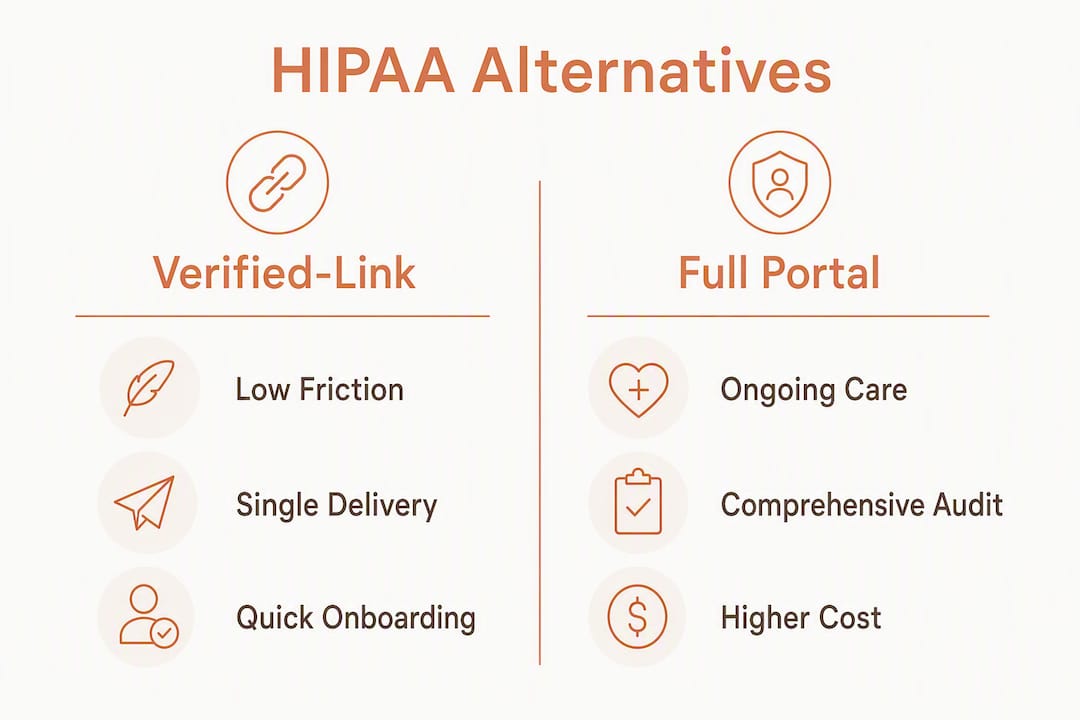
Pro Tip: A verified-link workflow is enough when you need to deliver a single document securely. A full portal is justified when you need a persistent, branded space where patients return repeatedly for forms, messaging, and records.
Concrete tools that represent each secure client management category
Understanding the categories is useful. Seeing what real tools actually do is more useful.
Cortico: verified-link delivery
Cortico lets clinics send documents directly from the patient chart behind a secure, identity-verified link. Patients confirm their identity before viewing, which turns a simple file delivery into a controlled, auditable workflow. Cortico holds SOC 2 Type II and ISO 27001 certifications. Clinics that move from portal-first models to verified-link delivery often see faster document turnaround because patients access files without creating accounts.
RocketShare: zero-knowledge encryption
RocketShare encrypts files in the browser before upload, using AES-256 at rest and TLS 1.3 in transit. The provider never holds the decryption key, which reduces legal exposure and internal risk. This is the strongest privacy model available for one-off PHI delivery.
Virtru: end-to-end encrypted file sharing
Virtru Secure Share applies object-level encryption to shared files, with granular controls for expiration, revocation, and view tracking. It’s designed for HIPAA use cases and balances ease of use with meaningful audit controls.
Journeymhw: integrated telehealth
Journeymhw is the option that removes the need for a separate delivery tool entirely. Evaluations, medication management, and structured treatment plans happen inside one telehealth workflow. For patients in Texas and Colorado managing ADHD, anxiety, or depression, there’s no separate portal to log into.
| Tool | Encryption model | Audit/logging | Identity verification | HIPAA-ready |
|---|---|---|---|---|
| Cortico | Provider-controlled, SOC 2 Type II | Per-access logs | Yes, verified link | Yes |
| RocketShare | Zero-knowledge, AES-256/TLS 1.3 | Varies | Link-based | Yes |
| Virtru | Object-level, end-to-end | View tracking, revocation | Access controls | Yes |
| Journeymhw | In-platform, integrated | Within EHR workflow | In-session | Yes |
For patients who also need diagnostic results delivered securely, EIV Diagnostics offers a patient-facing resource for understanding how document exchange connects to diagnostics.
How does Journeymhw reduce portal friction for mental health patients?
Journeymhw’s model is built around removing the barriers that cause patients to disengage before care even begins. Here’s what that looks like in practice:
- Online psychiatric evaluations completed from home, with no in-person intake required
- Medication management for ADHD, anxiety, and depression handled within the same telehealth visit
- Structured treatment plans, including “The Simple Plan,” available at a clear price point with no hidden steps
- Quick appointment availability, reducing the gap between deciding to seek care and actually receiving it
- Secure online consultations that keep all communication within a single, compliant workflow
Portal login friction is a recognized cause of patient disengagement. When a patient can’t remember their password at 10 PM on a Tuesday, they often don’t reschedule. Journeymhw’s integrated approach means patients interact with one system for everything, not a separate portal for documents and a separate platform for visits.
Pro Tip: For clinics that need a specialist secure-delivery tool for specific compliance workflows (e.g., releasing records to attorneys or insurers), a verified-link tool like Cortico can sit alongside an integrated telehealth platform without disrupting the primary care workflow.
Explore how telehealth platform features shape the patient experience when you’re comparing integrated options.
How do you pick the right secure client management tool for your situation?
Work through this checklist before committing to any platform:
- Match to use case: One-off document delivery needs a different tool than ongoing psychiatric care.
- Audit trail: Confirm the vendor logs every view and download event, not just uploads.
- Identity verification: Check whether the system confirms who accessed a file, not just who received the link.
- BAA availability: Any HIPAA-covered workflow requires a signed Business Associate Agreement from the vendor.
- EHR integration: Ask whether the tool exports records in a standard format (HL7, FHIR, or PDF) your clinic can retain.
- Mobile UX: Test the patient-facing experience on a phone before committing.
Questions to ask any vendor during onboarding:
- Can you provide a sample audit log showing view, download, and identity events?
- Do you hold encryption keys, or does the customer control them?
- Is multi-factor authentication available for both admin and patient access?
- Will you sign a BAA, and what does it cover?
- How does your tool integrate with our existing EHR or practice management system?
Red flags: No audit logs. No BAA. Storage-only vendors that retain decryption keys. Vague answers about identity verification. These are not minor gaps; they are compliance failures waiting to happen.
What does switching away from a single client portal actually cost?
Timeline and cost vary significantly by solution type.
- Verified-link systems: Delivery can begin the same day or next business day. Setup is minimal.
- Zero-knowledge tools: Admin configuration, key management setup, and staff training typically take a few weeks.
- Portal migrations or integrated telehealth onboarding: Plan for several weeks, depending on EHR complexity and data migration needs.
On cost: verified-link and zero-knowledge tools often charge per document, per seat, or via a monthly subscription tier. Hidden costs tend to appear in storage overages, API access for EHR integration, and premium support SLAs. Portal-first platforms frequently bundle these into higher base tiers.
To accelerate a switch: start a trial account, run a pilot with a small patient cohort, and export existing records before migrating. Scalability matters too. A tool that performs well for 10 patients may slow under 500 concurrent users if it wasn’t built for that load. Ask vendors for uptime SLAs and load-testing documentation before signing.
A quick HIPAA compliance checklist for any alternative you consider
Before you finalize any secure client management tool, verify each of these:
- [ ] Signed BAA from the vendor
- [ ] Audit logging of every view and download event
- [ ] Identity verification or verified-link confirmation for patient access
- [ ] Encryption in transit (TLS 1.3 or equivalent) and at rest (AES-256 or equivalent)
- [ ] Key management model documented: zero-knowledge, customer-managed, or provider-controlled
- [ ] Third-party security audit on file: SOC 2 Type II, ISO 27001, or equivalent
For clinics: request a copy of the BAA and a sample audit log before go-live. For patients: ask your provider whether their platform has been independently audited and whether you can receive a copy of your access log on request.
HHS HIPAA cloud computing guidance is the authoritative reference for verifying vendor obligations when using cloud-based tools for ePHI.
Pro Tip: A vendor that hesitates to share their BAA template or sample audit log during the sales process is showing you exactly how they’ll behave during a compliance review.
Key Takeaways
The most effective alternative to a dedicated client portal combines low patient friction with a signed BAA, verified identity confirmation, and a complete audit trail for every access event.
| Point | Details |
|---|---|
| Match tool to use case | One-off delivery needs verified-link; ongoing psychiatric care needs an integrated telehealth platform. |
| Audit trails are non-negotiable | Any HIPAA-ready alternative must log every view, download, and identity confirmation event. |
| BAA before go-live | Never use a cloud-based tool for ePHI without a signed Business Associate Agreement from the vendor. |
| Zero-knowledge for maximum privacy | Browser-side encryption (e.g., RocketShare) means the provider cannot access unencrypted PHI, reducing legal exposure. |
| Journeymhw removes the portal entirely | For patients in Texas and Colorado, Journeymhw integrates evaluations, medication management, and care plans in one HIPAA-compliant telehealth workflow. |
Why portal friction is the real barrier to timely mental health care
The conversation about secure client portals often focuses on compliance, and compliance matters. But the more immediate problem is that friction kills follow-through. A patient who can’t log in doesn’t reschedule. They wait. Sometimes they stop trying.
Verified-link delivery addresses this directly: a patient receives a link, confirms their identity, and views their document. No account creation, no forgotten password, no support ticket. When that same simplicity extends to the care itself, as it does with an integrated telehealth platform, the effect compounds. Patients who can book, attend, and receive care in a low-friction workflow are more likely to stay engaged.
There’s a scenario most clinicians recognize: a patient misses an intake appointment because they couldn’t access the portal to complete their forms. The appointment slot is lost. The patient waits another two weeks. A verified-link workflow, or better yet an integrated platform, would have sent the forms directly and logged the completion. The audit trail would show the clinic exactly what happened and when.
Prioritize patient access first. Compliance follows from the right architecture, not the other way around. Choosing a tool that patients will actually use is the most clinically sound compliance decision you can make.
Journeymhw offers integrated telehealth without the portal hassle
For patients in Texas and Colorado who want care without the friction of managing a separate client portal, Journeymhw offers a cleaner path. Virtual psychiatric evaluations, ADHD medication management, and structured treatment plans for ADHD, anxiety, and depression are all handled inside one telehealth workflow. There’s no separate login to forget, no portal to navigate before your first appointment.
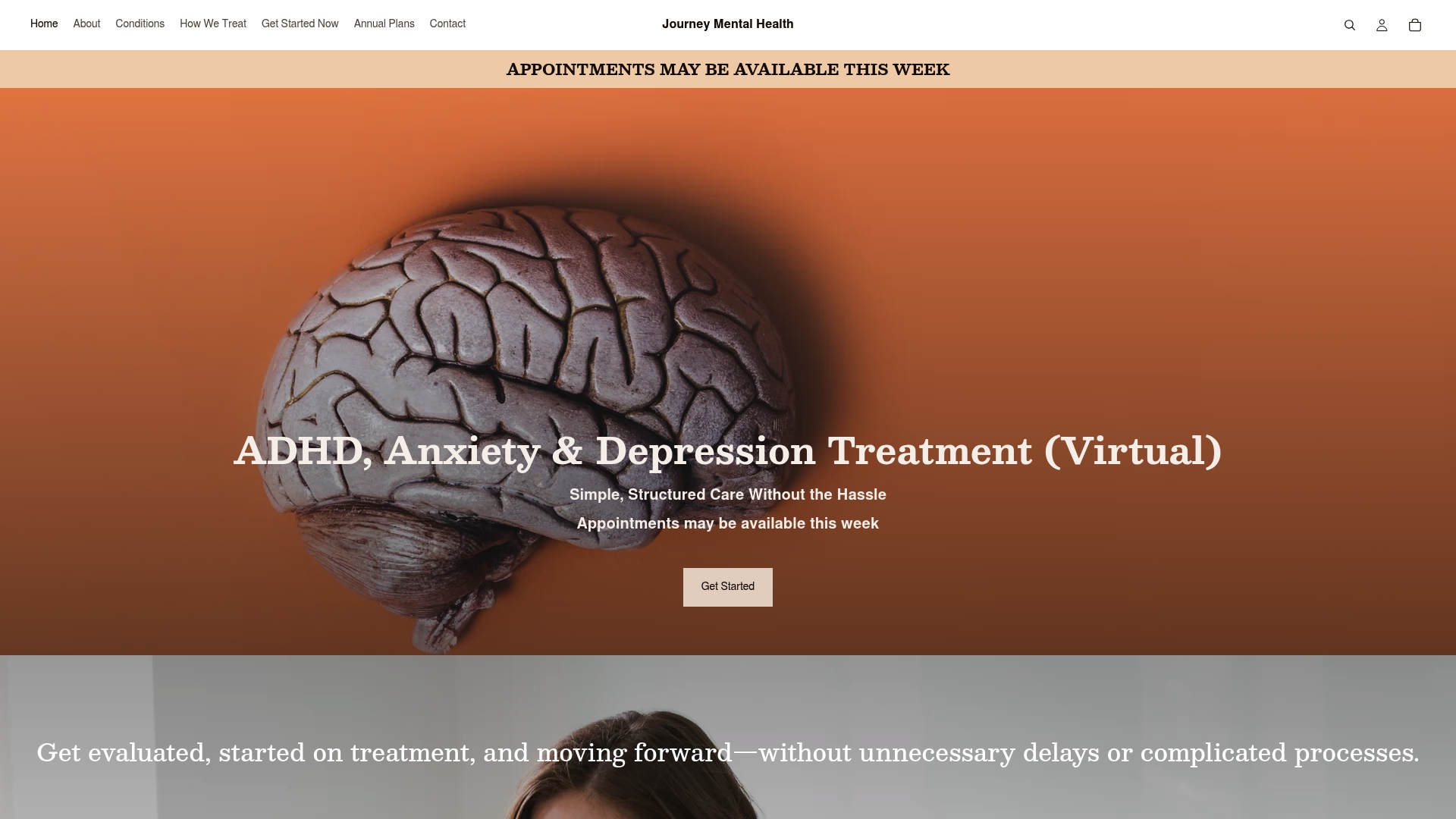
Appointments are available quickly, and the structured care model means you’re not piecing together your own treatment from multiple platforms. If you’re ready to move from a single client portal to a care experience that actually holds together, start with an ADHD evaluation or reach out to Journeymhw directly to check availability in your state.
Useful sources for verifying compliance and technical claims
These are the primary sources behind the compliance and technical claims in this article. Verify BAA terms and audit-log examples directly with any vendor before signing.
- HIPAA Security Rule Guidance | HHS: the authoritative standard for technical safeguards, encryption, and audit controls in healthcare
- HHS HIPAA FAQ: Email and PHI: clarifies when email is and isn’t adequate for clinical exchange
- HHS HIPAA Cloud Computing Guidance: covers BAA obligations and key management requirements for cloud-based ePHI tools
- Cortico Secure Healthcare File Delivery: verified-link delivery features, SOC 2 Type II and ISO 27001 certifications
- RocketShare for Healthcare: zero-knowledge encryption model, AES-256 and TLS 1.3 specifications
- Virtru Secure Share for Healthcare: object-level encryption, access controls, and HIPAA use case documentation
- Journeymhw: integrated telehealth, evaluations, and medication management for Texas and Colorado patients
“Clinics that move from a portal model to verified-link delivery often see faster document turnaround because patients can access items without creating accounts; integration with EHR messaging preserves the chart linkage.” — Cortico
This article provides general information about healthcare technology options and is not legal, medical, or compliance advice. Verify current HIPAA requirements and vendor terms with HHS guidance or a qualified compliance professional before implementing any solution.
Recommended
- Top 3 journeypsych.com Alternatives Providers 2026 – Journey Mental Health
- Top 4 journeyofthemindmhc.com Alternatives Providers 2026 – Journey Mental Health
- Common Telehealth Platform Features for Mental Health – Journey Mental Health
- Top 6 jtihllc.com Alternatives Providers 2026 – Journey Mental Health