

Building Coping Strategies for Depression That Actually Hold Up
The most effective approach to building coping strategies for depression is a short, written plan that combines behavioral activation, a cognitive technique, and one lifestyle habit, reviewed weekly and adjusted as you go. A multimodal plan like this outperforms any single tactic because depression rarely responds to one lever alone. Three components matter most:
- Behavioral activation — one small, scheduled action that counters withdrawal
- Cognitive restructuring — a way to catch and question automatic negative thoughts
- A daily anchor — a consistent sleep or activity habit that stabilizes mood
Start today: pick one five-minute task you have been avoiding, and put it on your calendar for a specific time, not “later.”
Key Takeaways
A written coping plan combining behavioral activation, cognitive restructuring, and one lifestyle anchor works better than any single strategy alone, especially when reviewed weekly and adjusted based on real completion data.
| Point | Details |
|---|---|
| Start small and specific | Pick one five-minute behavioral activation task and schedule it at a fixed time today. |
| Limit your plan to 3 to 5 items | Pull strategies from different domains (behavioral, cognitive, lifestyle, social) to avoid overload. |
| Expect a medication delay | Antidepressants typically need four to eight weeks before mood symptoms visibly improve. |
| Track completion, not perfection | Log a 1 to 10 mood rating and activity completion rate weekly to catch relapse signs early. |
| Escalate when progress stalls | Bring your written plan to a clinician if strategies aren’t working after several weeks. |
Table of Contents
- What Are the Core Evidence-Based Coping Strategies for Depression?
- How Do You Build a Personal Coping Plan Step by Step?
- What Daily Habits and Micro-Practices Stabilize Mood?
- When Should You Seek Professional Help, and What Should You Expect From Medication?
- How Do You Sustain Progress and Prevent Relapse?
- Who Is Behind This Guidance, and Where Can You Get Clinical Follow-Up?
- How Do You Recognize and Regulate Intense Emotions?
- How Do You Manage Stress Tied to Specific Depression Triggers?
- How Do You Build Problem-Solving Skills for Depressive Challenges?
- Why Does Self-Compassion Matter More Than Self-Criticism?
- How Does Nutrition Affect Mood and Depression?
- Ready to Build a Plan That Has Clinical Backup?
- Where Can You Read More on This Topic?
- What Actually Moves the Needle for People Building Coping Skills?
- Frequently Asked Questions
- Sources
What Are the Core Evidence-Based Coping Strategies for Depression?
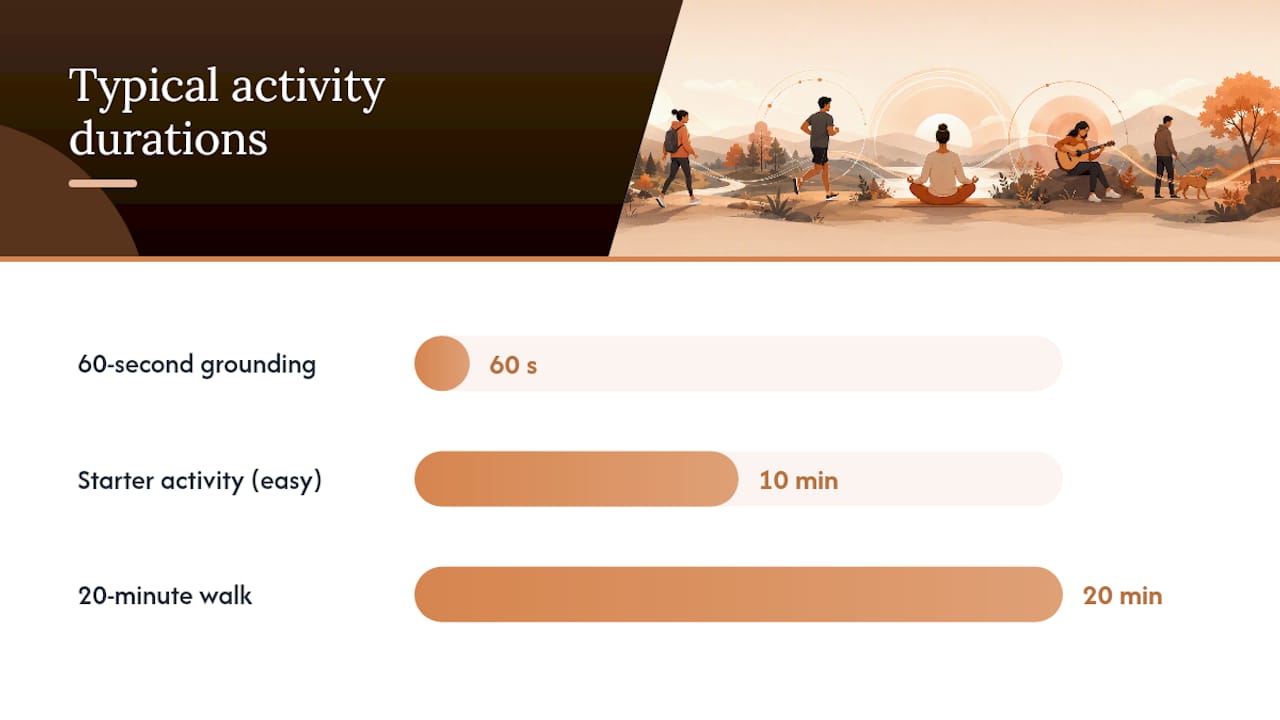
Behavioral activation works by reversing the withdrawal cycle that keeps depression in place. You choose a small, specific activity, one that feels almost too easy, and schedule it at a fixed time rather than waiting until you “feel like it.” A good starter list includes a ten-minute walk, washing one load of dishes, or texting a friend back. The mechanism matters here: doing the activity generates a small mood lift that makes the next activity easier to attempt.
Cognitive techniques target the automatic thoughts that fuel low mood. When you notice a thought like “I always mess this up,” write it down, then ask three questions: What evidence supports this? What evidence contradicts it? What would I tell a friend who said this about themselves? This Socratic method, borrowed from cognitive behavioral therapy, interrupts rumination by forcing a shift from feeling to evaluating.
Mindfulness and grounding techniques help when emotions spike faster than you can think through them. A 60 second version: name five things you can see, four you can touch, three you can hear, two you can smell, one you can taste. Use it when anxiety or sadness feels physically overwhelming, not as a daily habit, but as an emergency brake.
Lifestyle supports round out the plan. A 20 minute walk most days delivers measurable mood benefits, consistent sleep and wake times regulate the body’s mood chemistry, and cutting back on alcohol matters because it depresses the central nervous system and undoes progress made elsewhere in the plan.
Social connection often gets skipped because reaching out feels harder when you’re depressed. Keep the script simple: “I’ve been having a rough week, could we grab coffee or talk on the phone?” That is a complete request. You don’t owe anyone an explanation before you ask for support.
Here’s how to sequence these into your first week:
- Pick one behavioral activation task and schedule it for tomorrow morning.
- Write down one recurring negative thought and challenge it using the three questions above.
- Add a 20 minute walk to three days this week, same time each day.
- Send one text to someone you trust, using the script above.
- Start a one-line journal entry each night: what you did, how you felt, one thing that went okay.
Pro Tip: Pair every new habit with something you already do without thinking, like brushing your teeth. Attaching the walk to “right after breakfast” removes the decision fatigue that derails good intentions.
A printable “wellness toolbox,” a single page listing your go-to coping techniques by category, works better than trying to remember strategies in the moment. Keep it on your phone or taped inside a cabinet you open daily.
How Do You Build a Personal Coping Plan Step by Step?
Choose three to five strategies, not more, and pull them from different domains: one behavioral, one cognitive, one lifestyle, maybe one social. Depression narrows your capacity, so a plan with ten items becomes another source of failure. Base your selection on your current biggest barrier. If mornings are hardest, anchor your plan there. If isolation is the problem, weight it toward social contact.
Each entry needs four details: who, what, when, and how long. Vague plans (“exercise more”) fail quietly. Specific ones don’t. Two examples:
- Monday, Wednesday, Friday, 8:00 AM. Walk around the block alone, 15 minutes, before checking phone.
- Every evening, 9:00 PM. Write one automatic thought and challenge it using the three Socratic questions, five minutes, in the notes app.
Review your plan on two timelines: a daily micro-log (one line, thirty seconds) and a weekly check-in (ten minutes, Sunday evening) where you ask what worked, what didn’t, and what needs adjusting. Written, specific plans measurably improve follow-through compared with strategies you only think through mentally.
If you’re working with a clinician through structured guided self-help, expect the program to run about six to eight sessions, with your written plan serving as the between-session record of what’s working.
Build a safety layer into the plan itself: name one person you’ll call if things get worse, and list two immediate coping actions (a grounding exercise, a crisis line number) you can act on without deliberating.
What Daily Habits and Micro-Practices Stabilize Mood?
Mornings set the tone more than most people realize. A consistent wake time, even on weekends, keeps your circadian rhythm steady, and five minutes of natural light exposure after waking helps regulate the hormones tied to mood and alertness. Add one small movement, stretching, a short walk to get the mail, before checking your phone.
- Morning anchor: wake at the same time, get light exposure, move your body for two minutes.
- Midday activation: take a 20 minute walk, ideally outside, treating it as non-negotiable rather than optional.
- Evening wind-down: set a screen curfew 30 to 60 minutes before bed, and keep your bedroom for sleep only, which is the core of stimulus control.
- Two-minute grounding: when overwhelmed, breathe in for four counts, hold for four, exhale for six, repeat six times.
- Nightly journal: log your mood on a 1 to 10 scale, note one thing you’re grateful for, and one task you completed.
Pro Tip: If a full journal entry feels like too much on hard days, cut it down to three words: mood number, one activity, one word for how the day went. Consistency beats completeness.
Sleep hygiene deserves particular attention because depression and poor sleep reinforce each other. Go to bed and wake at fixed times even after a bad night, avoid caffeine after early afternoon, and if you can’t sleep after 20 minutes, get up and do something quiet rather than lying there frustrated.
When Should You Seek Professional Help, and What Should You Expect From Medication?
Certain signs mean it’s time to involve a clinician immediately rather than working through your plan alone: thoughts of suicide or self-harm, an inability to get out of bed or care for basic needs for several days, or a sudden worsening after a period of stability. If you or someone you know is in crisis, contact a crisis line or emergency services right away.
Antidepressants typically take several weeks of consistent use before mood symptoms noticeably lift, though physical symptoms like sleep or appetite often improve first. That gap between starting medication and feeling better is normal, not a sign the treatment has failed.
This documented timeframe from NIMH matters because many people stop medication in week two or three, right before it would have started working. Guided self-help programs, meanwhile, typically run multiple sessions with practitioner support, giving you a structured window to test strategies with feedback.
Bring your written coping plan to your first psychiatric visit. A clinician can tell you which parts align with structured treatment approaches and which need adjusting alongside medication.
How Do You Sustain Progress and Prevent Relapse?
Track two numbers weekly: the percentage of planned activities you actually completed, and a 1 to 10 mood rating each evening. On Sunday, spend ten minutes asking what patterns show up. A simple review script: What worked this week? What didn’t? What’s one change for next week?
- If completion rates drop below half for two weeks straight, scale down the plan rather than pushing harder.
- If a strategy consistently feels neutral after three weeks, swap it for a different one in the same domain.
- Watch for early warning signs of relapse: withdrawing from people again, skipping the morning anchor for several days in a row, or missing follow-up appointments.
Relapse prevention isn’t about never sliding backward. It’s about noticing the slide within days instead of months, and having a plan already written down for exactly that moment.
Who Is Behind This Guidance, and Where Can You Get Clinical Follow-Up?
- Journeymhw operates as a telehealth platform offering online psychiatric evaluations and medication management for depression, so you can pair a written coping plan with clinical oversight.
- Structured options like The Simple Plan give patients a defined, discounted path into ongoing psychiatric care with quicker appointment availability than many traditional clinics.
- This article was developed under Jamie’s editorial authorship on the Journeymhw publisher site, where you can find related reading on coping strategies for anxiety and depression.
- If your coping plan isn’t gaining traction after a few weeks, that’s a signal to bring it to a licensed evaluation rather than a signal you’re doing it wrong.
How Do You Recognize and Regulate Intense Emotions?
Emotional regulation starts with naming what you feel before trying to manage it. Depression often shows up as a fog of “bad,” when the actual emotion underneath might be shame, anger, or grief. Pause and ask: what is this specifically? Naming an emotion accurately reduces its intensity because it moves the experience from a raw physical sensation into something your thinking brain can work with.

Once you’ve named it, use a simple scale check: rate the emotion’s intensity from 1 to 10. Anything above a seven calls for a grounding technique first, the five senses exercise or paced breathing, before any cognitive work. Trying to challenge a thought while at a nine only adds frustration, because the nervous system isn’t ready to reason yet.
Build a short list of what each emotion tends to need. Sadness often responds to connection, a call or a shared meal. Anger tends to need physical release, a brisk walk or pushing against a wall. Anxiety usually needs grounding first, then problem-solving. Matching the response to the actual emotion, rather than defaulting to one technique for everything, is what separates coping skills that work from ones that fizzle out after a week.
Write these pairings into your wellness toolbox so you’re not guessing during a bad moment.
How Do You Manage Stress Tied to Specific Depression Triggers?
Generic stress management advice misses the point when depression has specific, recurring triggers. Identify yours first: is it Sunday nights before a hard week, a particular relationship, financial pressure, or unstructured weekends? Once you know the trigger, you can build a targeted response instead of a one-size-fits-all stress technique.
For predictable triggers, like a weekly deadline or a difficult family call, schedule a buffer. Do something grounding 30 minutes before and after the event, even a short walk or five minutes of quiet breathing. This prevents the stress from bleeding into the rest of your day.
For unpredictable triggers, keep your two-minute grounding technique ready and rehearsed so it’s automatic under pressure. The goal isn’t eliminating stress, which is not realistic, but shortening how long it takes you to recover once it hits.
Track your triggers in your nightly journal entry. After two or three weeks, patterns emerge that aren’t obvious in the moment, like a particular time of day or a specific person who consistently precedes a mood dip. That data turns vague stress into something you can actually plan around, which is the entire point of a written coping plan over a mental one.
How Do You Build Problem-Solving Skills for Depressive Challenges?
Depression narrows problem-solving ability, turning ordinary tasks like paying a bill or scheduling an appointment into decisions that feel paralyzing. A structured problem-solving approach breaks that paralysis into steps small enough to actually complete.
Start by writing the problem in one sentence, as specifically as possible. “I’m overwhelmed” isn’t solvable. “I haven’t scheduled my dentist appointment in three months” is. Next, list three possible actions, even bad ones, since generating options matters more than picking the perfect one right away. Pick the smallest viable action and set a time to do it, the same specificity your coping plan already uses.
This structured approach works because depression tends to inflate problems into unsolvable-feeling blocks. Breaking a problem down externally, on paper, counteracts the internal distortion that makes everything feel bigger than it is.
Why Does Self-Compassion Matter More Than Self-Criticism?
Self-criticism feels productive, like it’s pushing you toward improvement, but it consistently backfires with depression. Harsh self-talk activates the same threat response as external criticism, which increases withdrawal rather than motivation. Self-compassion isn’t about letting yourself off the hook. It’s a more effective driver of change.
Practically, this means catching self-critical language and rephrasing it the way you’d talk to a friend. Instead of “I’m so lazy for not doing this,” try “This has been genuinely hard, and I did one small thing today.” That rephrase isn’t denial. It’s accuracy, since depression itself, not laziness, is usually the actual obstacle.
Build a brief self-compassion check into your evening journal: one sentence acknowledging that today was hard, without a “but you should have” attached.
How Does Nutrition Affect Mood and Depression?
What you eat doesn’t cause or cure depression on its own, but it shapes the physical baseline your mood strategies are working from. Skipping meals or relying heavily on sugar and refined carbohydrates creates blood sugar swings that can mimic or worsen mood instability, irritability, and fatigue, the same symptoms your coping plan is trying to manage.
Aim for regular meal timing rather than a specific diet, since irregular eating is often the bigger issue for people with depression than food choice itself. Include protein at breakfast, since it supports steadier energy through the morning than carbohydrates alone. Limit alcohol, which disrupts both sleep architecture and mood regulation, undercutting two pillars of your plan at once.
Treat nutrition as one more lifestyle anchor alongside sleep and movement, not a separate project. A realistic goal, like eating breakfast within an hour of waking, fits the same specific, scheduled format as the rest of your coping plan.

Ready to Build a Plan That Has Clinical Backup?
A written coping plan gives you structure between appointments, but depression that isn’t responding to self-directed strategies after several weeks deserves a clinical evaluation, not more willpower. Journeymhw offers virtual psychiatric evaluations and ongoing medication management for depression for adults in Texas and Colorado, with appointment availability designed to reduce the wait between deciding you need help and actually getting it. If you’re weighing whether medication fits into your plan, reviewing what to expect from an initial telehealth visit can make that first step feel less uncertain. For a broader structured roadmap alongside your own plan, this depression recovery framework offers a useful clinician-oriented complement.
Where Can You Read More on This Topic?
- Depression overview and treatment | NIMH
- Coping with depression | NHS
- Depression fact sheet | WHO
- NAMI HelpLine and support finder
What Actually Moves the Needle for People Building Coping Skills?
Most advice on this topic treats coping strategies like a menu you sample from. That’s backward. The evidence points toward combining a small set of strategies into one written plan, then testing it the way a clinician would test a treatment, tracking what works and cutting what doesn’t.
The biggest gap between conventional advice and what actually helps is specificity. “Exercise more” and “practice mindfulness” sound reasonable, but they fail exactly when depression makes decision-making hardest. A plan that names the day, time, and duration survives the moments when motivation disappears, because it removes the decision entirely.
If you take one thing from this article, prioritize writing the plan down before anything else. Thinking through strategies mentally feels like progress, but it evaporates on a bad day. A page in your notes app, checked weekly, doesn’t.
Frequently Asked Questions
What is the fastest way to start building coping strategies for depression? Pick one small, specific behavioral activation task, like a 10 minute walk, and schedule it for a fixed time tomorrow. Starting with one concrete action beats planning an entire system before you’ve tested anything.
How many coping strategies should a plan include? Three to five, pulled from different domains like behavioral, cognitive, and lifestyle. More than that tends to overwhelm rather than help, especially in the early weeks.
How long before coping strategies start working? Behavioral activation often produces a small mood lift within days, while structured programs and medication typically need four to eight weeks for a clearer, sustained shift.
What’s the difference between coping strategies and professional treatment? Coping strategies are daily, self-directed tools you can use between appointments. Professional treatment, including medication and structured therapy, addresses the underlying condition and works best alongside a written plan rather than instead of one.
When should I stop self-managing and see a clinician? If thoughts of self-harm appear, if basic daily functioning breaks down for several days, or if your plan isn’t producing any change after a few weeks, it’s time for a psychiatric evaluation rather than more self-directed effort.
This article is general information, not a substitute for advice from a qualified doctor. Consult a qualified healthcare professional about your own circumstances before acting on anything here.
Sources
- Depression | NIMH
- Tips for depression | ADAA
- Clinical guidance on multimodal approaches (PubMed)
- Cope with depression | NHS
Recommended
- Coping Strategies for Anxiety and Depression in Adults – Journey Mental Health
- High Functioning Depression: 10 Strategies That Help – Journey Mental Health
- Why Depression Affects Daily Functioning: A Clear Guide – Journey Mental Health
- Why Depression Treatment Sometimes Doesn’t Work Phase 2 – Journey Mental Health