

Is an Annual Mental Health Subscription Worth It?
If you need ongoing psychiatric follow-up or medication management, an annual mental health subscription is often the more affordable, predictable route compared with paying per visit. Journey Mental Health offers a care-inclusive annual plan built around ADHD, anxiety, and depression that reflects exactly this model: bundled visits, medication oversight, and fewer administrative gaps.
The real question isn’t whether subscriptions exist. It’s whether the one you’re looking at actually includes clinical care, or just gives you access to book it. This article walks through both models, what they typically cost, who they fit, and how to check a plan before you commit to it.
- Care-inclusive plans bundle visits and medication management into one price.
- Access-only memberships charge separately for each visit, even after your annual fee.
- Journey Mental Health’s structured annual plan falls into the care-inclusive category.
Key Takeaways
Care-inclusive annual subscriptions save money and reduce care gaps for people who need recurring psychiatric follow-up, while access-only memberships and pay-per-visit care fit lighter or one-time needs better.
| Point | Details |
|---|---|
| Know the model | Access-only memberships charge per visit; care-inclusive plans bundle visits and medication management into one price. |
| Match usage to plan type | People needing three or more visits a year typically save more with a care-inclusive subscription. |
| Verify licensing and credentials | Confirm the clinician is licensed in your state and can prescribe your medication type via telehealth. |
| Crisis care is separate | Call 911 for immediate danger or call/text 988 for a mental health crisis; subscriptions don’t replace emergency care. |
| Journey Mental Health fits care-inclusive needs | The Simple Plan bundles evaluation and ongoing ADHD, anxiety, or depression care for residents of Texas and Colorado. |
This article is general information, not a substitute for advice from a qualified doctor. Consult a qualified healthcare professional about your own circumstances before acting on anything here.
Table of Contents
- What Is an Annual Mental Health Subscription, Exactly?
- Who Benefits Most From an Annual Plan?
- How Much Does an Annual Mental Health Subscription Cost?
- What Should You Ask Before Choosing a Plan?
- When Is a Subscription Not Enough? Crisis and Safety Guidance
- Journey Mental Health’s Annual Plan: What It Actually Includes
- Can You Cancel or Change Your Subscription Later?
- Does Insurance or an Employer Benefit Cover This?
- What I’d Tell a Friend Weighing This Decision
- Getting Started With Journey Mental Health’s Annual Plan
- Sources
What Is an Annual Mental Health Subscription, Exactly?
Every annual mental health subscription falls into one of two categories: access-only or care-inclusive. Access-only memberships give you perks like priority booking, secure messaging, or discounted rates, but you still pay per visit. Care-inclusive subscriptions bundle a set number of visits, medication management, and follow-ups into one annual price. Experts distinguish these two models because they serve different needs: occasional oversight versus consistent clinical intervention.
Common inclusions across care-inclusive plans:
- A defined number of scheduled psychiatric visits per year
- Ongoing medication management and refill coordination
- Secure messaging for questions between appointments
- Educational resources on your specific diagnosis
- Priority scheduling over pay-per-visit patients
Prepaid annual billing usually locks in a lower rate per visit than paying monthly or one-off, similar to how telehealth platforms often publish tiered pricing so patients can compare costs upfront.
Who Benefits Most From an Annual Plan?
An annual mental health subscription fits some situations far better than others. Here’s how to tell where you land.
Good fits typically include:
- People stable on medication who need predictable, recurring follow-ups
- Patients who prefer telepsychiatry over in-person visits and want cost certainty
- Anyone who visits a psychiatric provider three or more times a year
Poor fits typically include:
- Someone who needs a single diagnostic evaluation and nothing further
- Patients requiring in-person specialty care a subscription can’t deliver
- Anyone in active crisis who needs same-day, in-person intervention
Before enrolling, check your likely visit frequency, whether your medication is a controlled substance (this affects telehealth prescribing rules), your insurance preferences, and whether the provider is licensed in your state.
Pro Tip: If you’re not sure how often you’ll need follow-ups, ask the provider what their typical cadence looks like for someone with your diagnosis before you commit to a year of billing.
How Much Does an Annual Mental Health Subscription Cost?
Pricing varies widely depending on what’s actually bundled into the plan. Light, access-only oversight tends to run cheaper than full care-inclusive coverage.
A rough pricing snapshot: without insurance, a single psychiatric evaluation often costs $300 to $600, and follow-up medication management visits run $150 to $350 each. Paid separately, multiple follow-ups annually can add up substantially. A bundled annual plan that covers the same visits often costs less overall, especially once messaging and refill support are factored in.
Ballpark ranges you’ll see across the market:
- Light oversight or access-only memberships: typically within a moderate annual cost range
- Care-inclusive plans with monthly or quarterly follow-ups: generally fall within a higher annual cost range
These figures are directional, not quotes. Actual pricing depends on your provider’s state, visit frequency, and what’s bundled. Billing structures also vary: some providers charge the full year upfront at a discount, others bill monthly under an annual commitment, and cancellation or refund terms differ by practice. Read the affordability trade-offs of each structure before signing up.
What Should You Ask Before Choosing a Plan?
A good annual mental health subscription should answer these questions before you ever pay for it. If a provider’s page doesn’t cover most of this, that’s worth noticing.
Evaluate every plan against this list:
- What are the clinician’s credentials, and are they licensed in your state?
- How many visits are included, and what’s the cadence (monthly, quarterly)?
- Does medication management include controlled substances, and under what telehealth rules?
- How fast do they respond to secure messages between visits?
- Do they provide a superbill for out-of-network insurance reimbursement?
- What are the exact cancellation and refund terms?
Ask these directly, in these words if you have to:
- “Do you offer a superbill for insurance reimbursement?”
- “How are follow-up visits billed once I’m enrolled in the membership?”
- “Which states are you licensed to practice in?”
- “Do you prescribe controlled substances through telehealth?”
- “What happens if I need help after hours or on a weekend?”
Red flags worth walking away from: no published pricing anywhere on the site, no clinician credentials listed, vague or missing cancellation terms, and no mention of what to do in a crisis. Reviewing what a solid psychiatric care plan should include before you enroll saves you from discovering gaps after you’ve already paid.
When Is a Subscription Not Enough? Crisis and Safety Guidance
No annual mental health subscription, however comprehensive, replaces emergency care. If you are in immediate danger, call 911. If you’re experiencing a suicidal crisis or acute mental health emergency, call or text 988 to reach the Suicide and Crisis Lifeline right away.
Before enrolling, check:
- Whether the plan has an on-call or after-hours policy for urgent (non-emergency) issues
- How quickly messages get answered outside scheduled visits
- Whether your clinician will help you build a written safety plan you can share with family or other providers
A subscription manages ongoing care. It is not built for emergencies, and no reputable provider will claim otherwise.
Journey Mental Health’s Annual Plan: What It Actually Includes
Journey Mental Health runs a structured annual plan, marketed as The Simple Plan, built specifically around ADHD, anxiety, and depression care delivered through telehealth. The plan is care-inclusive by design: it bundles psychiatric evaluation, ongoing medication management, and scheduled follow-ups rather than charging separately for each visit.
What that looks like in practice:
- Virtual psychiatric evaluation to establish or confirm a diagnosis
- Structured follow-up visits for medication management and monitoring
- Focus areas limited to ADHD, anxiety, and depression, not general psychiatry
- Fast appointment turnaround compared with typical waitlists for local psychiatrists
- Superbill guidance available for patients seeking out-of-network insurance reimbursement
Care is available to residents of Texas and Colorado, where Journey Mental Health’s clinicians hold active licensure… That licensing boundary matters: telehealth often widens access compared with local psychiatry, but only within states where the provider is authorized to practice.
Can You Cancel or Change Your Subscription Later?
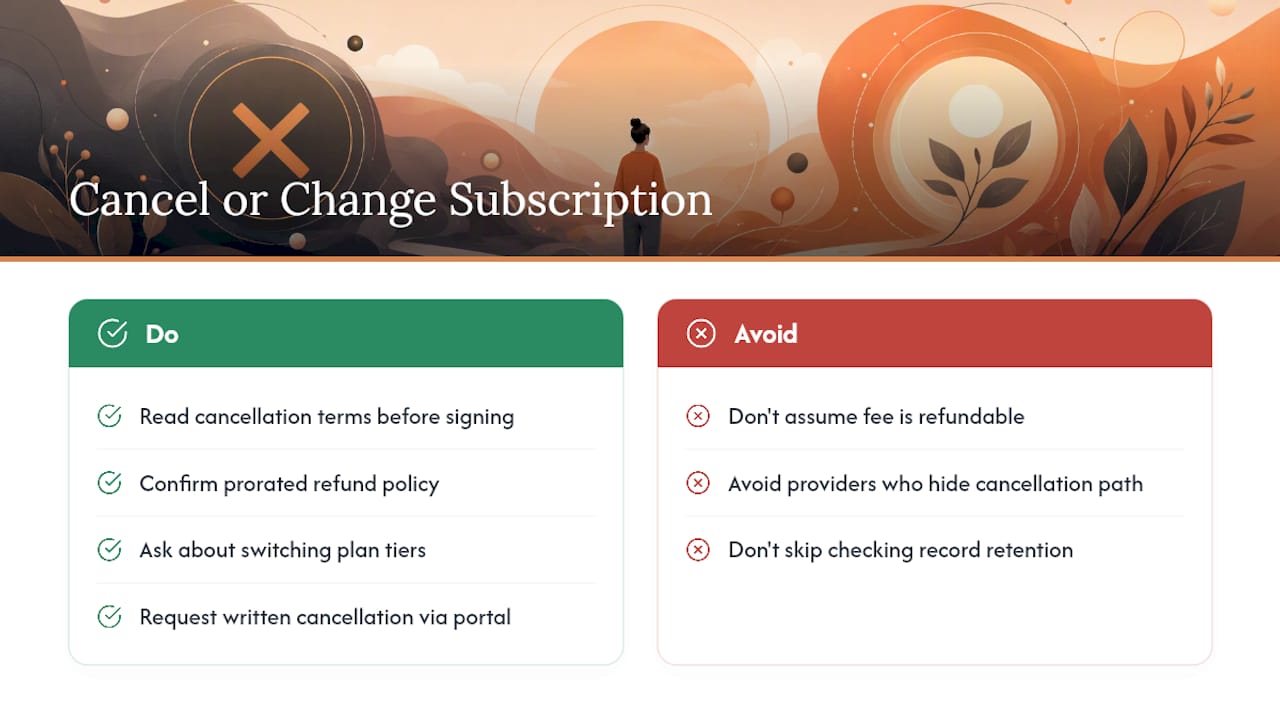
Yes, and you should read the fine print before you sign up, not after. Most annual mental health subscriptions, Journey Mental Health’s included, spell out cancellation terms at enrollment rather than burying them in a support ticket queue.
A few things to confirm up front. First, ask whether the annual fee is refundable on a prorated basis if you cancel partway through the year, or whether it’s treated as a nonrefundable commitment once the discount is applied. Providers structure this differently: some refund unused months, others don’t, especially if the annual price reflected a bundled discount versus paying month to month.
Second, find out how to change your plan tier if your needs shift. Someone who enrolled for quarterly medication management might later need monthly follow-ups, or the reverse, once symptoms stabilize. A provider worth choosing lets you move between tiers without forcing you to cancel and re-enroll from scratch.
Third, check what happens to your clinical records and any remaining scheduled visits if you cancel. You should walk away with a summary of your care, not a support email asking you to explain your history all over again to your next provider.
Practical steps that apply almost universally: log into your patient portal or account dashboard, locate the subscription or billing settings, and submit the cancellation request in writing so you have a timestamped record. If the portal doesn’t offer a clear cancellation path, that absence is itself worth treating as a red flag, per the evaluation checklist above. Reasonable providers make leaving as straightforward as joining.
Does Insurance or an Employer Benefit Cover This?
Annual mental health subscriptions and traditional insurance don’t always overlap the way people expect, so it helps to understand where they intersect.
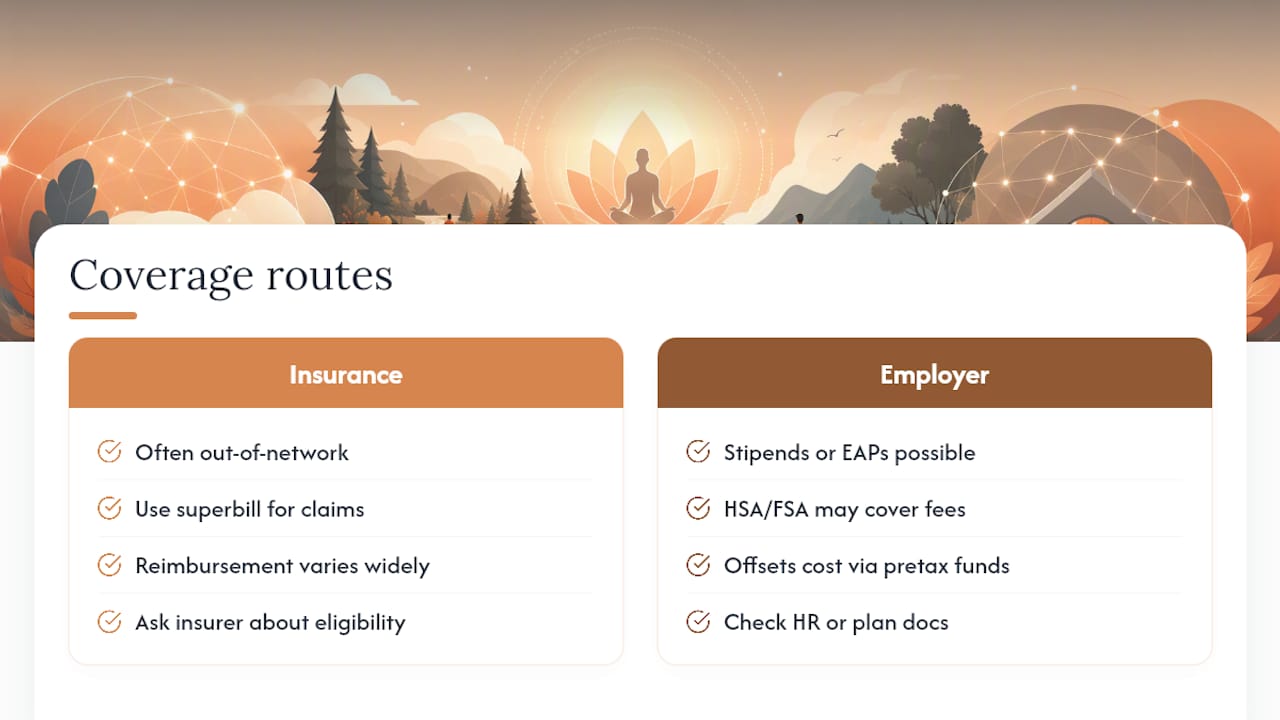
Many telepsychiatry subscriptions, including care-inclusive plans, operate outside insurance networks. That doesn’t mean insurance is irrelevant. Providers who issue a superbill, an itemized receipt listing diagnosis and procedure codes, let you submit that document to your insurer for potential out-of-network reimbursement. Whether you get money back depends entirely on your specific plan’s out-of-network mental health benefits, which vary enormously between insurers and even between plans from the same insurer.
Employer benefits add another layer. Some employers offer mental health stipends, Employee Assistance Programs, or Health Savings Account and Flexible Spending Account eligibility that can offset subscription costs even when the provider itself is out-of-network. It’s worth checking your HSA or FSA plan documents specifically. Many annual psychiatric subscriptions qualify as eligible medical expenses, which effectively discounts the cost through pretax dollars.
Before enrolling, ask your provider directly whether they issue superbills, and ask your insurer or HR benefits contact whether out-of-network mental health visits or subscription-based care qualify for reimbursement. Doing both before you pay avoids the common surprise of assuming coverage that never existed.
What I’d Tell a Friend Weighing This Decision
Annual plans make the most sense for people who already know they’ll need psychiatric follow-up for months, not weeks. If you’re still figuring out whether you even need ongoing care, a single evaluation is the smarter first step; you can decide about a subscription once you know your actual visit cadence…
My practical tip: ask any provider how they handle a missed refill or delayed message before you enroll. That answer tells you more about the plan’s real value than the price tag does.
— Jamie
Getting Started With Journey Mental Health’s Annual Plan
Journey Mental Health built its enrollment process to remove the usual friction of starting psychiatric care: long waitlists, unclear pricing, and scattered paperwork. Compared with piecing together individual visits with a local psychiatrist, the annual plan gives you one predictable price for a full year of structured ADHD, anxiety, or depression care.
Getting started follows a simple sequence. You complete an initial online assessment, get matched with a licensed clinician in your state, and enroll in the annual plan with your preferred payment option. From there, scheduling follow-ups happens directly through the platform rather than through a call center. Care is currently available to residents of Texas and Colorado, and the team can provide superbill documentation for patients pursuing out-of-network insurance reimbursement.
If ADHD is your primary concern, start with the ADHD treatment plan or the state-specific options for Texas and Colorado. For anxiety, review the anxiety treatment page, and for depression, the depression treatment options outline what to expect from evaluation through ongoing care. Whichever condition brought you here, the next step is the same: complete the assessment and see whether the annual plan fits your situation.
Sources
Recommended
- Affordable Mental Health Care Access: Your Practical Guide – Journey Mental Health
- Best awonderfuljourneyllc.com Alternatives for ADHD & Mental Health – Journey Mental Health
- Annual ADHD Treatment Plans in Texas and Colorado | Affordable Mental Health Membership – Journey Mental Health
- Benefits of Structured Mental Health Plans Explained – Journey Mental Health