

Avoid Dose Dumping: Safer Drinking With ADHD Medication and Telehealth
Heavy drinking on ADHD medication is never a good idea, but the real risk depends heavily on which drug and formulation you take. Stimulants and long-acting formulas carry the most concern, according to manufacturer warnings and pharmacology data. Before you drink, check your medication leaflet and talk with your prescriber. Clinicians can help you understand what’s safe for your specific prescription.
TL;DR:
- Long-acting stimulants can release a full dose early when mixed with alcohol, causing dose-dumping and increasing toxicity risk.
- Alcohol can raise blood concentrations of methylphenidate and lead to the formation of harmful metabolites, intensifying side effects.
- Stimulant medications mask intoxication symptoms, heightening the risk of unintentional overdrinking, accidents, and poor judgment.
- People with heart conditions, older adults, or those with a history of alcohol use disorder face higher health risks from combining alcohol with ADHD medications.
- A medical review before drinking is essential, especially for long-acting formulas or if recent alcohol use has occurred, to ensure safety.
Table of Contents
- Which ADHD Medications Interact With Alcohol
- How Alcohol Changes the Way ADHD Meds Work in Your Body
- The Masking Effect: Why ADHD Meds Can Hide How Drunk You Are
- The Real Health Risks of Mixing Alcohol With ADHD Medication
- A Harm-Reduction Checklist for Drinking on ADHD Medication
- What Clinicians Actually Look at When Assessing Your Risk
- An Honest Note on Balancing Treatment and Safety
- Get a Medication Review With Journeymhw
- Sources
Which ADHD Medications Interact With Alcohol
Not every ADHD medication carries the same risk profile, and knowing your drug class matters more than most people realize. Stimulants, including methylphenidate (found in Ritalin, Concerta, and Metadate), amphetamine salts (Adderall), and lisdexamfetamine (Vyvanse), sit at the center of most interaction concerns. Nonstimulants, such as atomoxetine (Strattera), guanfacine, clonidine, and the newer agent viloxazine, work through different mechanisms and generally carry a distinct set of cautions. Newer options like centanafadine (marketed as Simtriyo) are still building a safety record with alcohol specifically.
Long-acting stimulant formulations deserve extra attention because of how they’re designed to release medication slowly over the day.
- Immediate-release stimulants (methylphenidate, amphetamine salts): raise heart rate and blood pressure; alcohol compounds cardiac strain.
- Long-acting stimulants (Ritalin LA, Metadate CD): some formulations can release their full dose early when mixed with alcohol, a phenomenon called dose-dumping.
- Atomoxetine and central alpha agonists (guanfacine, clonidine): combine with alcohol to increase sedation and blood pressure drops rather than cardiac spikes.
- What to check: your leaflet’s “drug interactions” section, any explicit alcohol warning, and whether your formulation is labeled extended or controlled release.
How Alcohol Changes the Way ADHD Meds Work in Your Body
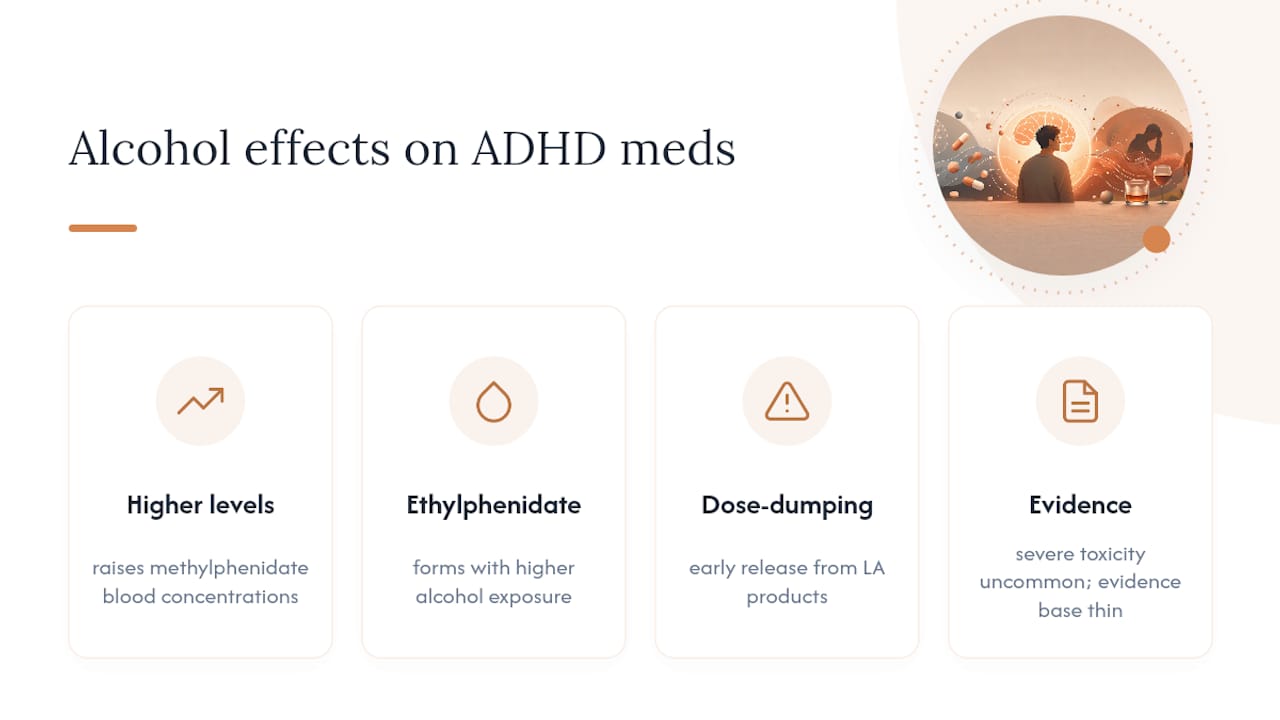
Alcohol doesn’t just sit next to your medication. It actively changes how your body processes it. Research indicates alcohol can raise methylphenidate blood concentrations, and at higher doses, the two substances can combine to form ethanol-linked metabolites like ethylphenidate. That’s a chemical byproduct your body wasn’t designed to handle from either drug alone.
The bigger practical concern involves long-acting formulations. Laboratory testing on certain extended-release methylphenidate products, including Ritalin LA and Metadate CD, showed dramatically increased early drug release when exposed to alcohol. Instead of a smooth release over eight to twelve hours, you could get a much larger dose hitting your system all at once. That’s dose-dumping, and it’s part of why manufacturers warn against alcohol with these specific products.
Here’s the honest caveat: a 2015 systematic review examining 20 studies over 22 years found that severe acute toxicity from combining therapeutic-dose ADHD medication with alcohol is uncommon in the published literature. That doesn’t mean it’s safe. It means the evidence base is thin, and manufacturer warnings exist because the pharmacology justifies caution even where large-scale harm data is limited.
The Masking Effect: Why ADHD Meds Can Hide How Drunk You Are
Stimulants keep you alert. That’s the whole point of the medication, and it’s also the problem when alcohol enters the picture. Normally, drowsiness and slowed reaction time tell your brain to stop drinking. Stimulants can blunt those signals, according to clinical reviews on ADHD and alcohol, which means you can keep drinking past the point where your body would otherwise put the brakes on.
This matters because ADHD itself is already linked to higher rates of alcohol misuse, often tied to impulsivity and a tendency to self-medicate. Layer the masking effect on top of that baseline risk, and the consequences show up fast:
- Blackouts from drinking more than intended, unaware of your actual intoxication level.
- Higher accident risk, including falls and impaired driving.
- Poor judgment calls that wouldn’t happen if you felt as drunk as you actually are.
Pro Tip: If you notice you’re drinking more since starting stimulant medication, that’s worth mentioning at your next appointment. It’s a pattern worth flagging early, not after it becomes a bigger problem.
The Real Health Risks of Mixing Alcohol With ADHD Medication
Short-term, the biggest concerns are cardiovascular. Amphetamines and methylphenidate already raise heart rate and blood pressure; alcohol adds strain on top of that, increasing arrhythmia risk in susceptible people. Because stimulants can mask intoxication, the risk of unintentional alcohol poisoning climbs too. Nonstimulants like guanfacine or clonidine bring a different short-term issue: combined sedation and blood pressure drops that can cause dizziness or fainting.
Long-term, repeated mixing raises the stakes further. It compounds addiction risk, adds ongoing cardiovascular strain, and creates uncertain but plausible toxicity concerns that simply haven’t been studied at scale. Drug-information reviews note that methylphenidate accounts for over half of ADHD interaction queries clinicians handle, though most are manageable with monitoring rather than outright contraindication.
Some readers carry more risk than others. Older adults, people with existing heart disease, anyone with a history of alcohol use disorder, and patients on multiple medications should treat these warnings as more than boilerplate caution.
A Harm-Reduction Checklist for Drinking on ADHD Medication
You don’t have to choose between treatment and having a drink at a wedding. You do need a plan.
- Read your medication leaflet first. Look specifically for alcohol warnings and note whether your prescription is immediate or extended release.
- Call your prescriber or pharmacist before you drink, especially if you’re on a long-acting stimulant or have any cardiac history. CHADD’s patient resources recommend this as a first step, not an afterthought.
- Set your drink limit before you start, not after a few drinks in. Because stimulants can mask intoxication, deciding in advance is your safety net.
- Skip other sedatives. Don’t combine alcohol, ADHD medication, and benzodiazepines or opioids in the same window.
- Don’t drive, even if you feel clear-headed. Masking works against your own judgment here.
- Watch for warning signs: chest tightness, racing heartbeat, confusion, or unusual dizziness.
On the 24-hour question: waiting roughly 24 hours between your last dose and drinking is a reasonable buffer for many immediate-release stimulants, giving the drug time to clear your system. It’s not a reliable rule for long-acting formulations or if you’ve recently taken a higher dose, since dose-dumping risk and extended release windows don’t follow a clean 24-hour clock. If you experience chest pain, severe confusion, or fainting, treat it as an emergency. For anything short of that, a call to your prescriber is the right move.
What Clinicians Actually Look at When Assessing Your Risk
Prescribers don’t hand out a blanket “no alcohol” rule and call it done. A proper evaluation includes screening for alcohol use disorder, reviewing other health conditions, and weighing whether a different medication class or formulation might reduce your risk. Sometimes that means shifting from an extended-release stimulant to an immediate-release one, or considering a nonstimulant option entirely.
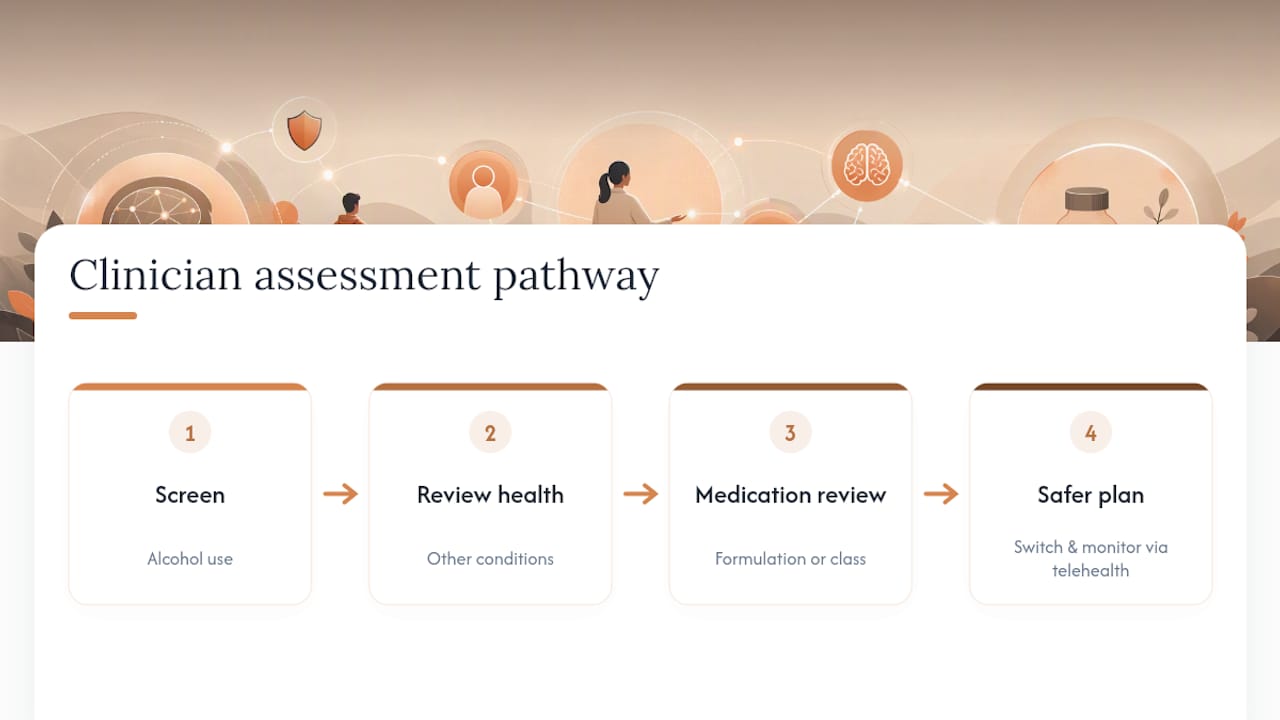
Telehealth has made this kind of review far more accessible. A virtual ADHD medication management visit can get you a formulation reassessment and safety counseling without waiting weeks for an in-person appointment, which matters if you’re already worried about a pattern you’ve noticed.
An Honest Note on Balancing Treatment and Safety
ADHD medication genuinely helps most people who take it. That’s not in question, and safety concerns shouldn’t scare anyone into stopping treatment they need. What the evidence supports is a shared decision between you and your prescriber, not a one-size-fits-all warning label. If you drink, or you’re worried you drink more than you used to, say so at your next visit. That single conversation does more for your safety than any checklist alone.
— Jamie
Get a Medication Review With Journeymhw
If you’re unsure whether your specific prescription is safe to mix with the occasional drink, or you’ve noticed you’re drinking more since starting treatment, that uncertainty is exactly what a medication review is for. Virtual psychiatric evaluations and ongoing medication management, including structured options like certain plans, can provide formulation and dosing decisions built around your actual health history rather than a generic warning label.
Consider booking a review if you’ve had a recent drinking episode that worried you, you’re switching from a long-acting to a shorter-acting stimulant, or you simply want a clinician to confirm your current plan is the right fit. For those managing co-occurring substance concerns, resources like the Sylmar Treatment Center’s guidance on ADHD and substance use can help you understand when additional support makes sense. Start with Journeymhw’s ADHD treatment page to schedule a virtual evaluation and get a plan built around your actual prescription, not a generic warning label.
This article is general information, not a substitute for advice from a qualified doctor. Consult a qualified healthcare professional about your own circumstances before acting on anything here.
Sources
- Are there any potentially dangerous pharmacological effects of combining ADHD medication with alcohol and drugs of abuse? A systematic review
- Mixing ADHD Medication With Alcohol (Psychology Today)
- Drugs