

Starting Mental Health Treatment Online: A Practical Guide
If the idea of starting mental health treatment online feels overwhelming, you are not alone. Many adults dealing with anxiety, depression, or ADHD put off getting help simply because they do not know where to begin. Finding the right provider, understanding what a first session looks like, managing cost concerns — these are real barriers, not excuses. This guide walks you through every step clearly, from choosing a virtual provider to walking out of your first session with a plan that actually fits your life.
Table of Contents
- Key takeaways
- Understanding your online therapy options
- How to prepare for your first online appointment
- What to expect in your first session
- Common challenges when starting online mental health treatment
- My perspective on starting therapy online
- How Journeymhw supports your first steps in online treatment
- FAQ
Key takeaways
| Point | Details |
|---|---|
| Online therapy is accessible and legitimate | Teletherapy for mental health meets the same clinical standards as in-person care when providers follow HIPAA compliance. |
| Preparation reduces first-session anxiety | Setting up your space, testing tech, and writing down your goals beforehand makes a measurable difference in session quality. |
| Cost varies widely but options exist | With insurance, a session can cost as little as $20; without it, structured plans through platforms like Journeymhw can reduce that gap. |
| The first session is exploratory, not a test | Therapists spend the first appointment getting to know you, not diagnosing or prescribing solutions on the spot. |
| Fit matters more than speed | If a provider does not feel right after a few sessions, switching is not failure. Finding the right match is part of the process. |
Understanding your online therapy options
Before you book anything, it helps to know what type of care you actually need. Online mental health services generally fall into three categories: therapy (talk-based sessions with a licensed counselor or psychologist), psychiatry (medical evaluation and diagnosis), and medication management (ongoing prescription monitoring). Many adults with ADHD, anxiety, or depression benefit from a combination of the first two.
Therapy vs. psychiatry vs. medication management
A therapist helps you work through thought patterns and behaviors. A psychiatrist or psychiatric nurse practitioner can evaluate whether medication is appropriate and prescribe it if so. Medication management appointments are typically shorter follow-up visits to check how a prescription is working and adjust as needed. Some virtual mental health services offer all three under one platform, which reduces the coordination burden significantly.

Technology and privacy requirements
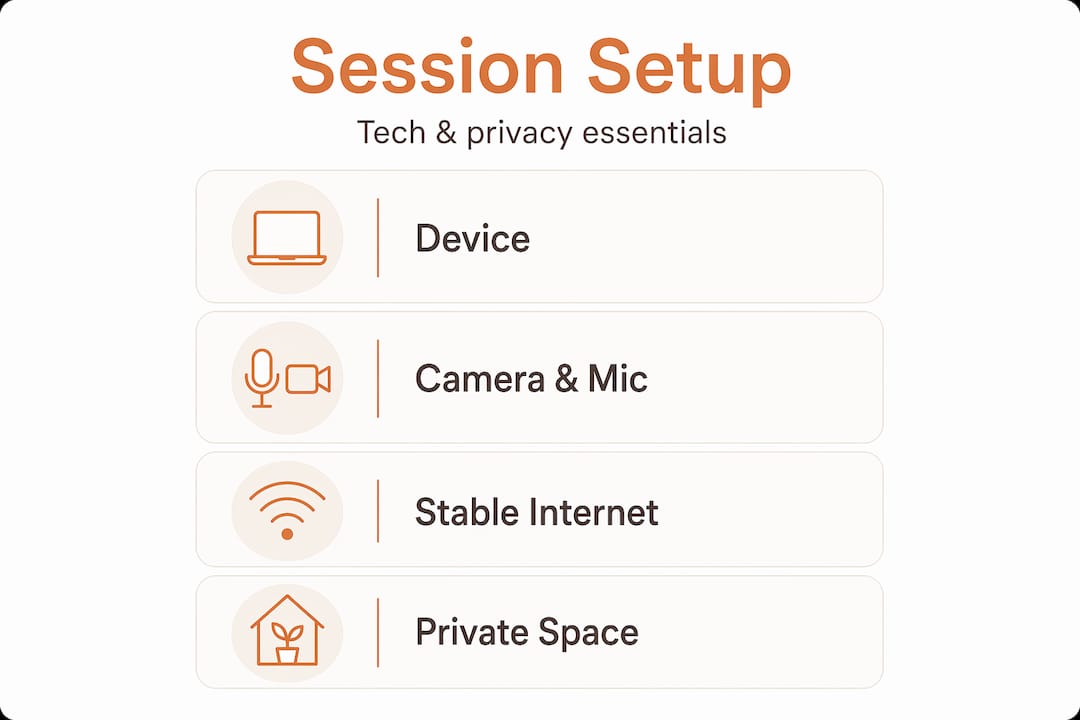
You need a device with a working camera and microphone, a stable internet connection, and a private space. That is it. Most reputable platforms run through a standard web browser, so you do not need to install software. Privacy matters. Any platform you use should be HIPAA compliant with encryption that protects your data both in transit and at rest. Multi-factor authentication, virtual waiting rooms, and strict access controls are all signs a platform takes your privacy seriously.
Pro Tip: Before you sign up for any platform, ask directly whether they have a signed Business Associate Agreement with their video provider. A legitimate telehealth service will answer this question without hesitation.
Cost and insurance factors
| Cost Type | Typical Range |
|---|---|
| Insurance copay | $20–$50 per session |
| Private pay (standard) | $80–$350 per session |
| Nonprofit or sliding scale | $40–$70 per session |
Session costs vary widely depending on your insurance plan and the type of provider you see. Psychiatry visits typically cost more than therapy sessions. If cost is a concern, ask about structured treatment plans before committing to per-session pricing. Platforms that bundle evaluations and follow-ups into a fixed program often deliver better value, especially for people managing a single primary condition like ADHD or generalized anxiety.
How to prepare for your first online appointment
Preparation is not just about logistics. It shapes how open and present you can be when the session starts. Here is a practical sequence that works.
-
Choose your space. Find a room with a door you can close. A private, distraction-free setup is one of the most important factors in session quality. Let anyone in your household know you need uninterrupted time. If you live with others and privacy is genuinely difficult, consider using headphones and positioning your screen away from entryways.
-
Test your technology early. Check your camera, microphone, and internet connection at least 10 to 15 minutes before your appointment. A technical failure right at the start of your session adds unnecessary stress at precisely the wrong moment. Log in to the platform the day before just to confirm your credentials work.
-
Write down your goals. You do not need a polished speech. Jot down two or three things you want to address, whether that is trouble focusing at work, persistent worry, low mood, or something more specific. Having this in front of you prevents blanking under pressure.
-
Gather what you might need. Keep water nearby. Have any current medication names and dosages written down if you are seeing a psychiatrist. A notebook for jotting things down during the session is useful, though not required.
-
Check your mental state before logging on. Avoid scheduling sessions immediately after stressful commitments if you can. Give yourself 10 minutes beforehand to sit quietly, breathe, and shift your focus toward the appointment. This is not wasted time. It primes you for honest conversation.
Pro Tip: Avoid lying down during your session if you are someone who tends to fall asleep when relaxed. Sitting upright at a desk or table keeps your brain in a more alert, engaged state, which supports better conversation.
You can also use Journeymhw’s first appointment checklist to make sure nothing important is missed before your session begins.
What to expect in your first session
The single biggest misconception about starting therapy remotely is that the first session will produce answers. It will not, and that is completely normal. A typical first session runs 45 to 60 minutes and is structured around building comfort and understanding your history, not solving problems.
Here is how that first hour generally unfolds:
- Introductions and informed consent. Your provider will explain how sessions work, what confidentiality means in practice, and what happens in an emergency. You will sign or confirm consent before the clinical conversation begins.
- Background and history. Expect questions about your life, your current challenges, and any prior experience with therapy or medication. You do not have to share everything right away. Building trust online takes time, and setting a boundary on what you are ready to discuss is not only acceptable, it is expected.
- Goal setting. Your provider will ask what you are hoping to get from treatment. Even a vague answer like “I want to feel less overwhelmed” is enough to start. Precision develops over multiple sessions.
- Questions from you. Most providers leave time for your questions. Use it. Ask about their experience with your specific condition, how they approach treatment, and how often you will meet.
“Therapists are trained to help people at all levels of need — you do not have to be in crisis to benefit from beginning mental health support.”
One thing worth knowing about confidentiality: your therapist’s notes are not the same as your general medical records. Psychotherapy notes require separate authorization for disclosure and are kept distinct from your broader treatment record under HIPAA. If you have concerns about who can access what you say, ask your provider to walk you through their documentation practices.
Common challenges when starting online mental health treatment
Starting therapy remotely is rarely perfect, and knowing what difficulties might arise helps you handle them without losing momentum.
- Technology problems mid-session. This happens more than people expect. Most platforms have a backup protocol, usually a phone call. Ask your provider at the start of your first session what to do if the connection drops.
- Doubts about whether online therapy works. Research consistently supports the effectiveness of teletherapy for mental health conditions including anxiety, depression, and ADHD. The format is different from in-person care, not inferior to it.
- Feeling worse after your first few sessions. This catches people off guard. Emotional responses after early sessions can temporarily intensify anxiety or low mood. This is not a sign that therapy is making things worse. It often means the work is engaging important emotional material.
- Wondering if you picked the right provider. The therapeutic relationship is a key success factor in online treatment. If after three or four sessions you do not feel heard or safe, switching providers is a reasonable and healthy decision.
Pro Tip: Ask your provider during the first session about their recording policy. Session recordings require explicit consent and must be stored securely. Most sessions are not recorded at all, but knowing the policy upfront protects you.
My perspective on starting therapy online
I have worked with many adults who delayed getting help for months, sometimes years, because the process felt too complicated or because they were not sure they were “struggling enough” to deserve support. That framing is one of the most damaging things I have seen in mental health care. You do not need to be in crisis to benefit from treatment. Therapy is useful at every level of distress.
What I have found is that the adults who do best in online treatment are not the ones who feel the most prepared. They are the ones who show up consistently and give themselves permission to be honest, even when it is uncomfortable. The format, whether it is video or phone, matters far less than the relationship you build with your provider over time.
I also want to be direct about something: not every first provider will be the right one. That is not a reflection of your suitability for therapy. It is just how human compatibility works. If you do not feel comfortable after a few sessions, changing providers is not giving up. It is actually a sign that you understand what good care should feel like.
Virtual care has genuinely transformed access to mental health treatment. Adults in rural areas, people with demanding schedules, and those who experience social anxiety all report higher engagement with mental health treatment from home compared to traditional in-person settings. That is not a workaround. That is care that actually fits people’s lives.
— Jamie
How Journeymhw supports your first steps in online treatment
Journeymhw is a telehealth platform built specifically for adults managing ADHD, anxiety, and depression. We offer psychiatric evaluations, personalized treatment plans, and ongoing medication management, all accessible from home without long waits or complicated intake processes. If you are in Texas or Colorado, our team is ready to support you with condition-specific care that fits your schedule and budget.
Our ADHD, anxiety, and depression treatment programs are designed to get you from first evaluation to a clear treatment plan quickly. We also offer structured options like The Simple Plan, which gives you access to quality psychiatric care at a rate designed to reduce financial barriers. To explore online treatment pricing or schedule your first evaluation, visit Journeymhw today.
FAQ
What is the first step to starting mental health treatment online?
The first step is identifying what type of care you need, whether that is therapy, psychiatric evaluation, or medication management, and then finding a HIPAA-compliant provider who specializes in your condition. From there, booking an intake appointment is typically straightforward through most telehealth platforms.
How long does a first online therapy session last?
A first online therapy session typically lasts 45 to 60 minutes and focuses on gathering background information, explaining confidentiality, and setting treatment goals rather than immediately addressing problems.
Is online therapy covered by insurance?
Many insurance plans cover telehealth mental health services, with copays typically ranging from $20 to $50 per visit. Coverage varies by plan and provider, so verifying your benefits before your first session is recommended.
Can I switch therapists if the first one is not a good fit?
Yes. Finding the right therapist is part of the process, and switching providers after a few sessions is a healthy and common decision. The quality of the therapeutic relationship is one of the strongest predictors of treatment success.
Is online mental health treatment effective for ADHD, anxiety, and depression?
Yes. Teletherapy and online psychiatric care are clinically effective for managing ADHD, anxiety, and depression. Telehealth is now considered a standard mode of mental health care delivery, not a temporary substitute for in-person treatment.
Recommended
- Your guide to navigating mental health treatment options – Journey Mental Health
- Your Mental Health Care Checklist for the First Appointment – Journey Mental Health
- Online Depression Treatment: What to Expect Phase 3 – Journey Mental Health
- The Benefits of Virtual Mental Health Care for Depression, Anxiety and ADHD your guide – Journey Mental Health